Center for Biomedical Engineering, Brown University, Providence, Rhode Island, USA.
Department of Molecular Pharmacology, Physiology, and Biotechnology, Brown University, Providence, Rhode Island, USA.
Cytometry A. 2021 May;99(5):488-495. doi: 10.1002/cyto.a.24192. Epub 2020 Aug 19.
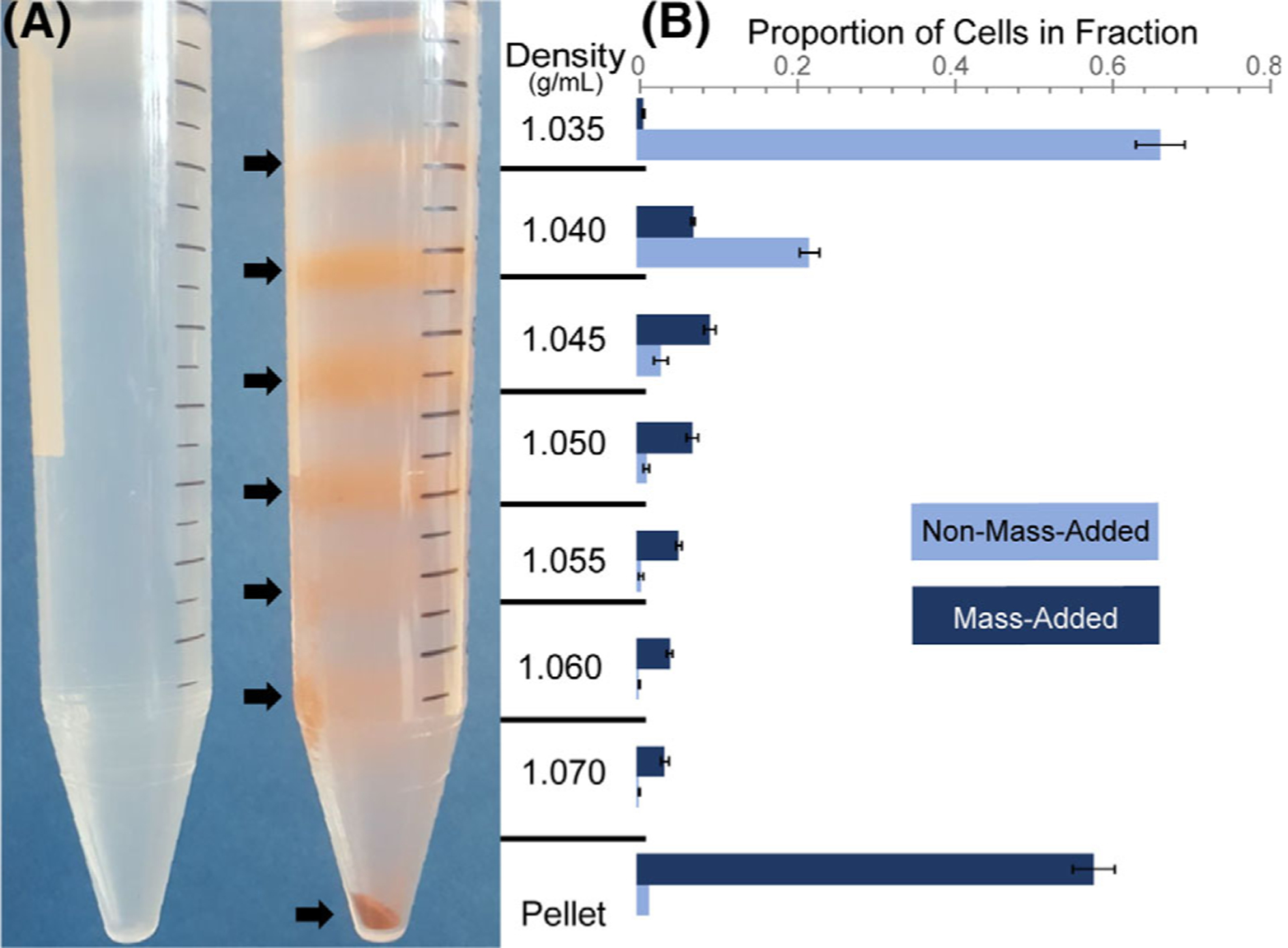
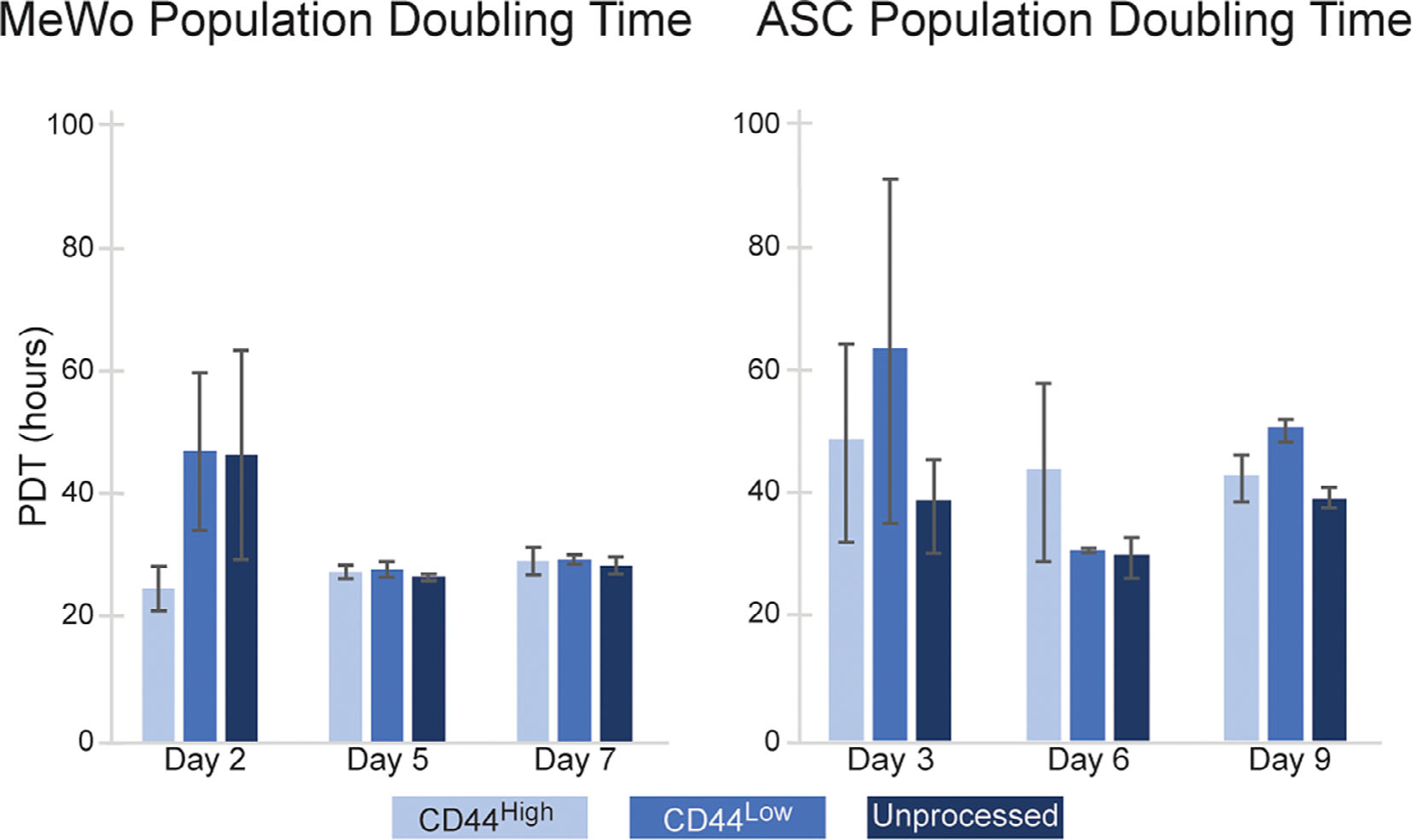
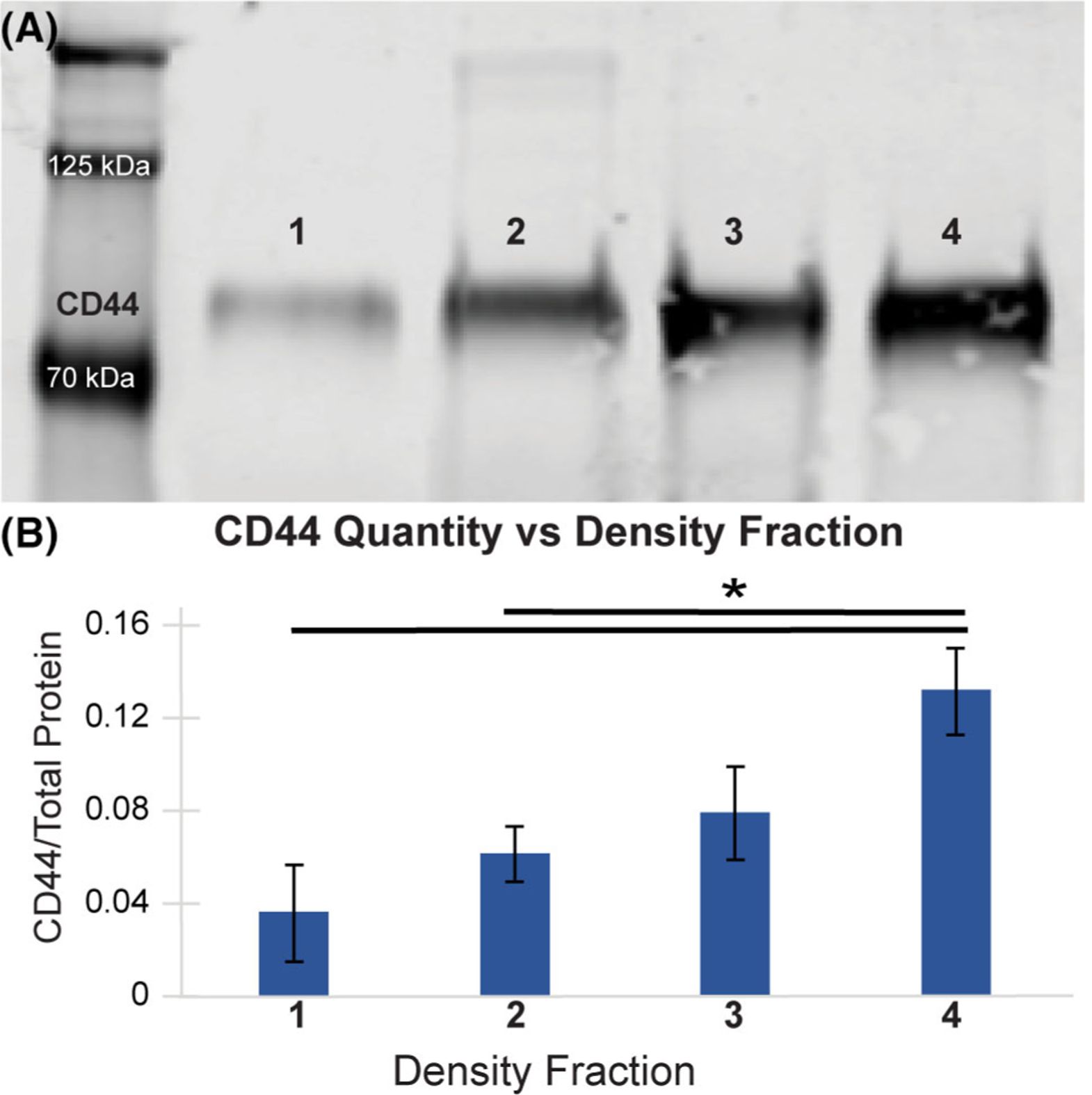
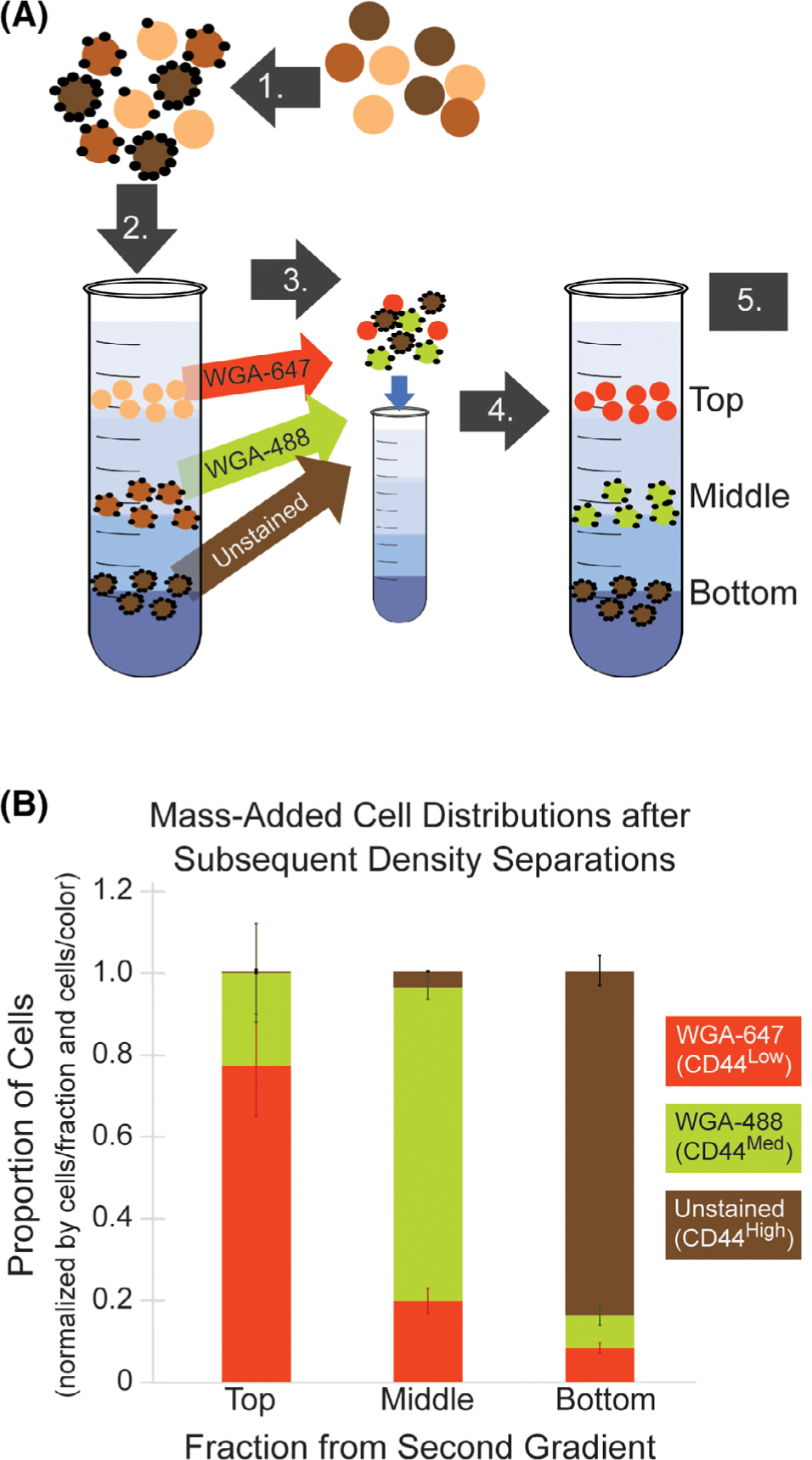
Cell sorting is a powerful tool in basic research and therapeutic enrichment. However, common cell sorting methods, such as fluorescence-activated cell sorting (FACS) and magnetic-activated cell sorting (MACS) have significant limitations, such as generally low cell yields or restriction to binary separation, respectively. To address these limitations, we developed a two-step cell sorting method called mass-added density centrifugation (MADC) to enable nonbinary separation of large cell numbers based on surface protein levels. In the first MADC step (mass-adding), antibody-directed massive microparticles bind target surface proteins to modulate single-cell density proportionally to target protein level. Second, microparticle-laden cells are subjected to discontinuous density gradient centrifugation, whereby they separate into discrete density bands which can be isolated for downstream use. MADC will prove especially advantageous for obtaining sufficient cell numbers for protein analyses from large source populations, and it is a fast process that can facilitate live cell enrichment for therapies that require tens of millions of cells. Here, we demonstrate MADC's utility for both live and fixed cell sorts of multiple cell types based on abundance of an example target protein, CD44. CD44 quantity in separated cell groups was assayed with western blots and correlated with modulated cell density. This novel sorting method enables rapid, nonbinary isolation of large quantities of cells based on surface protein levels and should prove useful in both basic science and therapeutic applications. © 2020 International Society for Advancement of Cytometry.
细胞分选是基础研究和治疗富集的有力工具。然而,常见的细胞分选方法,如荧光激活细胞分选(FACS)和磁激活细胞分选(MACS)分别存在细胞产量普遍较低或仅能实现二元分离的显著局限性。为了解决这些局限性,我们开发了一种两步细胞分选方法,称为质量添加密度离心(MADC),能够基于表面蛋白水平实现大数量的非二进制分离。在第一步 MADC(质量添加)中,抗体导向的大量微球结合靶表面蛋白,以调节单细胞密度与靶蛋白水平成比例。其次,载入微球的细胞进行不连续密度梯度离心,从而将其分离成离散的密度带,可用于下游应用。MADC 将特别有利于从大的源群体中获得足够数量的细胞用于蛋白质分析,并且是一种快速的过程,可以促进需要数千万个细胞的治疗方法中的活细胞富集。在这里,我们展示了 MADC 基于示例靶蛋白 CD44 的丰度对多种细胞类型的活细胞和固定细胞分选的实用性。用 Western blot 测定分离细胞群中 CD44 的数量,并与调节后的细胞密度相关联。这种新型分选方法能够基于表面蛋白水平快速、非二进制地分离大量细胞,应该在基础科学和治疗应用中都很有用。