Department of Pulmonary Medicine, School of Medicine, Keio University, Tokyo, Japan.
Division of Translational Research, Clinical and Translational Research Center, School of Medicine, Keio University, Tokyo, Japan.
Cancer Sci. 2020 Oct;111(10):3793-3801. doi: 10.1111/cas.14569. Epub 2020 Aug 5.
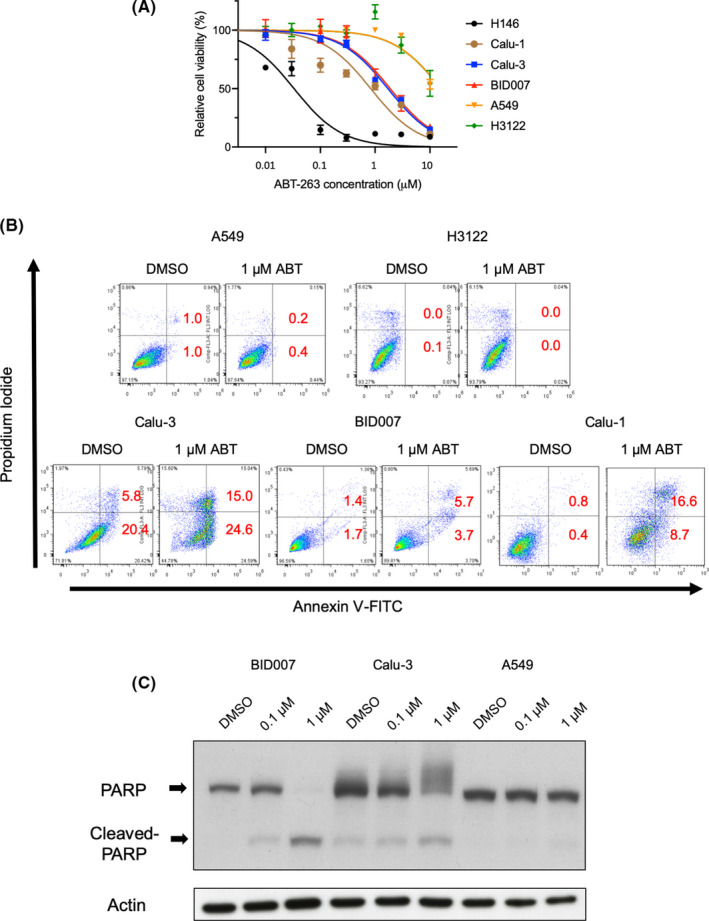
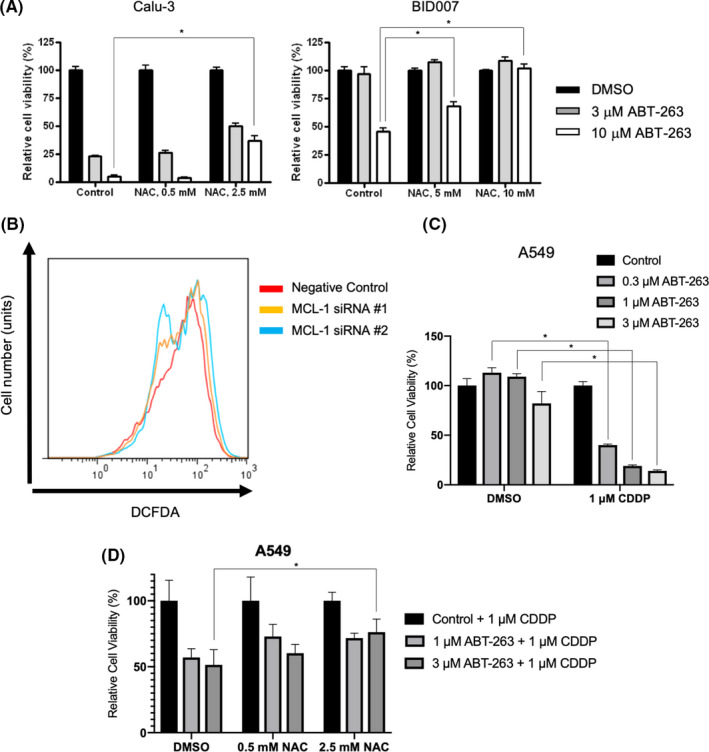
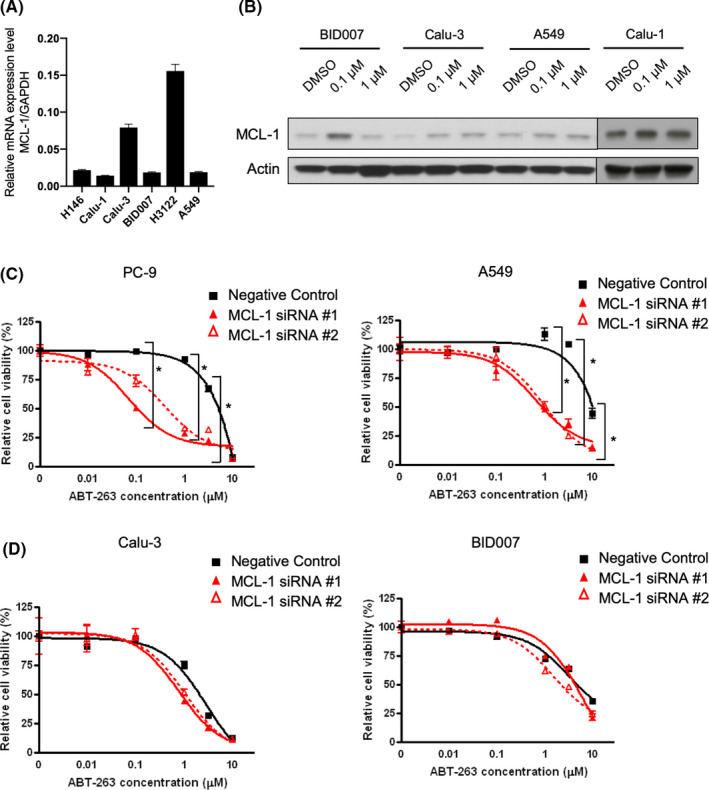
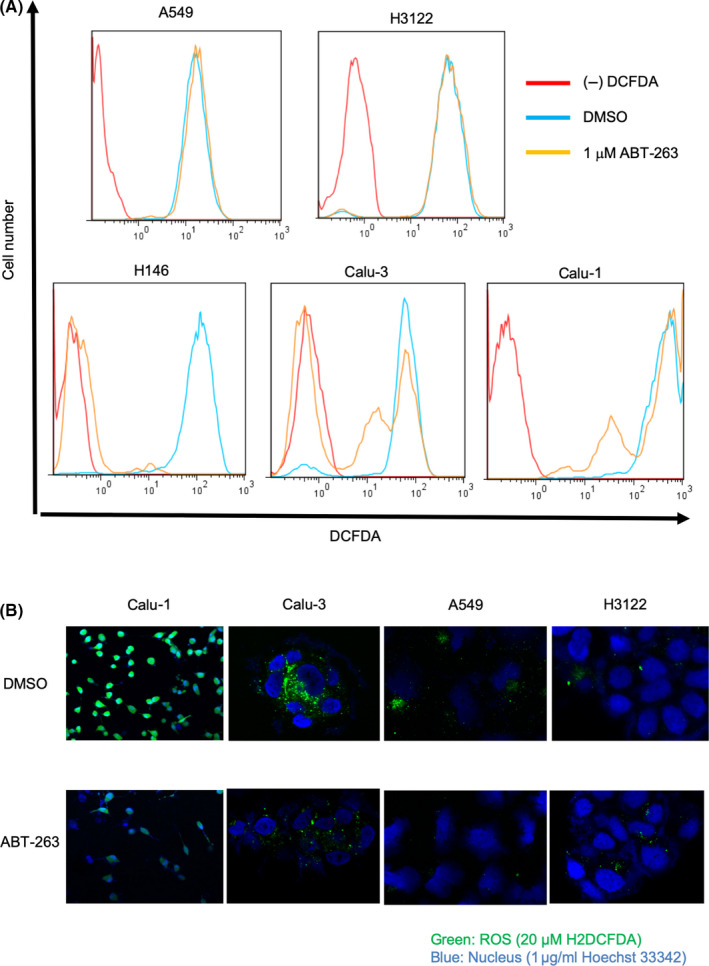
ABT-263 (Navitoclax) is a BH3-mimetic drugs targeting anti-apoptotic B-cell lymphoma-2 (BCL-2) family proteins, including BCL-2, BCL-xL, and BCL-w, thereby inducing apoptosis. In small-cell lung cancer (SCLC) cells, the response to ABT-263 is associated with the expression of myeloid cell leukemia-1 (MCL-1) protein, however the efficacy of ABT-263 in non-small-cell lung cancer (NSCLC) has not been thoroughly evaluated. There are currently no established biomarkers for predicting the efficacy of ABT-263 treatment in NSCLC. We screened a panel of different NSCLC cell lines and found that ABT-263 inhibited cell proliferation and induced apoptosis in Calu-1, Calu-3, and BID007 cells. Inconsistent with previous reports on SCLC, low levels of MCL-1 did not predict the response to ABT-263 in NSCLC cells, however we found that intracellular levels of reactive oxygen species (ROS) in cancer cells were associated with sensitivity to ABT-263 in NSCLC cells. We also showed that increasing the level of intracellular ROS could enhance the sensitivity to ABT-263 in NSCLC cells. In summary, we propose that the intracellular levels of ROS could be used as a potential novel biomarker for predicting a response to ABT-263 in NSCLC. Furthermore, we show some evidence supporting the further assessment of ABT-263 as a new therapeutic strategy in patients with NSCLC combined with agents regulating ROS levels. We believe that our findings and follow-up studies on this matter would lead to novel diagnostic and treatment strategies in patients with NSCLC.
ABT-263(Navitoclax)是一种针对抗凋亡 B 细胞淋巴瘤-2(BCL-2)家族蛋白的 BH3 模拟药物,包括 BCL-2、BCL-xL 和 BCL-w,从而诱导细胞凋亡。在小细胞肺癌(SCLC)细胞中,对 ABT-263 的反应与髓样细胞白血病-1(MCL-1)蛋白的表达有关,然而,ABT-263 在非小细胞肺癌(NSCLC)中的疗效尚未得到彻底评估。目前尚无确定的生物标志物可预测 NSCLC 患者对 ABT-263 治疗的疗效。我们筛选了一组不同的 NSCLC 细胞系,发现 ABT-263 抑制 Calu-1、Calu-3 和 BID007 细胞的增殖并诱导细胞凋亡。与 SCLC 的先前报道不一致的是,MCL-1 水平低并不能预测 NSCLC 细胞对 ABT-263 的反应,但我们发现癌细胞内的活性氧(ROS)水平与 NSCLC 细胞对 ABT-263 的敏感性相关。我们还表明,增加细胞内 ROS 水平可以提高 NSCLC 细胞对 ABT-263 的敏感性。总之,我们提出细胞内 ROS 水平可以作为预测 NSCLC 患者对 ABT-263 反应的潜在新型生物标志物。此外,我们提供了一些证据支持进一步评估 ABT-263 作为联合调节 ROS 水平的药物治疗 NSCLC 患者的新治疗策略。我们相信,我们的发现和对该问题的后续研究将为 NSCLC 患者带来新的诊断和治疗策略。