Ministry of Education Key Laboratory of Cell Proliferation and Differentiation, College of Life Sciences, Department of Human Anatomy, Histology, and Embryology, and School of Basic Medical Sciences, Peking University Health Science Center, Peking University, Beijing, 100871, China.
Haidian Maternal & Child Health Hospital, Beijing, 100080, China.
Cell Res. 2020 Dec;30(12):1109-1126. doi: 10.1038/s41422-020-0378-6. Epub 2020 Jul 20.
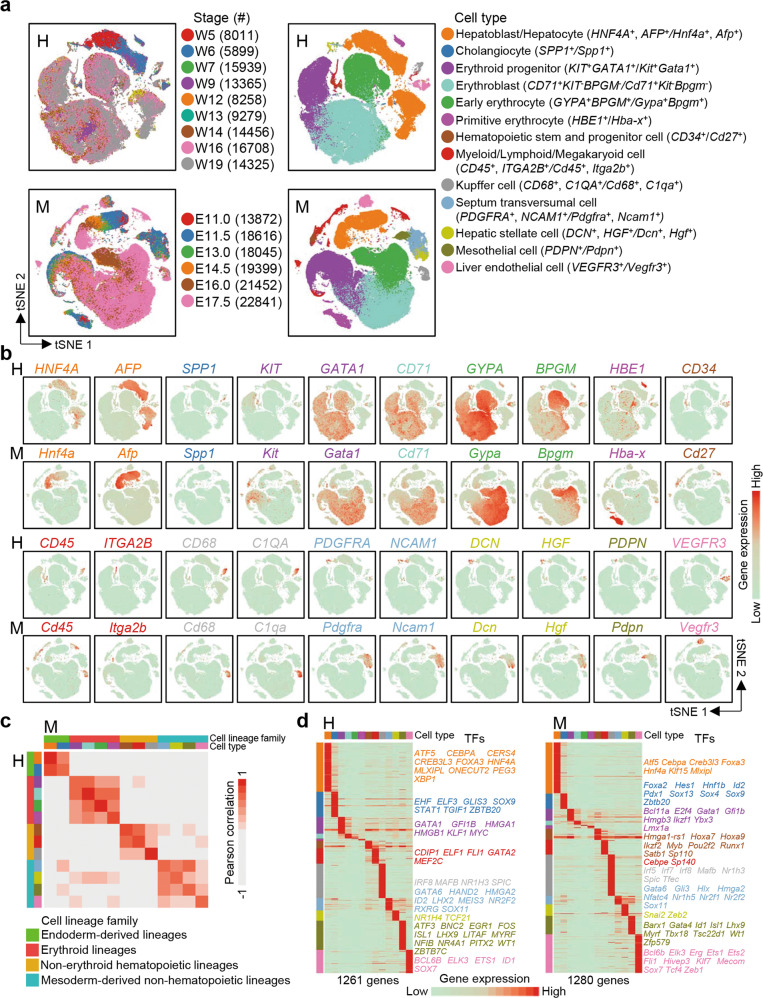
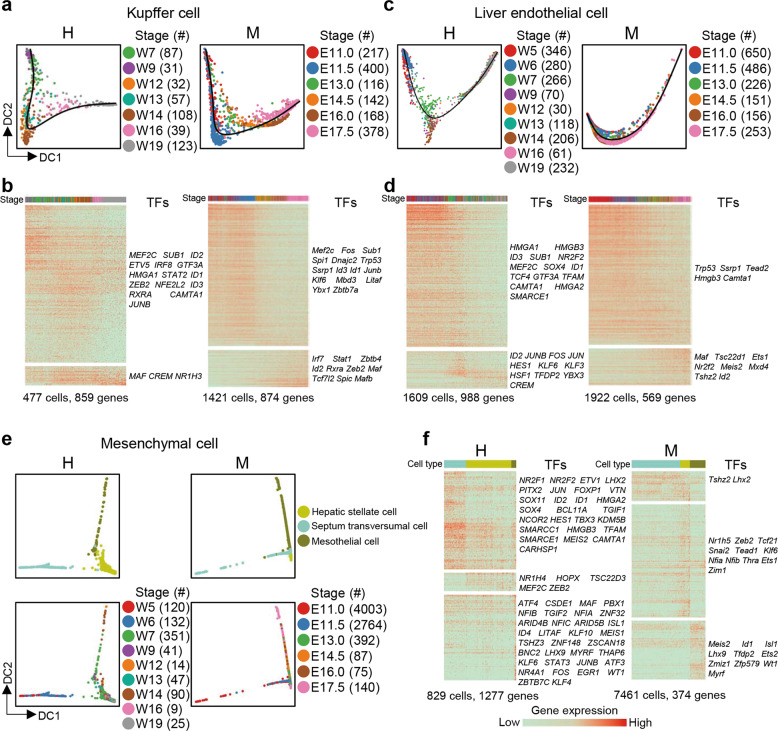
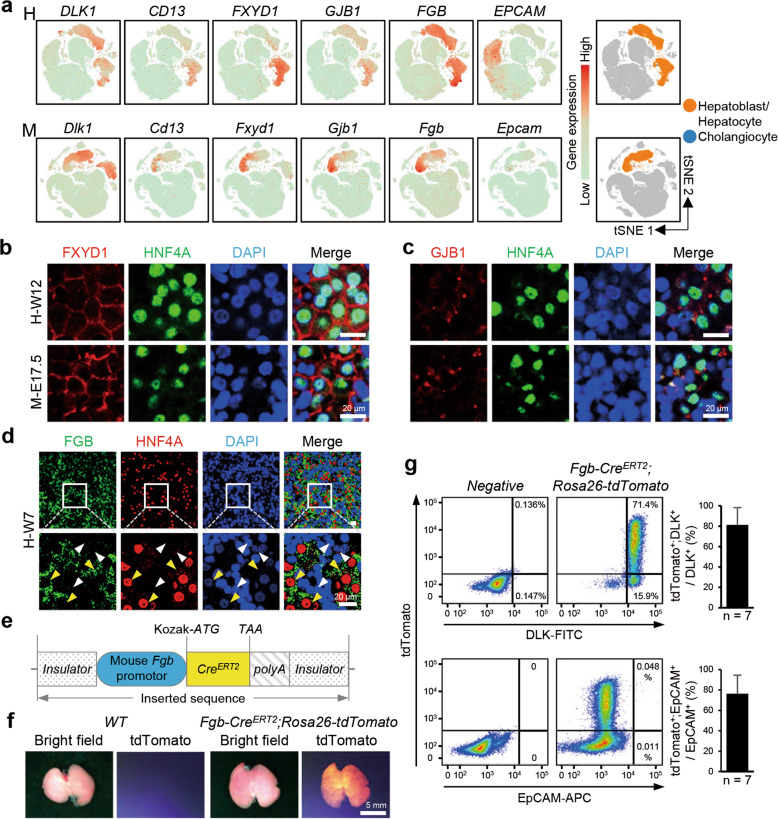
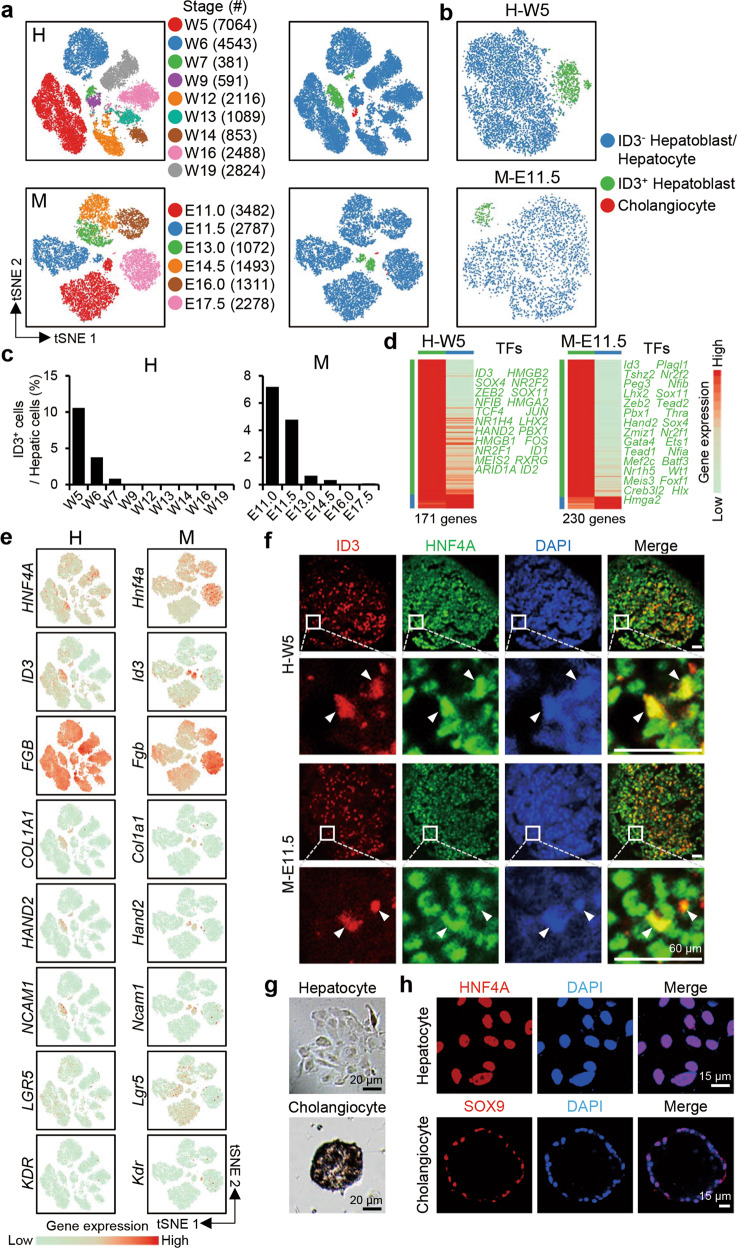
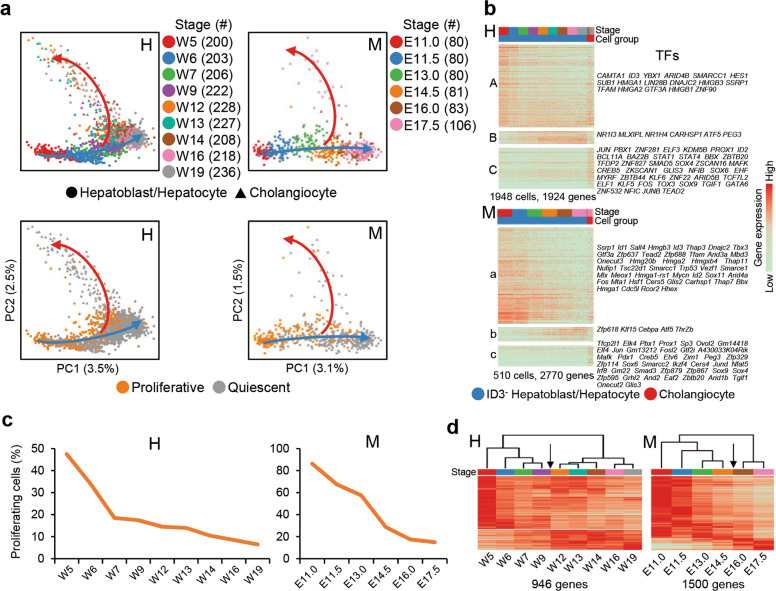
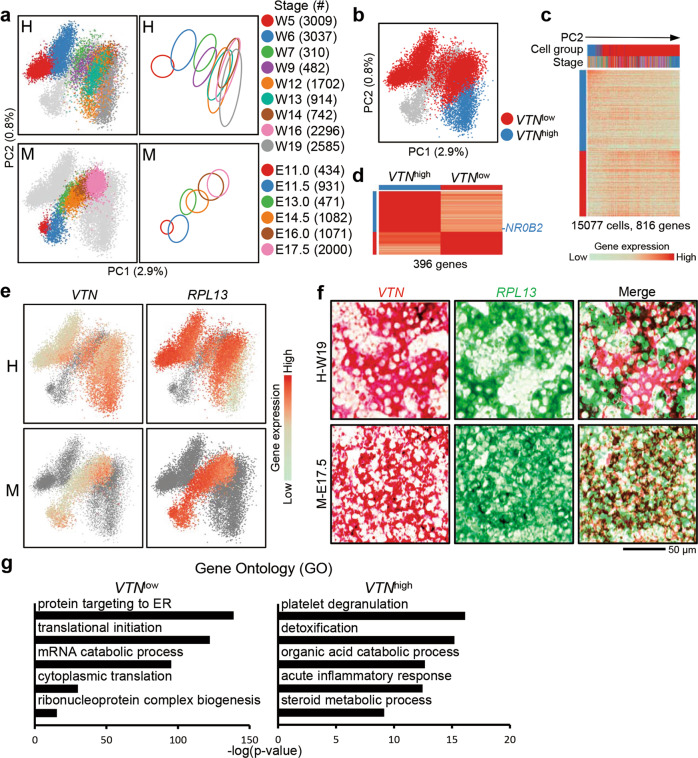
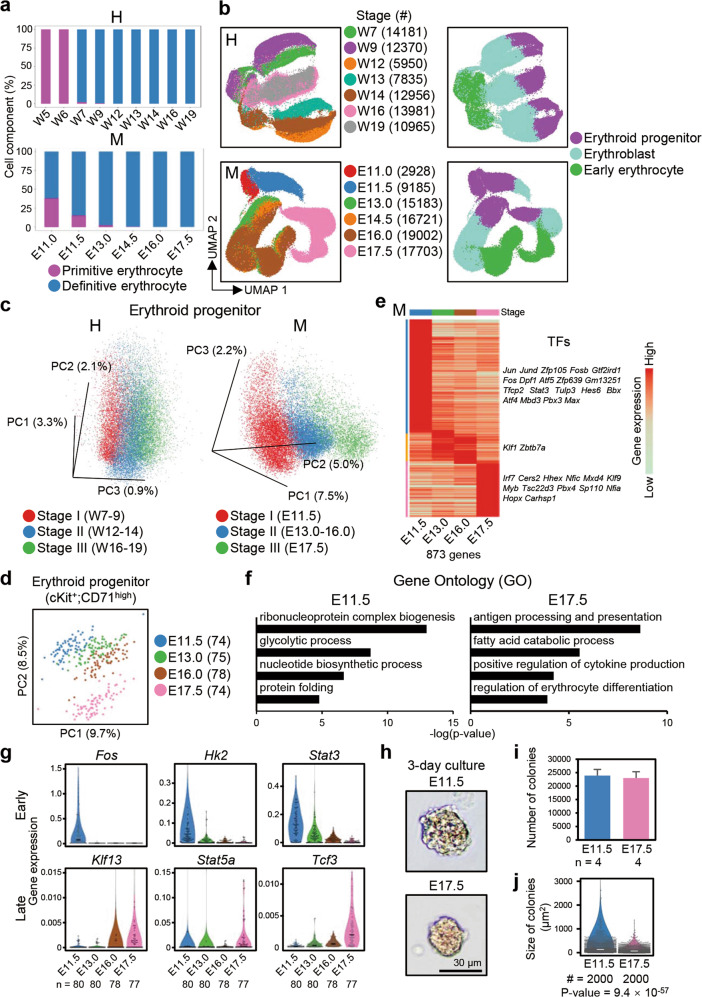
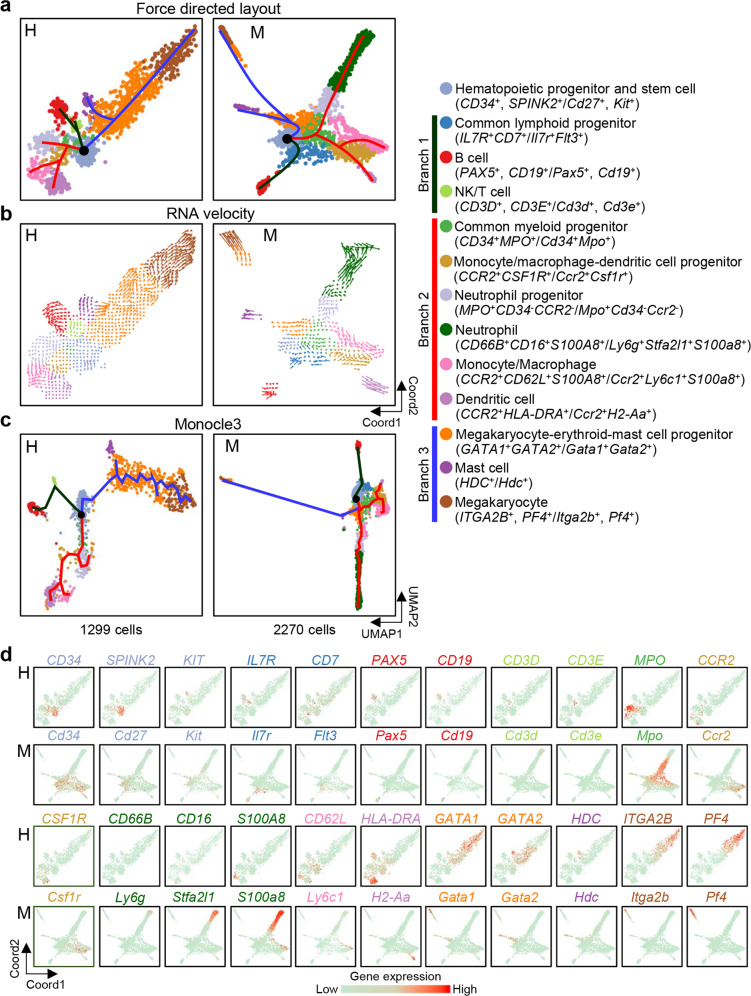
During embryogenesis, the liver is the site of hepatogenesis and hematopoiesis and contains many cell lineages derived from the endoderm and mesoderm. However, the characteristics and developmental programs of many of these cell lineages remain unclear, especially in humans. Here, we performed single-cell RNA sequencing of whole human and mouse fetal livers throughout development. We identified four cell lineage families of endoderm-derived, erythroid, non-erythroid hematopoietic, and mesoderm-derived non-hematopoietic cells, and defined the developmental pathways of the major cell lineage families. In both humans and mice, we identified novel markers of hepatic lineages and an ID3 subpopulation of hepatoblasts as well as verified that hepatoblast differentiation follows the "default-directed" model. Additionally, we found that human but not mouse fetal hepatocytes display heterogeneity associated with expression of metabolism-related genes. We described the developmental process of erythroid progenitor cells during human and mouse hematopoiesis. Moreover, despite the general conservation of cell differentiation programs between species, we observed different cell lineage compositions during hematopoiesis in the human and mouse fetal livers. Taken together, these results reveal the dynamic cell landscape of fetal liver development and illustrate the similarities and differences in liver development between species, providing an extensive resource for inducing various liver cell lineages in vitro.
在胚胎发生过程中,肝脏是肝发生和造血的部位,包含许多来源于内胚层和中胚层的细胞谱系。然而,这些细胞谱系中的许多特征和发育程序仍不清楚,尤其是在人类中。在这里,我们对整个人类和小鼠胎儿肝脏在整个发育过程中的单细胞 RNA 进行了测序。我们鉴定了来源于内胚层的、红系的、非红系造血的和中胚层衍生的非造血细胞的四个细胞谱系家族,并定义了主要细胞谱系家族的发育途径。在人和小鼠中,我们鉴定了肝谱系的新标记物和肝前体细胞的 ID3 亚群,并证实了肝前体细胞的分化遵循“默认定向”模型。此外,我们发现人类而非小鼠胎儿肝细胞显示出与代谢相关基因表达相关的异质性。我们描述了人类和小鼠造血过程中红系祖细胞的发育过程。此外,尽管物种间细胞分化程序普遍保守,但我们观察到人类和小鼠胎儿肝脏造血过程中的细胞谱系组成不同。总之,这些结果揭示了胎儿肝脏发育的动态细胞景观,并说明了物种间肝脏发育的相似性和差异,为体外诱导各种肝细胞谱系提供了广泛的资源。