Chastain Daniel B, Stitt Tia M, Ly Phong T, Henao-Martínez Andrés F, Franco-Paredes Carlos, Osae Sharmon P
University of Georgia College of Pharmacy, Albany, Georgia, USA.
Phoebe Putney Memorial Hospital, Albany, Georgia, USA.
Open Forum Infect Dis. 2020 Jun 5;7(7):ofaa219. doi: 10.1093/ofid/ofaa219. eCollection 2020 Jul.
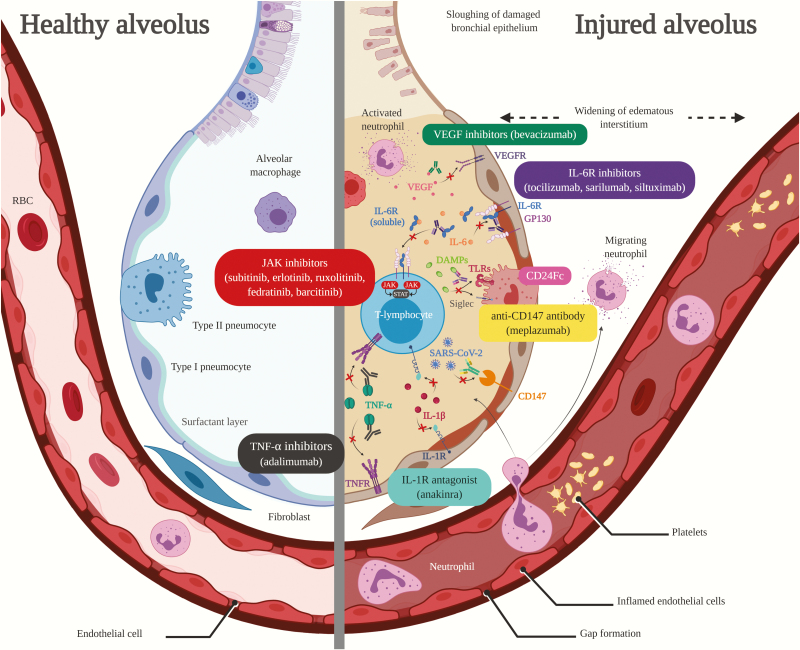
Severe acute respiratory syndrome coronavirus 2 is associated with higher concentrations of proinflammatory cytokines that lead to lung damage, respiratory failure, and resultant increased mortality. Immunomodulatory therapy has the potential to inhibit cytokines and quell the immune dysregulation. Controversial data found improved oxygenation after treatment with tocilizumab, an interleukin-6 inhibitor, sparking a wave of interest and resultant clinical trials evaluating immunomodulatory therapies. The purpose of this article is to assess potential proinflammatory targets and review the safety and efficacy of immunomodulatory therapies in managing patients with acute respiratory distress syndrome associated with coronavirus disease 2019.
严重急性呼吸综合征冠状病毒2与导致肺损伤、呼吸衰竭及死亡率增加的促炎细胞因子浓度升高有关。免疫调节疗法有抑制细胞因子并平息免疫失调的潜力。有争议的数据显示,白细胞介素-6抑制剂托珠单抗治疗后氧合改善,引发了一波兴趣以及评估免疫调节疗法的临床试验。本文旨在评估潜在的促炎靶点,并综述免疫调节疗法在治疗2019冠状病毒病相关急性呼吸窘迫综合征患者中的安全性和有效性。