Instituto Gonçalo Moniz (IGM)-Fundação Oswaldo Cruz (Fiocruz) Bahia.
Faculdade de Medicina da Bahia-Universidade Federal da Bahia, Salvador-BA, Brazil.
PLoS Negl Trop Dis. 2020 Jul 21;14(7):e0008467. doi: 10.1371/journal.pntd.0008467. eCollection 2020 Jul.
Chikungunya virus (CHIKV) has caused worldwide epidemics that impose a major burden on health systems. Approximately half of infected individuals develop chronic debilitating arthralgia, affecting their quality of life. Here, we identified the relevant clinical and demographic variables in the acute phase of CHIKV infection prospectively linked to chronic arthralgia to elaborate a prognostic scoring system.
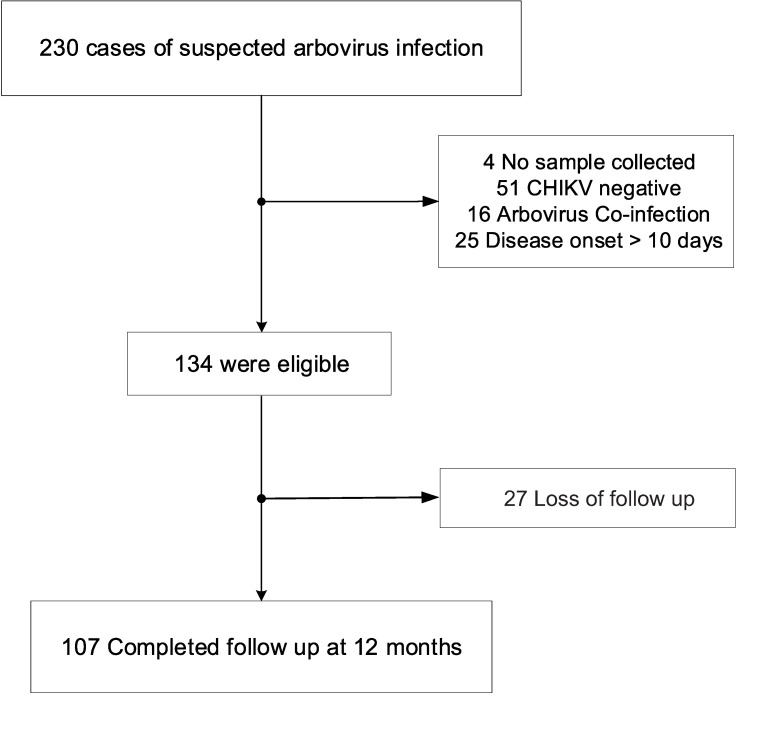
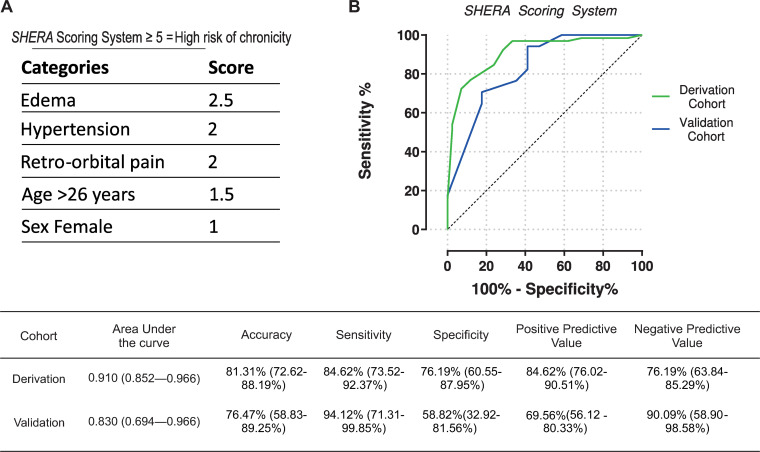
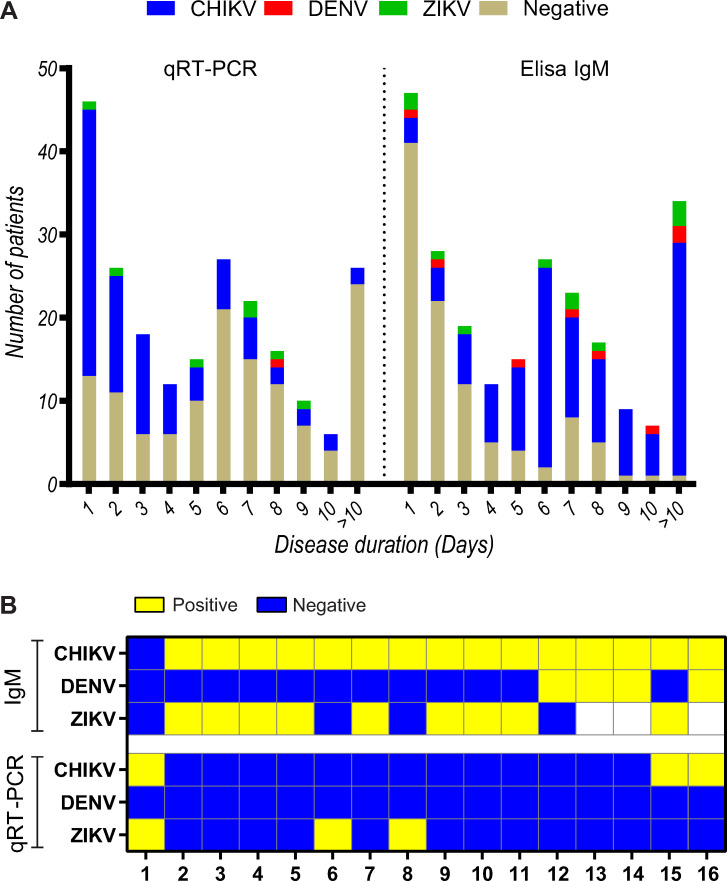
Acute CHIKV infection cases (n = 134) confirmed by serology or molecular test were examined <10 days of disease onset and followed for one year to evaluate for disease progression. Potential risk factors for chronic arthralgia were evaluated by multivariate analysis to develop a prognostic scoring system, which was subsequently tested in an independent validation cohort consisting of 42 individuals.
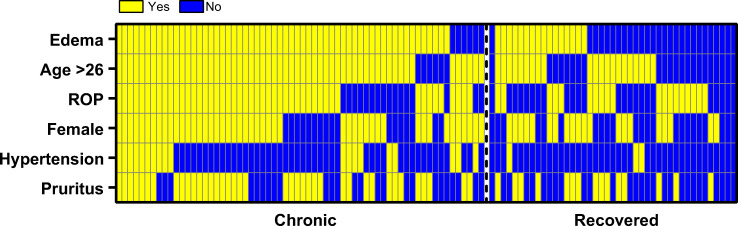
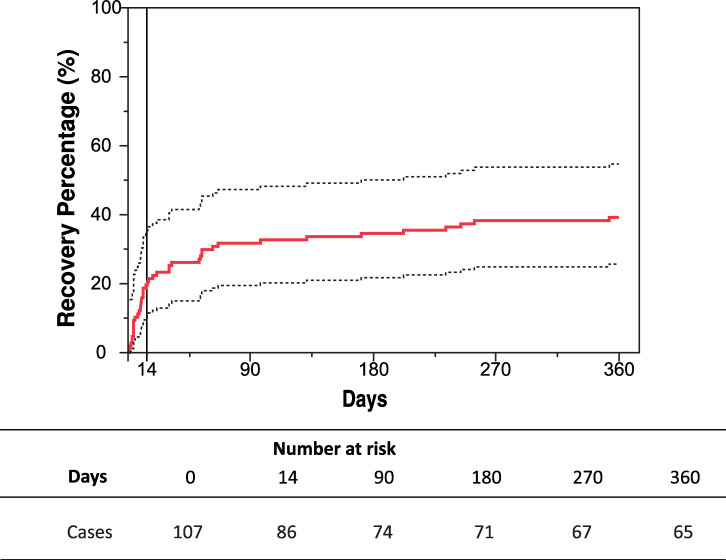
A total of 107 out of 134 (80%) acute CHIKV-confirmed cases from the derivation cohort were re-examined one year after enrollment. Chronic arthralgia post-CHIKV infection was diagnosed in 64 (60%). Five of the 12 parameters evaluated in the acute phase were statistically associated with persistent arthralgia and were further tested by Bayesian analysis. These variables were weighted to yield a prognosis score denominated SHERA (Sex, Hypertension, Edema, Retroocular pain, Age), which exhibited 81.3% accuracy in predicting long-term arthralgia post-CHIKV infection in the derivation cohort, and 76.5% accuracy in the validation cohort.
The simplified and externally validated prognostic scoring system, SHERA, is a useful method to screen acutely CHIKV-infected patients at elevated risk of chronic arthralgia who will benefit from specific interventions. This tool could guide public health policies, particularly in resource-constrained settings.
基孔肯雅病毒(CHIKV)已在全球范围内引发了流行疫情,给卫生系统带来了重大负担。约有一半的感染者会出现慢性衰弱性关节炎,影响其生活质量。在此,我们前瞻性地确定了 CHIKV 感染急性期与慢性关节炎相关的临床和人口统计学变量,以制定预后评分系统。
通过血清学或分子检测确诊的急性 CHIKV 感染病例(n = 134)在发病后<10 天内进行检查,并随访一年以评估疾病进展情况。通过多变量分析评估慢性关节炎的潜在危险因素,以开发预后评分系统,随后在由 42 名个体组成的独立验证队列中进行测试。
从起始队列中共有 134 例急性 CHIKV 确诊病例中的 107 例(80%)在入组一年后进行了重新检查。在感染 CHIKV 后诊断出慢性关节炎的有 64 例(60%)。在急性期中评估的 12 个参数中有 5 个与持续性关节炎具有统计学相关性,并通过贝叶斯分析进行了进一步测试。这些变量经过加权得出了预后评分系统,称为 SHERA(性别、高血压、水肿、眼后疼痛、年龄),该评分系统在起始队列中预测 CHIKV 感染后长期关节炎的准确性为 81.3%,在验证队列中为 76.5%。
简化且经过外部验证的预后评分系统 SHERA 是一种筛选患有慢性关节炎风险较高的急性 CHIKV 感染患者的有用方法,这些患者将受益于特定的干预措施。该工具可以为公共卫生政策提供指导,特别是在资源有限的环境中。