Trümper Verena, Wittig Ilka, Heidler Juliana, Richter Florian, Brüne Bernhard, von Knethen Andreas
Institute of Biochemistry I, Goethe-University Frankfurt, 60590 Frankfurt am Main, Germany.
Functional Proteomics, SFB 815 Core Unit, Goethe-University Frankfurt, 60590 Frankfurt am Main, Germany.
PPAR Res. 2020 Jul 1;2020:8253831. doi: 10.1155/2020/8253831. eCollection 2020.
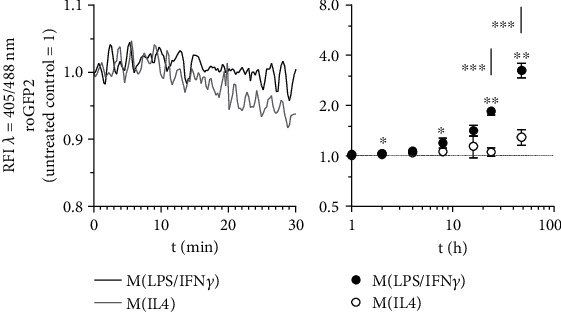
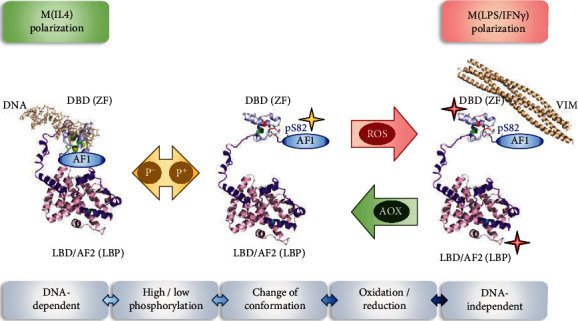
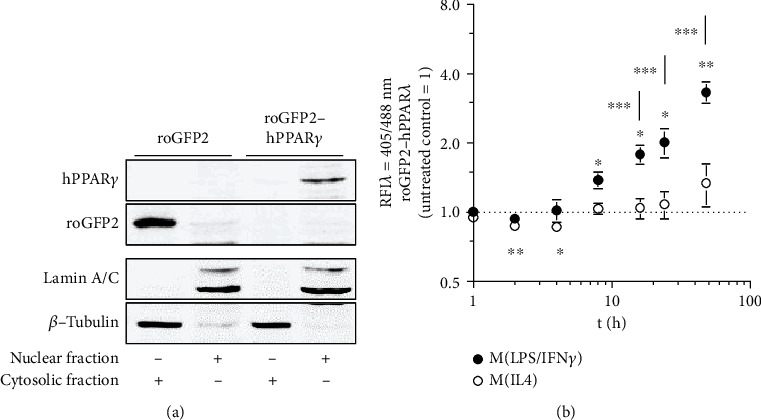
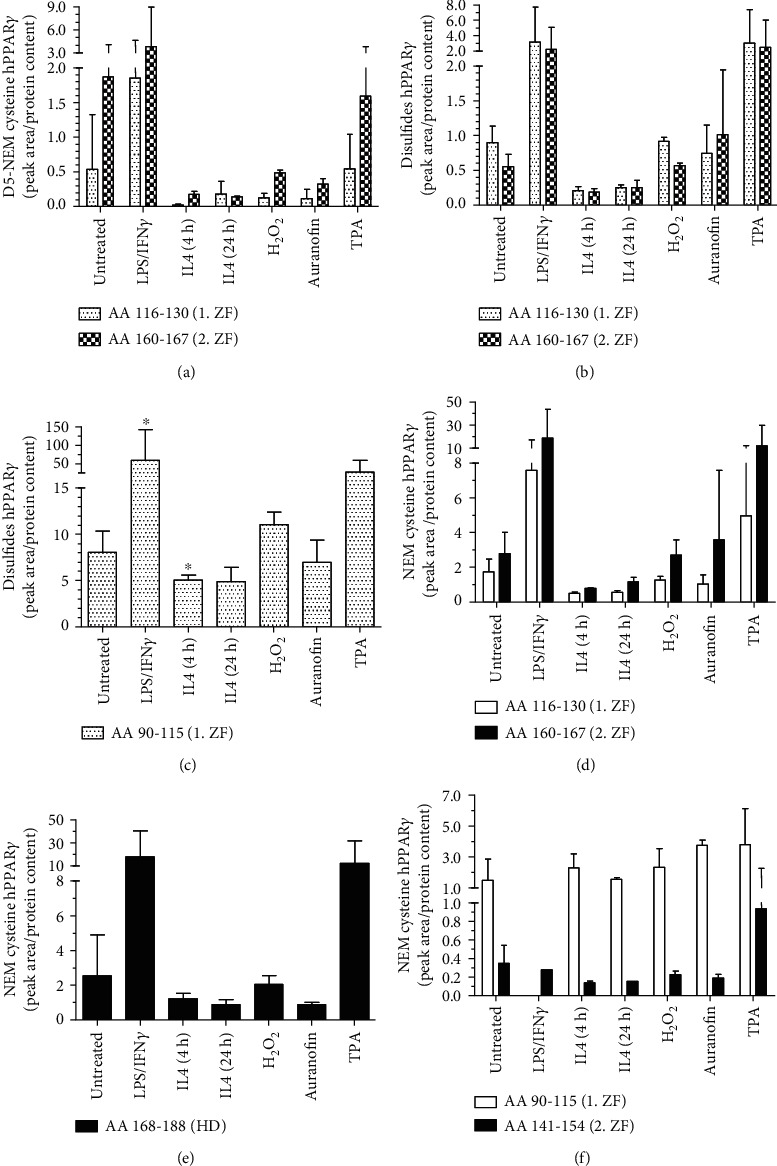
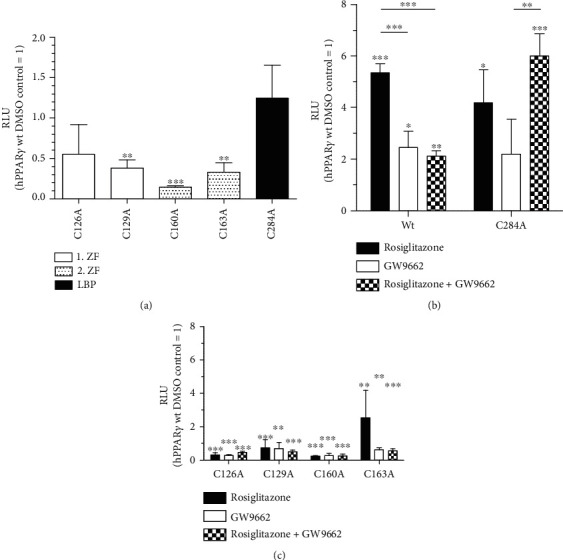
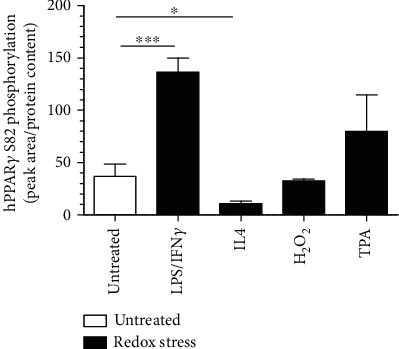
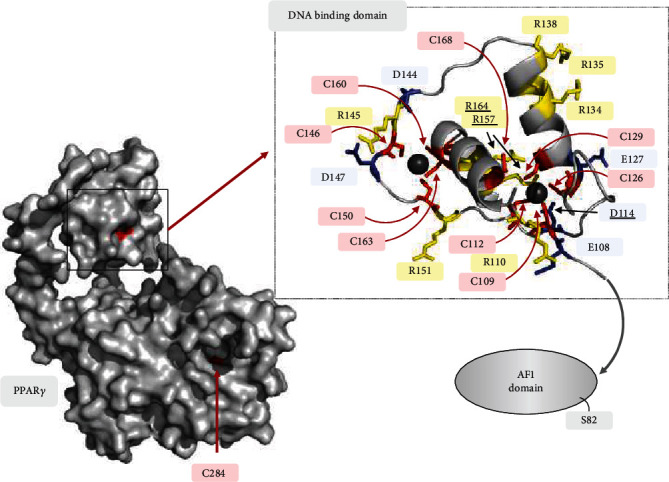
The peroxisome proliferator-activated receptor (PPAR) is a central mediator of cellular lipid metabolism and immune cell responses during inflammation. This is facilitated by its role as a transcription factor as well as a DNA-independent protein interaction partner. We addressed how the cellular redox milieu in the cytosol and the nucleus of lipopolysaccharide (LPS)/interferon-- (IFN-) and interleukin-4- (IL4-) polarized macrophages (M) initiates posttranslational modifications of PPAR, that in turn alter its protein function. Using the redox-sensitive GFP2 (roGFP2), we validated oxidizing and reducing conditions following classical and alternative activation of M, while the redox status of PPAR was determined via mass spectrometry. Cysteine residues located in the zinc finger regions (amino acid fragments AA 90-115, AA 116-130, and AA 160-167) of PPAR were highly oxidized, accompanied by phosphorylation of serine 82 in response to LPS/IFN, whereas IL4-stimulation provoked minor serine 82 phosphorylation and less cysteine oxidation, favoring a reductive milieu. Mutating these cysteines to alanine to mimic a redox modification decreased PPAR-dependent reporter gene transactivation supporting a functional shift of PPAR associated with the M phenotype. These data suggest distinct mechanisms for regulating PPAR function based on the redox state of M.
过氧化物酶体增殖物激活受体(PPAR)是炎症期间细胞脂质代谢和免疫细胞反应的核心介质。这得益于其作为转录因子以及不依赖DNA的蛋白质相互作用伙伴的作用。我们研究了脂多糖(LPS)/干扰素-γ(IFN-γ)和白细胞介素-4(IL-4)极化巨噬细胞(M)的细胞质和细胞核中的细胞氧化还原环境如何启动PPAR的翻译后修饰,进而改变其蛋白质功能。使用氧化还原敏感的绿色荧光蛋白2(roGFP2),我们验证了M经典激活和替代激活后的氧化和还原条件,同时通过质谱法测定了PPAR的氧化还原状态。位于PPAR锌指区域(氨基酸片段AA 90-115、AA 116-130和AA 160-167)的半胱氨酸残基高度氧化,同时响应LPS/IFN时丝氨酸82发生磷酸化,而IL-4刺激引起轻微的丝氨酸82磷酸化和较少的半胱氨酸氧化,有利于还原环境。将这些半胱氨酸突变为丙氨酸以模拟氧化还原修饰会降低PPAR依赖的报告基因反式激活,支持与M表型相关的PPAR功能转变。这些数据表明基于M的氧化还原状态调节PPAR功能的不同机制。