Department of Biological, Chemical and Pharmaceutical Sciences and Technologies, University of Palermo, 90128 Palermo, Italy.
Centro di Oncobiologia Sperimentale (C.O.B.S.) via San Lorenzo, 90146 Palermo, Italy.
Genes (Basel). 2020 Jul 20;11(7):824. doi: 10.3390/genes11070824.
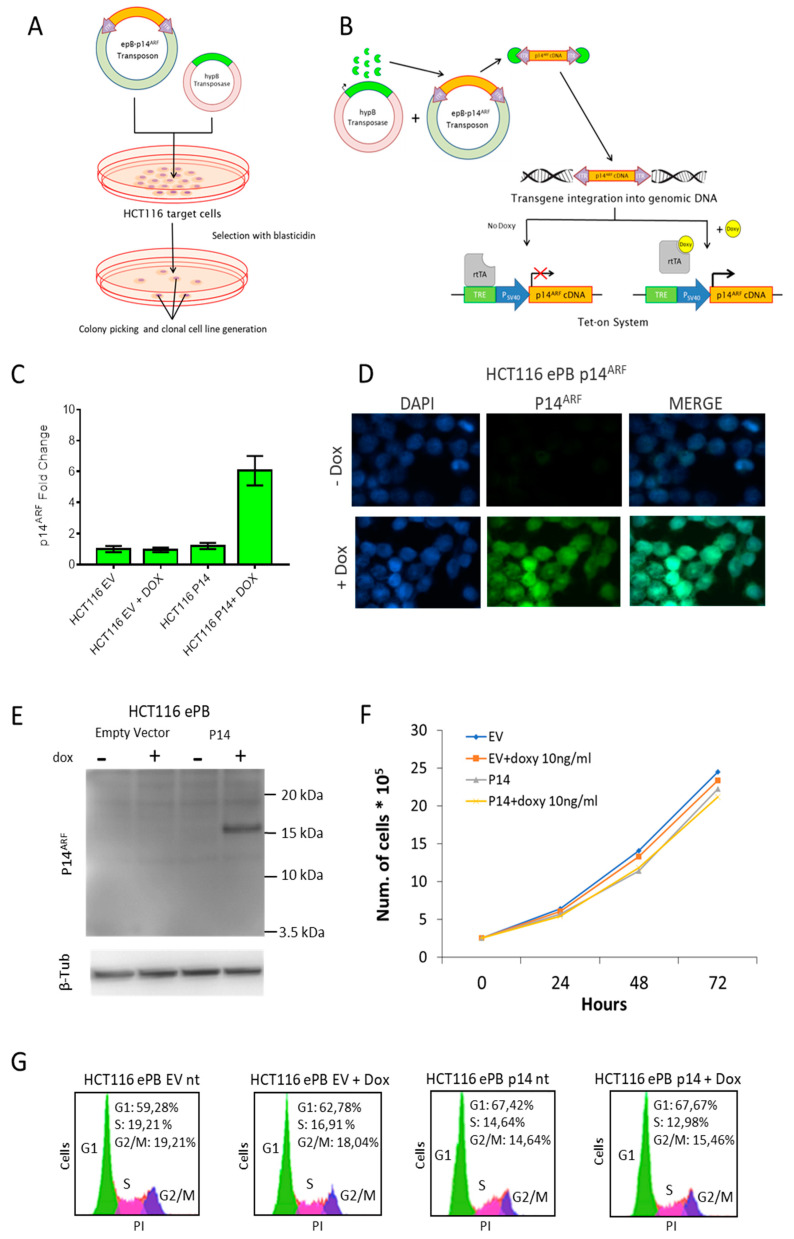
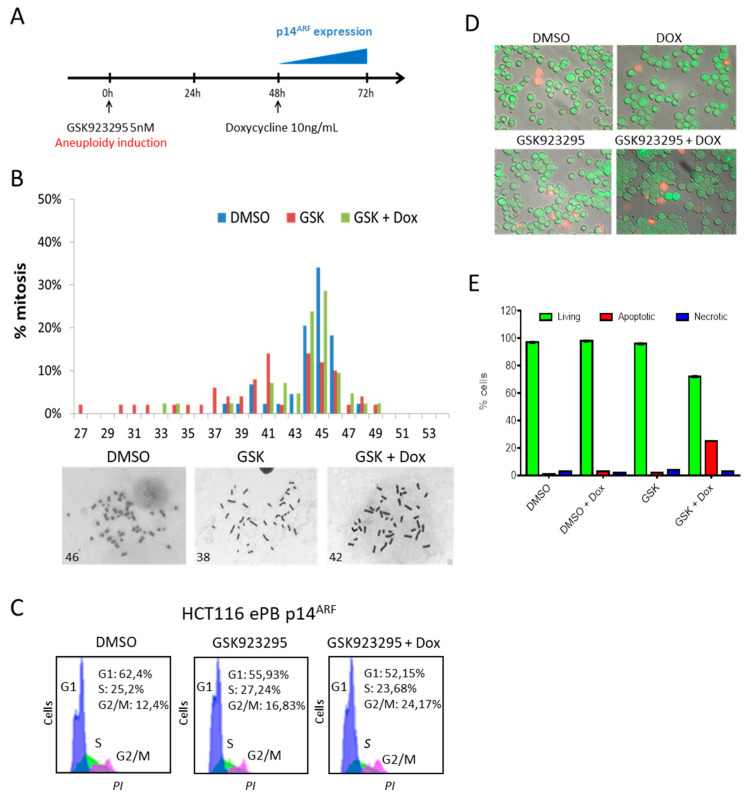
P14 is a tumor suppressor encoded by the CDKN2a locus that is frequently inactivated in human tumors. P14 protein quenches oncogene stimuli by inhibiting cell cycle progression and inducing apoptosis. P14 functions can be played through interactions with several proteins. However, the majority of its activities are notoriously mediated by the p53 protein. Interestingly, recent studies suggest a new role of p14 in the maintenance of chromosome stability. Here, we deepened this new facet of p14 which we believe is relevant to its tumor suppressive role in the cell. To this aim, we generated a monoclonal HCT116 cell line expressing the p14 cDNA cloned in the piggyback vector and then induced aneuploidy by treating HCT116 cells with the CENP-E inhibitor GSK923295. P14 ectopic re-expression restored the near-diploid phenotype of HCT116 cells, confirming that p14 counteracts aneuploid cell generation/proliferation.
P14 是一个肿瘤抑制因子,由 CDKN2a 基因座编码,在人类肿瘤中经常失活。P14 蛋白通过抑制细胞周期进程和诱导细胞凋亡来抑制致癌基因的刺激。P14 可以通过与几种蛋白质相互作用来发挥作用。然而,其大部分活性是由 p53 蛋白介导的。有趣的是,最近的研究表明 p14 在维持染色体稳定性方面有一个新的作用。在这里,我们深入研究了 p14 的这一新方面,我们认为这与其在细胞中的肿瘤抑制作用有关。为此,我们生成了一个表达克隆在 piggyback 载体中的 p14 cDNA 的单克隆 HCT116 细胞系,然后用 CENP-E 抑制剂 GSK923295 处理 HCT116 细胞诱导非整倍体。P14 的异位重新表达恢复了 HCT116 细胞的近二倍体表型,证实 p14 对抗非整倍体细胞的产生/增殖。