Faculty of Biology and Environmental Protection, Department of Molecular Genetics, University of Lodz, Pomorska 141/143, 90-236, Lodz, Poland.
Sci Rep. 2020 Jul 22;10(1):12200. doi: 10.1038/s41598-020-68948-6.
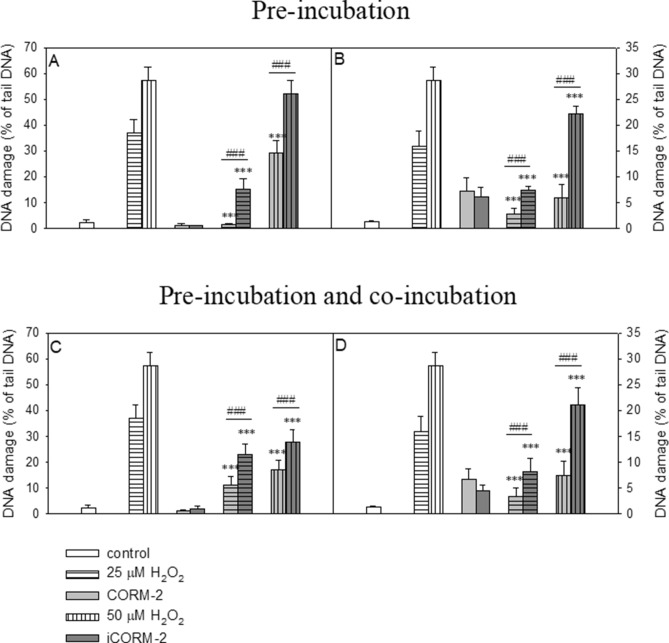
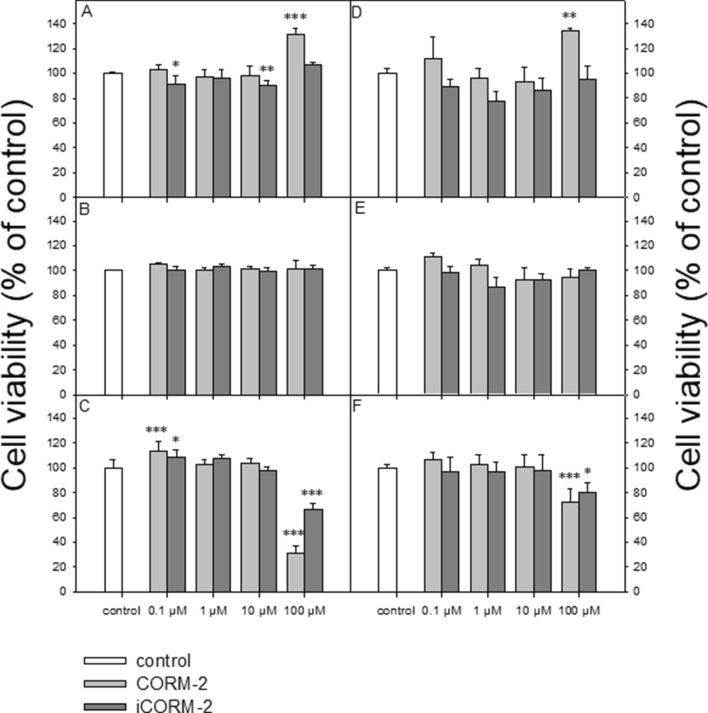
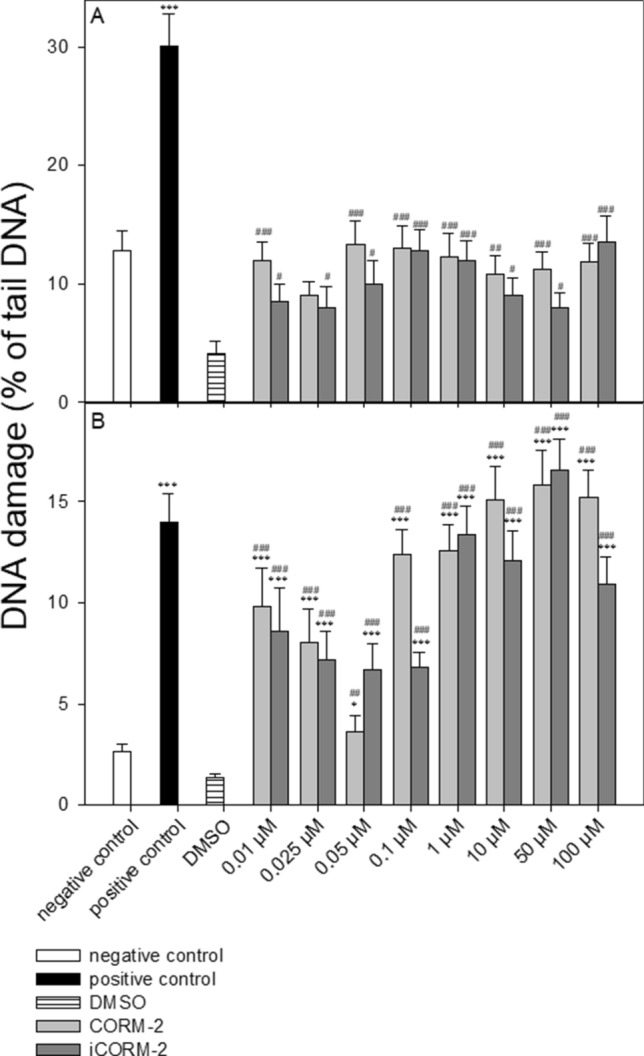
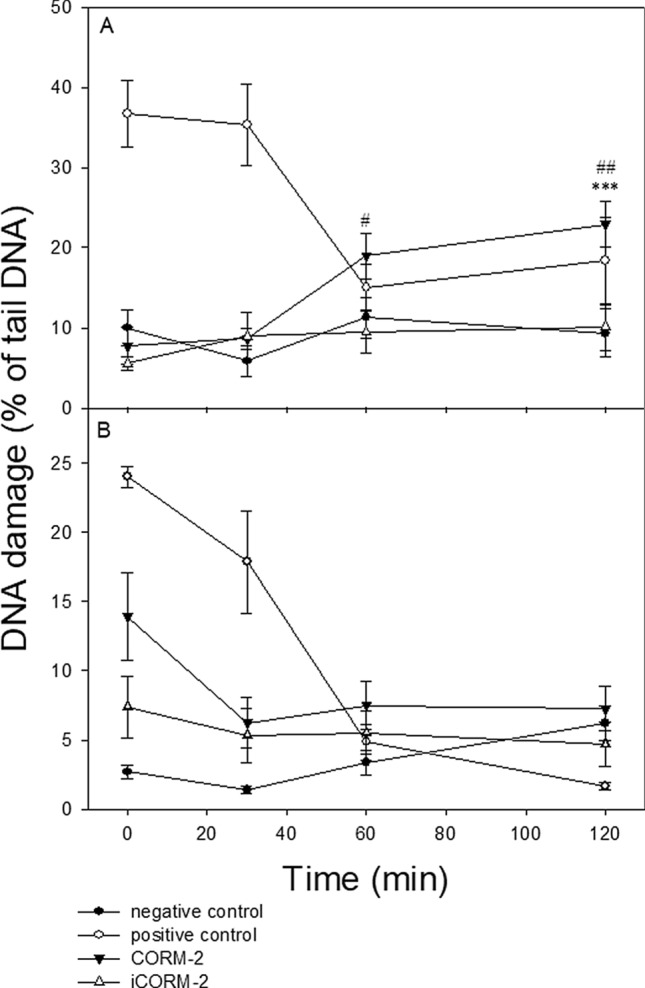
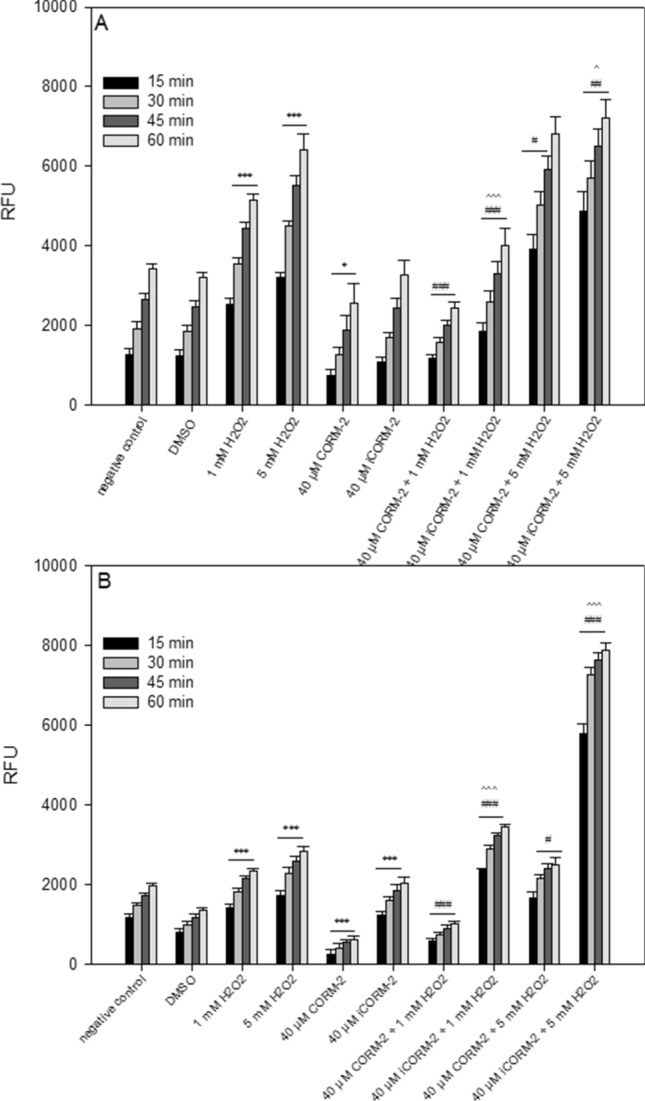
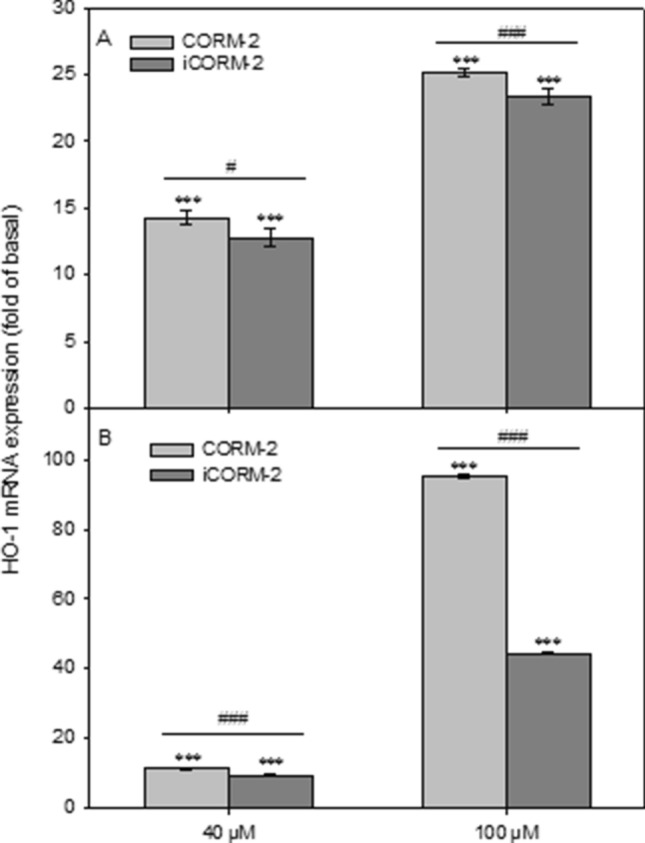
In this study, we compared the effect of tricarbonyldichlororuthenium (II) dimer (CORM-2) and its CO-depleted molecule (iCORM-2) on human peripheral blood mononuclear cells (PBMCs) and human promyelocytic leukemia HL-60 cells. We determined cell viability, DNA damage and DNA repair kinetics. We also studied the effect of both compounds on DNA oxidative damage, free radical level and HO-1 gene expression. We showed that at low concentrations both CORM-2 and iCORM-2 stimulate PBMCs viability. After 24-h incubation, CORM-2 and iCORM-2, at the concentration of 100 µM, reduce the viability of both PBMCs and HL-60 cells. We also demonstrated that CORM-2 and iCORM-2, in the 0.01-100 µM concentration range, cause DNA damage such as strand breaks and alkaline labile sites. DNA damage was repaired efficiently only in HL-60 cells. CORM-2 significantly reduces oxidative stress induced by 1 mM HO in normal and cancer cells. On the contrary, iCORM-2 in HL-60 cells increases the level of free radicals in the presence of 1 and 5 mM HO. We also revealed that both CORM-2 and iCORM-2 induce HO-1 gene expression. However, CORM-2 induces this gene to a greater extent than iCORM-2, especially in HL-60 cells at 100 µM. Finally, we showed that CORM-2 and iCORM-2 reduce HO-induced DNA oxidative damage. Furthermore, CORM-2 proved to be a compound with stronger antioxidant properties than iCORM-2. Our results suggest that both active CORM-2 and inactive iCORM-2 exert biological effects such as cyto- and genotoxicity, antioxidant properties and the ability to induce the HO-1 gene. The released CO as well as iCORM-2 can be responsible for these effects.
在这项研究中,我们比较了三羰基二氯钌(II)二聚体(CORM-2)及其 CO 耗尽分子(iCORM-2)对人外周血单核细胞(PBMC)和人早幼粒细胞白血病 HL-60 细胞的影响。我们测定了细胞活力、DNA 损伤和 DNA 修复动力学。我们还研究了这两种化合物对 DNA 氧化损伤、自由基水平和 HO-1 基因表达的影响。我们表明,在低浓度下,CORM-2 和 iCORM-2 均能刺激 PBMC 活力。孵育 24 小时后,CORM-2 和 iCORM-2 在 100μM 浓度下降低 PBMC 和 HL-60 细胞的活力。我们还证明,CORM-2 和 iCORM-2 在 0.01-100μM 浓度范围内引起 DNA 损伤,如链断裂和碱性不稳定部位。只有在 HL-60 细胞中,DNA 损伤才能得到有效修复。CORM-2 可显著降低正常和癌细胞中 1mM HO 诱导的氧化应激。相反,在存在 1 和 5mM HO 的情况下,iCORM-2 在 HL-60 细胞中增加自由基水平。我们还揭示,CORM-2 和 iCORM-2 均可诱导 HO-1 基因表达。然而,CORM-2 诱导该基因的程度大于 iCORM-2,尤其是在 100μM 的 HL-60 细胞中。最后,我们表明 CORM-2 和 iCORM-2 可降低 HO 诱导的 DNA 氧化损伤。此外,CORM-2 被证明是一种比 iCORM-2 具有更强抗氧化特性的化合物。我们的结果表明,活性 CORM-2 和非活性 iCORM-2 均具有细胞毒性和遗传毒性、抗氧化特性和诱导 HO-1 基因的能力等生物学效应。释放的 CO 和 iCORM-2 可能是这些效应的原因。