Clinical Research Center, Marshfield Clinic Research Institute, Marshfield, Wisconsin, USA.
Prevention Genetics, Marshfield, Wisconsin, USA.
Pediatr Obes. 2021 Feb;16(2):e12703. doi: 10.1111/ijpo.12703. Epub 2020 Jul 22.
Bardet-Biedl syndrome (BBS) is a rare genetic disorder that severely inhibits primary cilia function. BBS is typified by obesity in adulthood, but pediatric weight patterns, and thus optimal periods of intervention, are poorly understood.
To examine body mass differences by age, gender, and genotype in children and adolescents with BBS.
We utilized the largest international registry of BBS phenotypes. Anthropometric and genetic data were obtained from medical records or participant/family interviews. Participants were stratified by age and sex categories. Genotype and obesity phenotype were investigated in a subset of participants with available data.
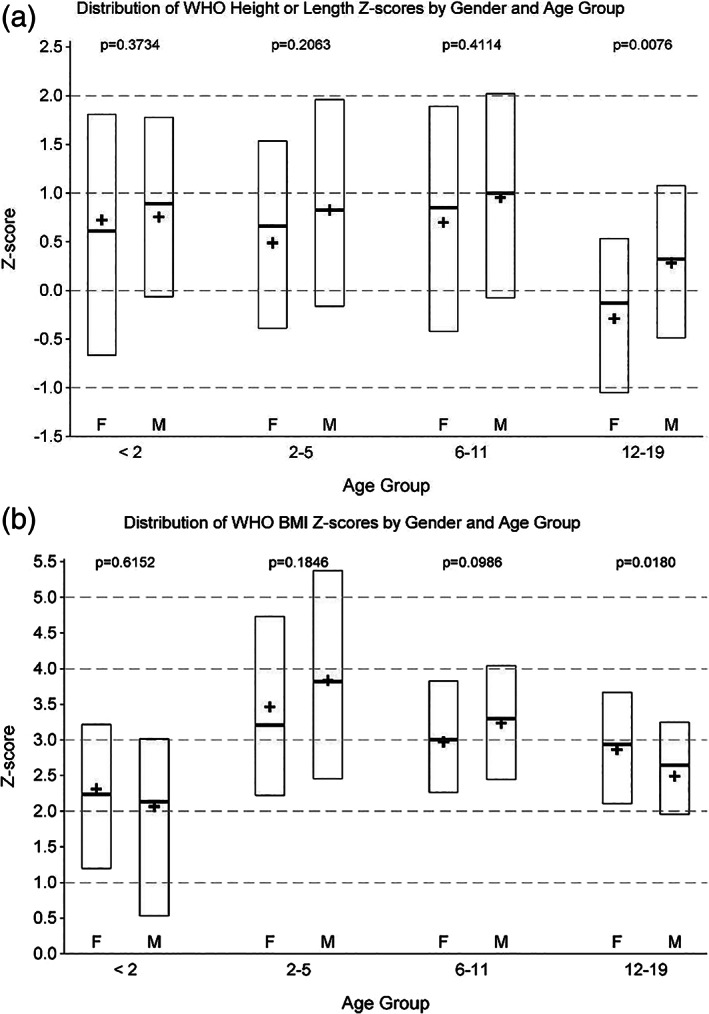
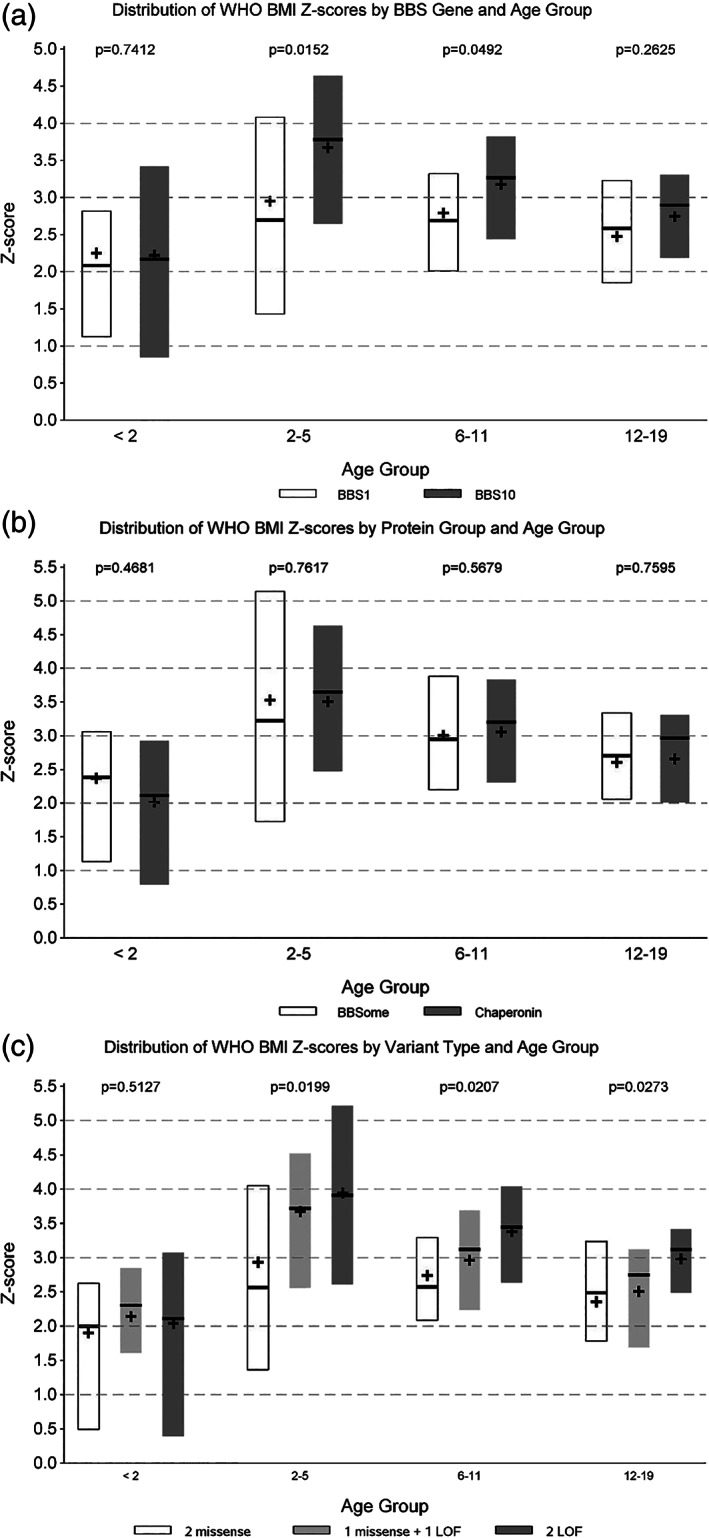
Height and weight measurements were available for 552 unique individuals with BBS. The majority of birth weights were in the normal range, but rates of overweight or obesity rapidly increased in early childhood, exceeding 90% after age 5. Weight z-scores in groups >2 years were above 2.0, while height z-scores approached 1.0, but were close to 0.0 in adolescents. Relative to those with the BBS10 genotype, the BBS1 cohort had a lower BMI z-score in the 2-5 and 6-11 age groups, with similar BMI z-scores thereafter. Children with biallelic loss of function (LOF) genetic variants had significantly higher BMI z-scores compared to missense variants.
Despite normal birth weight, most individuals with BBS experience rapid weight gain in early childhood, with high rates of overweight/obesity sustained through adolescence. Children with LOF variants are disproportionally affected. Our findings support the need for earlier recognition and initiation of weight management therapies in BBS.
Bardet-Biedl 综合征(BBS)是一种罕见的遗传疾病,严重抑制了初级纤毛的功能。BBS 的典型特征是成年后肥胖,但儿科体重模式和最佳干预时期知之甚少。
研究 BBS 患儿的年龄、性别和基因型对体重的影响。
我们利用了最大的 BBS 表型国际注册中心。从病历或参与者/家属访谈中获取了人体测量学和遗传学数据。根据年龄和性别分类对参与者进行分层。对有可用数据的部分参与者进行基因型和肥胖表型的研究。
552 名独特的 BBS 个体的身高和体重测量值可用。大多数出生体重在正常范围内,但超重或肥胖的发生率在幼儿期迅速增加,超过 5 岁后超过 90%。年龄大于 2 岁的组的体重 z 分数超过 2.0,而身高 z 分数接近 1.0,但在青少年接近 0.0。与 BBS10 基因型相比,BBS1 队列在 2-5 岁和 6-11 岁年龄组的 BMI z 分数较低,此后 BMI z 分数相似。具有双等位基因功能丧失(LOF)遗传变异的儿童的 BMI z 分数明显高于错义变异。
尽管出生体重正常,但大多数 BBS 患者在幼儿期体重迅速增加,超重/肥胖的发生率持续到青春期。具有 LOF 变异的儿童受影响不成比例。我们的研究结果支持 BBS 中更早识别和开始体重管理治疗的必要性。