Central Modulation of Pain Group, Wolfson Centre for Age-Related Diseases, King's College London, London, United Kingdom.
Neurorestoration Group, Wolfson Centre for Age-Related Diseases, King's College London, London, United Kingdom.
Pain. 2020 Aug;161(8):1894-1905. doi: 10.1097/j.pain.0000000000001880. Epub 2020 Apr 13.
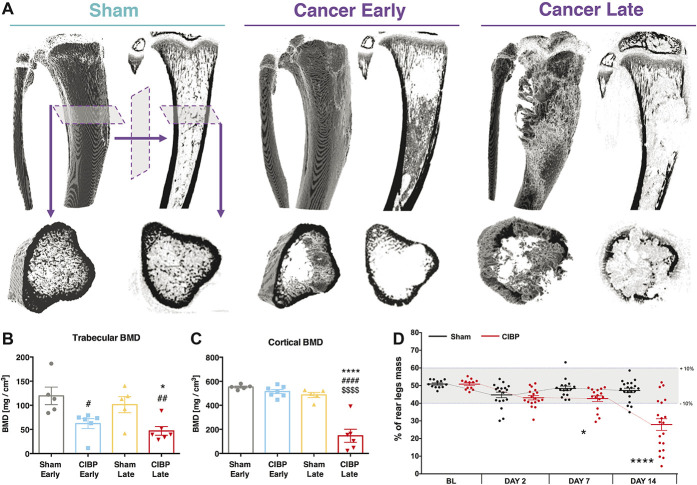
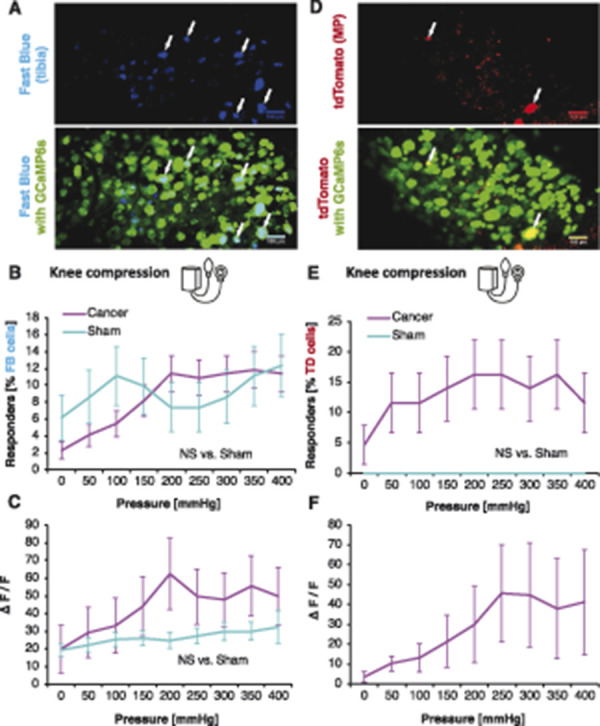
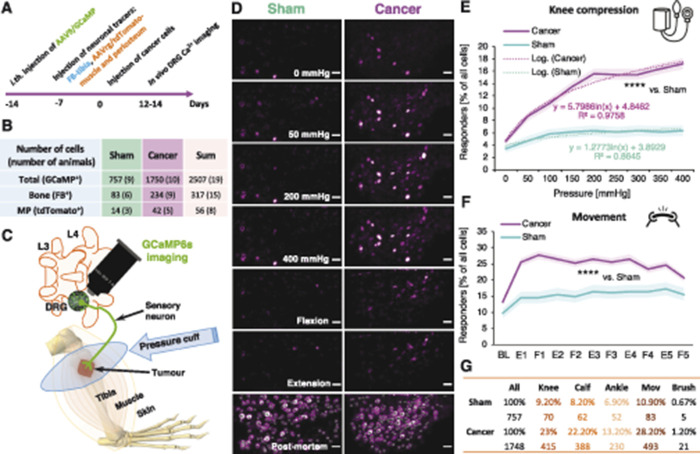
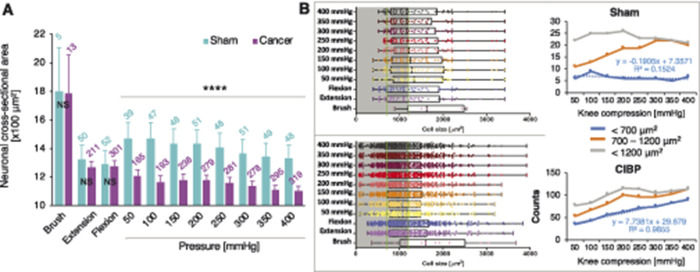
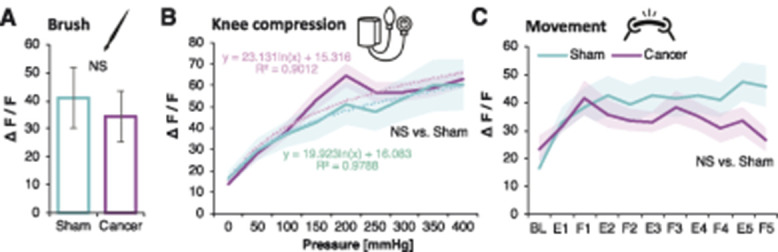
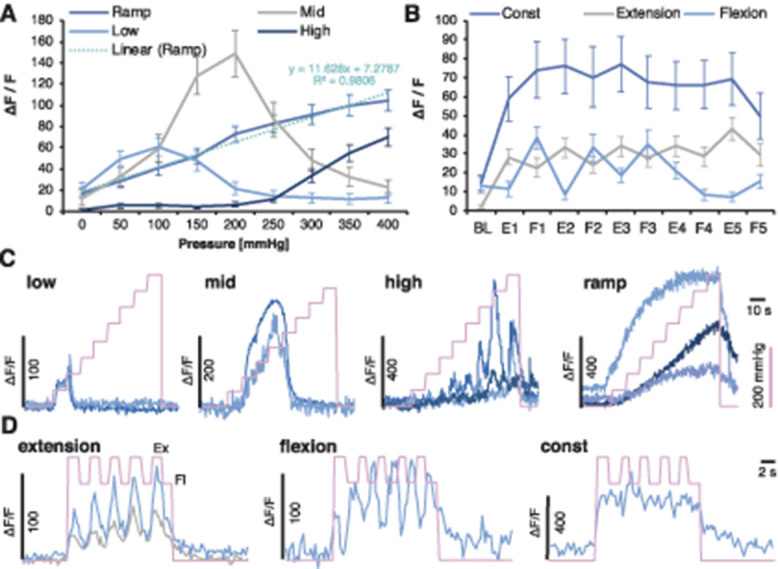
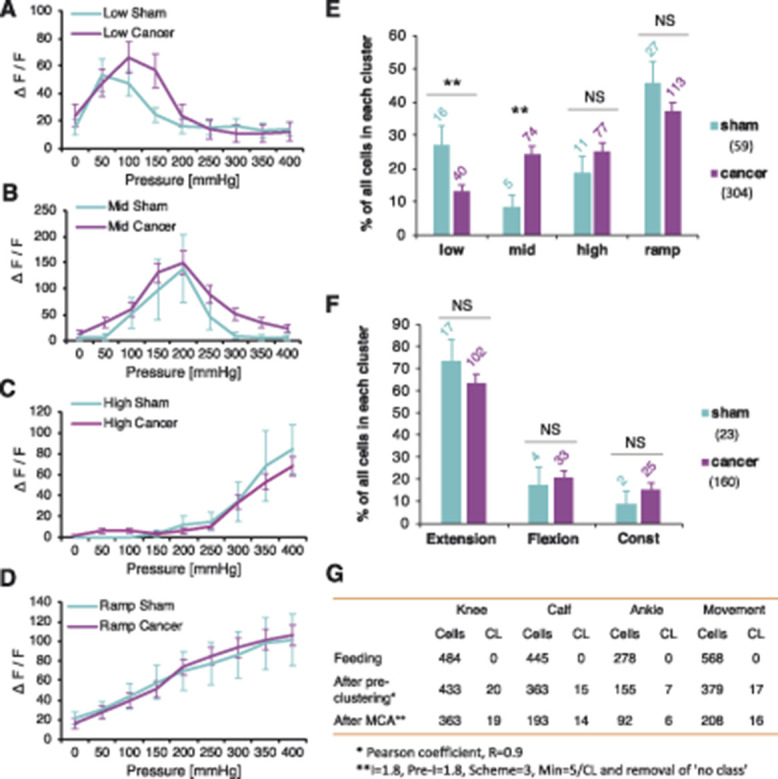
Skeletal metastases are frequently accompanied by chronic pain that is mechanoceptive in nature. Mechanistically, cancer-induced bone pain (CIBP) is mediated by peripheral sensory neurons innervating the cancerous site, the cell bodies of which are housed in the dorsal root ganglia (DRG). How these somatosensory neurons encode sensory information in CIBP remains only partly explained. Using a validated rat model, we first confirmed cortical bone destruction in CIBP but not sham-operated rats (day 14 after surgery, designated "late"-stage bone cancer). This occurred with behavioural mechanical hypersensitivity (Kruskal-Wallis H for independent samples; CIBP vs sham-operated, day 14; P < 0.0001). Next, hypothesising that the proportion and phenotype of primary afferents would be altered in the disease state, dorsal root ganglia in vivo imaging of genetically encoded calcium indicators and Markov Cluster Analysis were used to analyse 1748 late-stage CIBP (n = 10) and 757 sham-operated (n = 9), neurons. Distinct clusters of responses to peripheral stimuli were revealed. In CIBP rats, upon knee compression of the leg ipsilateral to the tumour, (1) 3 times as many sensory afferents responded (repeated-measures analysis of variance: P < 0.0001 [vs sham]); (2) there were significantly more small neurons responding (Kruskal-Wallis for independent samples (vs sham): P < 0.0001); and (3) approximately 13% of traced tibial cavity afferents responded (no difference observed between CIBP and sham-operated animals). We conclude that an increased sensory afferent response is present in CIBP rats, and this is likely to reflect afferent recruitment from outside of the bone rather than increased intraosseous afferent activity.
骨骼转移常伴有机械感受性慢性疼痛。从机制上讲,癌症诱导的骨痛(CIBP)是由支配癌变部位的周围感觉神经元介导的,这些神经元的细胞体位于背根神经节(DRG)中。这些感觉神经元如何在 CIBP 中编码感觉信息仍未完全解释。我们使用经过验证的大鼠模型,首先证实了 CIBP 但不是假手术大鼠(手术后第 14 天,称为“晚期”骨癌)的皮质骨破坏。这伴随着行为性机械性超敏反应(Kruskal-Wallis H 用于独立样本;CIBP 与假手术,第 14 天;P < 0.0001)。接下来,我们假设在疾病状态下,初级传入的比例和表型会发生改变,因此使用活体成像的基因编码钙指示剂和马尔可夫聚类分析来分析 1748 例晚期 CIBP(n = 10)和 757 例假手术(n = 9)大鼠的背根神经节神经元。揭示了对周围刺激的反应有明显不同的聚类。在 CIBP 大鼠中,当对肿瘤同侧腿部的膝盖施加压力时,(1)有 3 倍的感觉传入神经元做出反应(重复测量方差分析:P < 0.0001[与假手术相比]);(2)有更多的小神经元做出反应(Kruskal-Wallis 用于独立样本(与假手术相比):P < 0.0001);(3)大约 13%的胫骨腔传入纤维做出反应(CIBP 和假手术动物之间没有观察到差异)。我们得出结论,CIBP 大鼠中存在增加的感觉传入反应,这可能反映了来自骨外的传入纤维的募集,而不是骨内传入纤维活性的增加。