Department of Surgery, University Medical Center Groningen, University of Groningen, Groningen, The Netherlands.
Department of Critical Care, University Medical Center Groningen, University of Groningen, Groningen, The Netherlands.
Clin Transl Sci. 2021 Jan;14(1):222-230. doi: 10.1111/cts.12846. Epub 2020 Jul 31.
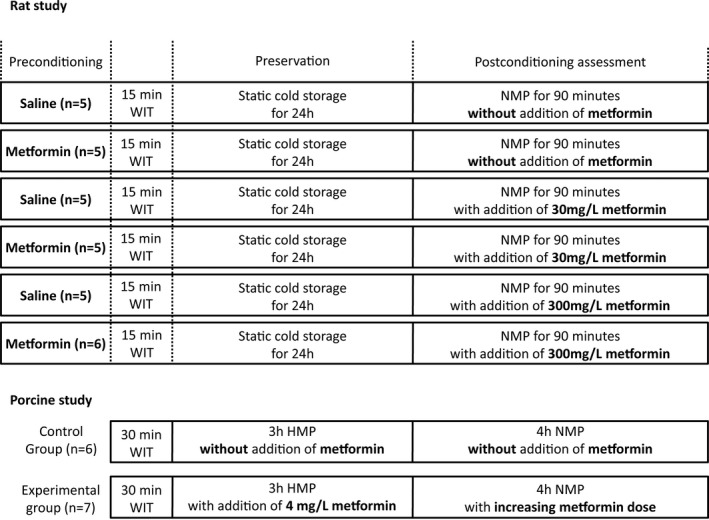
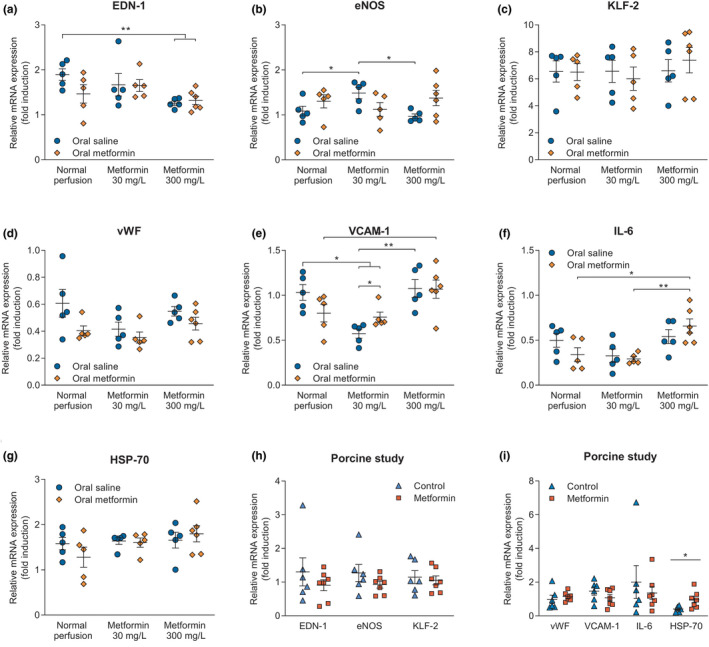
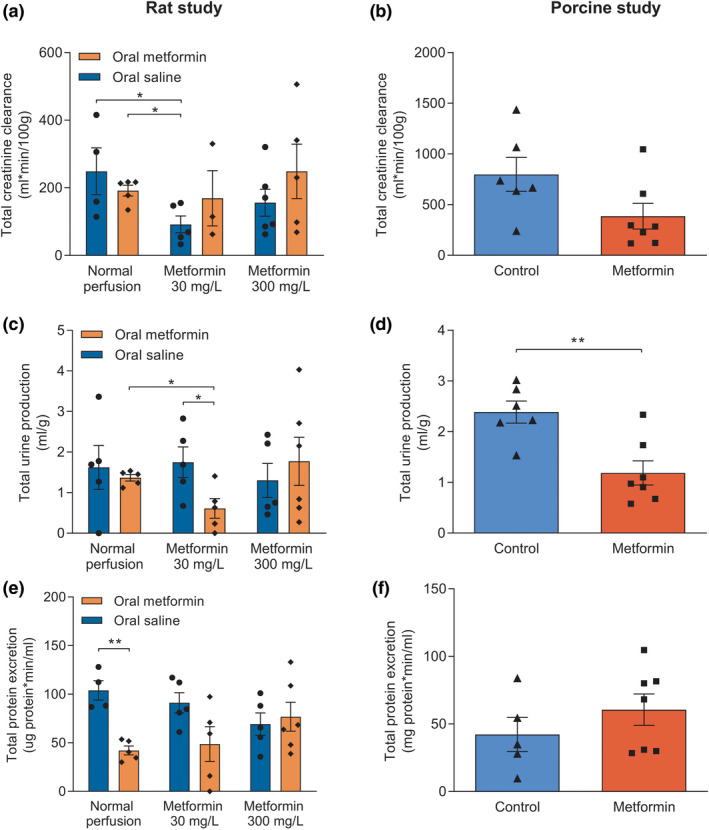
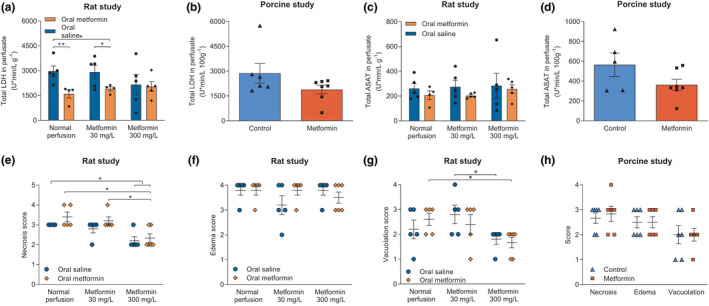
Metformin may act renoprotective prior to kidney transplantation by reducing ischemia-reperfusion injury (IRI). This study examined whether metformin preconditioning and postconditioning during ex vivo normothermic machine perfusion (NMP) of rat and porcine kidneys affect IRI. In the rat study, saline or 300 mg/kg metformin was administered orally twice on the day before nephrectomy. After 15 minutes of warm ischemia, kidneys were preserved with static cold storage for 24 hours. Thereafter, 90 minutes of NMP was performed with the addition of saline or metformin (30 or 300 mg/L). In the porcine study, after 30 minutes of warm ischemia, kidneys were preserved for 3 hours with oxygenated hypothermic machine perfusion. Subsequently, increasing doses of metformin were added during 4 hours of NMP. Metformin preconditioning of rat kidneys led to decreased injury perfusate biomarkers and reduced proteinuria. Postconditioning of rat kidneys resulted, dose-dependently, in less tubular cell necrosis and vacuolation. Heat shock protein 70 expression was increased in metformin-treated porcine kidneys. In all studies, creatinine clearance was not affected. In conclusion, both metformin preconditioning and postconditioning can be done safely and improved rat and porcine kidney quality. Because the effects are minor, it is unknown which strategy might result in improved organ quality after transplantation.
二甲双胍在肾移植前可能通过减少缺血再灌注损伤(IRI)发挥肾保护作用。本研究探讨了大鼠和猪肾脏在体外常温机器灌注(NMP)过程中,二甲双胍预处理和后处理是否会影响 IRI。在大鼠研究中,术前一天口服生理盐水或 300mg/kg 二甲双胍两次。在 15 分钟的热缺血后,用静态冷保存法保存肾脏 24 小时。此后,加入生理盐水或二甲双胍(30 或 300mg/L)进行 90 分钟的 NMP。在猪研究中,在 30 分钟的热缺血后,用含氧低温机器灌注保存肾脏 3 小时。随后,在 4 小时的 NMP 期间添加递增剂量的二甲双胍。大鼠肾脏的二甲双胍预处理导致损伤灌流生物标志物减少和蛋白尿减少。大鼠肾脏的后处理导致肾小管细胞坏死和空泡形成剂量依赖性减少。热休克蛋白 70 在接受二甲双胍治疗的猪肾脏中的表达增加。在所有研究中,肌酐清除率均不受影响。总之,二甲双胍预处理和后处理均可安全进行,可改善大鼠和猪肾脏的质量。由于效果较小,尚不清楚哪种策略可能会导致移植后器官质量的改善。