Department of Neurology, Faculty of Medicine, University Hospital Hradec Králové, Charles University, Sokolská 581, Prague, Hradec Králové, 500 05, Czech Republic.
Department of Clinical Immunology and Allergology, University Hospital Hradec Králové, Hradec Králové, Czech Republic.
Sci Rep. 2020 Jul 23;10(1):12277. doi: 10.1038/s41598-020-69285-4.
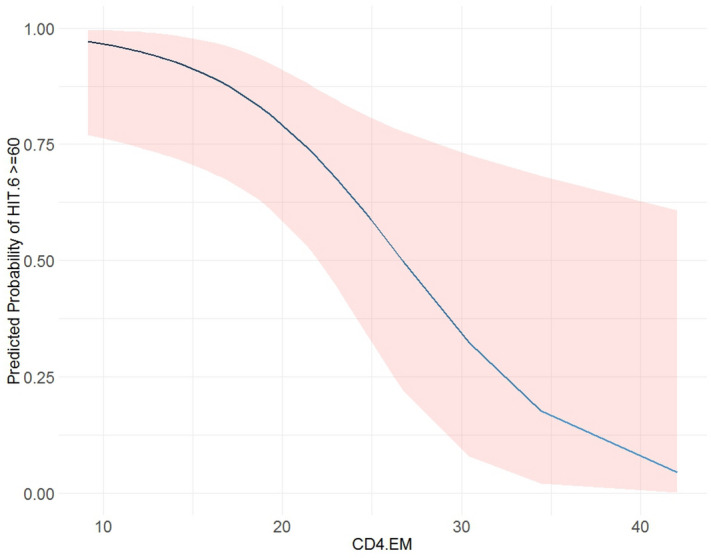
The role of the immune system as an integral component of the inflammatory response in the pathophysiology of migraine remains unclear. The aim of this study was to evaluate the differences in immune system parameters (acquired immunity parameters) in patients with episodic migraine (EM) and in healthy controls. In EM patients, we aimed to determine whether the changes found in peripheral blood parameters were related to migraine severity according to the standardised MIDAS and HIT-6 tests. Forty-nine patients with EM and 50 healthy controls were included in this study. The authors compared different lymphocyte parameters obtained by multicolor flow cytometry in the EM and control groups by performing statistical tests. The relationship between the changes in peripheral blood parameters and migraine severity in EM patients was investigated using correlation and regression analysis. EM patients showed higher values than healthy controls, especially in nine parameters: relative count of lymphocytes, relative and absolute counts of CD3 T cells, relative and absolute counts of CD8 suppressor cytotoxic T cells, relative and absolute counts of CD4 + T (terminally differentiated helper T lymphocytes), absolute count of CD8 naïve T cells, and absolute count of CD19 switched memory B cells. Among the lymphocyte parameters, CD4 + T (effector memory helper T lymphocytes) and CD8 + T (terminally differentiated cytotoxic T lymphocytes) were statistically significantly associated with HIT-6. Patients with a CD4 + T value below 15 had a high probability (90%) that the HIT-6 value would be higher than 60. The results of this study show that EM patients have changes in immune system parameters measured in the peripheral blood. Changes in the abundance of CD4 + T could be used as a biomarker for disease severity.
免疫系统作为炎症反应病理生理学中不可或缺的一部分,在偏头痛中的作用仍不清楚。本研究旨在评估发作性偏头痛 (EM) 患者与健康对照组之间免疫系统参数(获得性免疫参数)的差异。在 EM 患者中,我们旨在确定外周血参数的变化是否与根据标准 MIDAS 和 HIT-6 测试的偏头痛严重程度有关。本研究纳入了 49 名 EM 患者和 50 名健康对照者。作者通过进行统计检验比较了 EM 和对照组中通过多色流式细胞术获得的不同淋巴细胞参数。使用相关和回归分析研究了 EM 患者外周血参数变化与偏头痛严重程度之间的关系。EM 患者的数值高于健康对照组,尤其是在九个参数方面:淋巴细胞相对计数、CD3 T 细胞相对计数和绝对计数、CD8 抑制性细胞毒性 T 细胞相对计数和绝对计数、CD4+T(终末分化辅助性 T 淋巴细胞)相对计数和绝对计数、CD8 幼稚 T 细胞绝对计数和 CD19 转换记忆 B 细胞绝对计数。在淋巴细胞参数中,CD4+T(效应记忆辅助性 T 淋巴细胞)和 CD8+T(终末分化细胞毒性 T 淋巴细胞)与 HIT-6 呈统计学显著相关。CD4+T 值低于 15 的患者 HIT-6 值高于 60 的可能性很高(90%)。本研究结果表明,EM 患者外周血中存在免疫系统参数变化。CD4+T 丰度的变化可用作疾病严重程度的生物标志物。