Melchior Emily A, Smith Jason K, Schneider Liesel G, Mulliniks J Travis, Bates Gary E, Flythe Michael D, Klotz James L, Ji Huihua, Goodman Jack P, Lee Amanda R, Caldwell J Marc, Myer Phillip R
Department of Animal Science, University of Tennessee, Knoxville, TN.
Department of Plant Sciences, University of Tennessee, Knoxville, TN.
Transl Anim Sci. 2018 Dec 29;3(1):315-328. doi: 10.1093/tas/txy147. eCollection 2019 Jan.
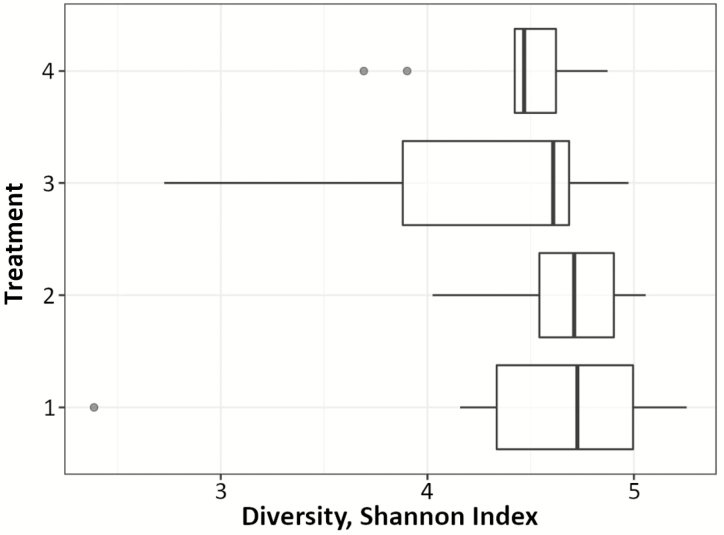
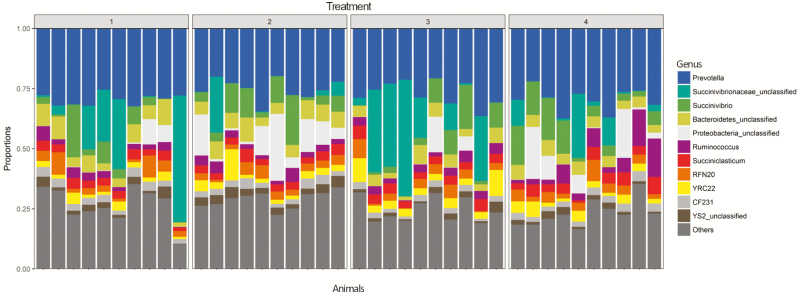
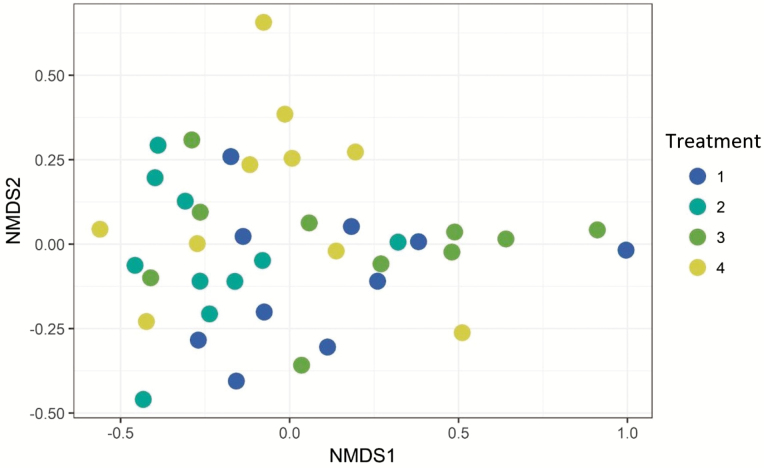
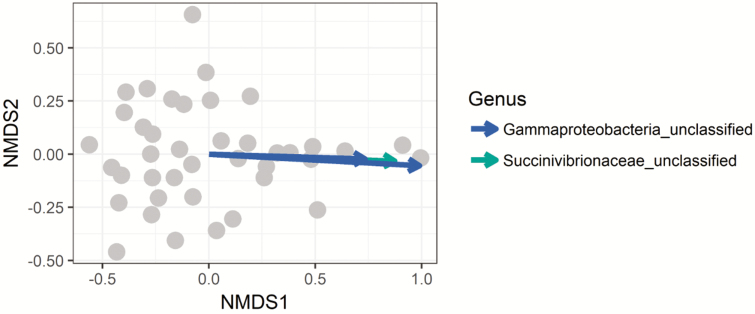
[() tall fescue] toxicosis is responsible for substantial beef production losses in the United States, due to its negative effects on reproduction, growth, and feed efficiency. These effects are consequences of toxic alkaloids within tall fescue. Interseeding legumes, such as (red clover), into pastures has been shown to mitigate a portion of these effects. Clovers contain isoflavones, which may play a role in tall fescue toxicosis mitigation. The present study utilized 36 Angus steers to determine the effects of daily supplementation with a red clover-isolated isoflavone feed additive on physiological symptoms of tall fescue toxicosis and the rumen microbial environment over a 21-d period. Angus steers were initially stratified based upon their single nucleotide polymorphism genotype at the DRD2 receptor. Treatments were then randomly assigned in a 2 × 2 factorial arrangement within a completely randomized design, where treatment factors consisted of tall fescue seed type (endophyte-infected tall fescue seed vs. endophyte-free tall fescue seed) supplemented with and without the isoflavone additive. Steers that consumed endophyte-infected tall fescue seed had lower serum prolactin concentrations ( = 0.0007), average daily gain (ADG; = 0.003), final body weight (BW; = 0.004), and feed efficiency ( = 0.018) when compared with steers that consumed endophyte-free tall fescue seed. Serum insulin-like growth factor-1 (IGF-1) tended to be reduced with supplementation of isoflavones ( = 0.06) but was unaffected by seed type ( ≥ 0.10) and seed by treatment interaction ( ≥ 0.10). Isoflavones reduced serum glucose levels ( = 0.023), but neither seed type, isoflavones, or their interaction affected serum urea nitrogen (SUN), nonesterified fatty acids (NEFA), or insulin ( ≥ 0.10). Volatile fatty acid concentrations, dry matter intake (DMI), ruminal pH, and overall feeding behaviors were also unaffected by seed type or isoflavone treatments ( ≥ 0.10). Twenty-eight ruminal bacteria taxa shifted as a result of seed type or isoflavone treatment ( < 0.05). In this experiment, feeding isoflavones to Angus cattle did not completely mitigate all symptoms of fescue toxicosis. However, dose-response trials may aid future research to determine if dietary supplementation with isoflavones alleviates fescue toxicosis symptoms and promotes livestock growth and performance.
[(高羊茅)中毒症在美国造成了大量牛肉生产损失,因为它对繁殖、生长和饲料效率有负面影响。这些影响是高羊茅中有毒生物碱的结果。在牧场间种豆科植物,如(红三叶草),已被证明可以减轻这些影响的一部分。三叶草含有异黄酮,可能在减轻高羊茅中毒症方面发挥作用。本研究利用36头安格斯阉牛,在21天的时间里,确定每日补充红三叶草分离的异黄酮饲料添加剂对高羊茅中毒症生理症状和瘤胃微生物环境的影响。安格斯阉牛最初根据它们在DRD2受体处的单核苷酸多态性基因型进行分层。然后在完全随机设计中,以2×2析因排列随机分配处理,其中处理因素包括高羊茅种子类型(内生真菌感染高羊茅种子与无内生真菌高羊茅种子),分别添加和不添加异黄酮添加剂。与食用无内生真菌高羊茅种子的阉牛相比,食用内生真菌感染高羊茅种子的阉牛血清催乳素浓度较低(P = 0.0007)、平均日增重(ADG;P = 0.003)、最终体重(BW;P = 0.004)和饲料效率(P = 0.018)。补充异黄酮后,血清胰岛素样生长因子-1(IGF-1)有降低趋势(P = 0.06),但不受种子类型(P≥0.10)和种子与处理交互作用(P≥0.10)的影响。异黄酮降低了血清葡萄糖水平(P = 0.023),但种子类型、异黄酮及其交互作用均未影响血清尿素氮(SUN)、非酯化脂肪酸(NEFA)或胰岛素(P≥0.10)。挥发性脂肪酸浓度、干物质采食量(DMI)、瘤胃pH值和总体采食行为也不受种子类型或异黄酮处理的影响(P≥0.10)。由于种子类型或异黄酮处理,28种瘤胃细菌分类群发生了变化(P < 0.05)。在本实验中,给安格斯牛饲喂异黄酮并不能完全减轻高羊茅中毒症的所有症状。然而,剂量反应试验可能有助于未来研究确定日粮补充异黄酮是否能减轻高羊茅中毒症症状并促进家畜生长和性能。