Křížová Ludmila, Křešťáková Veronika, Dadáková Kateřina, Kašparovský Tomáš
Department of Animal Breeding, Animal Nutrition and Biochemistry, Faculty of Veterinary Hygiene and Ecology, University of Veterinary and Pharmaceutical Sciences, 61242 Brno, Czech Republic.
Department of Biochemistry, Faculty of Science, Masaryk University, 61137 Brno, Czech Republic.
Animals (Basel). 2021 Mar 8;11(3):735. doi: 10.3390/ani11030735.
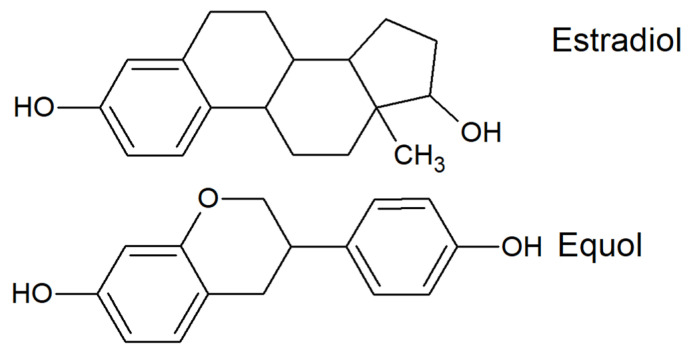
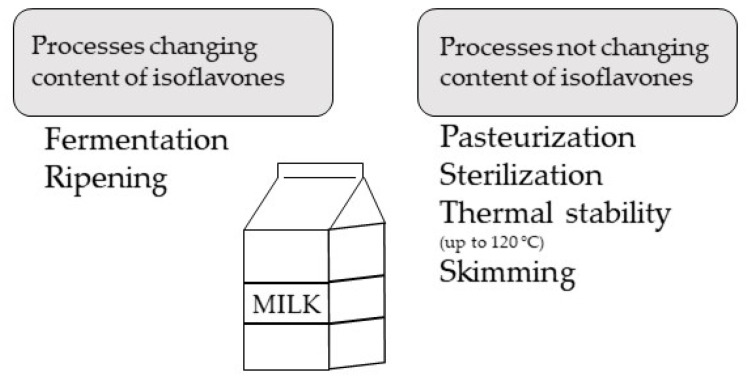
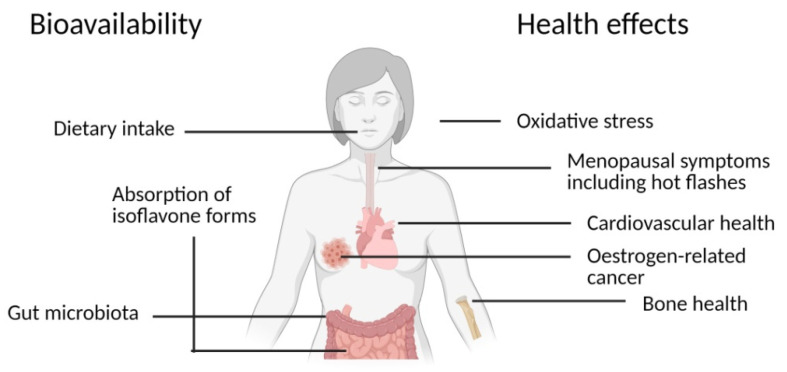
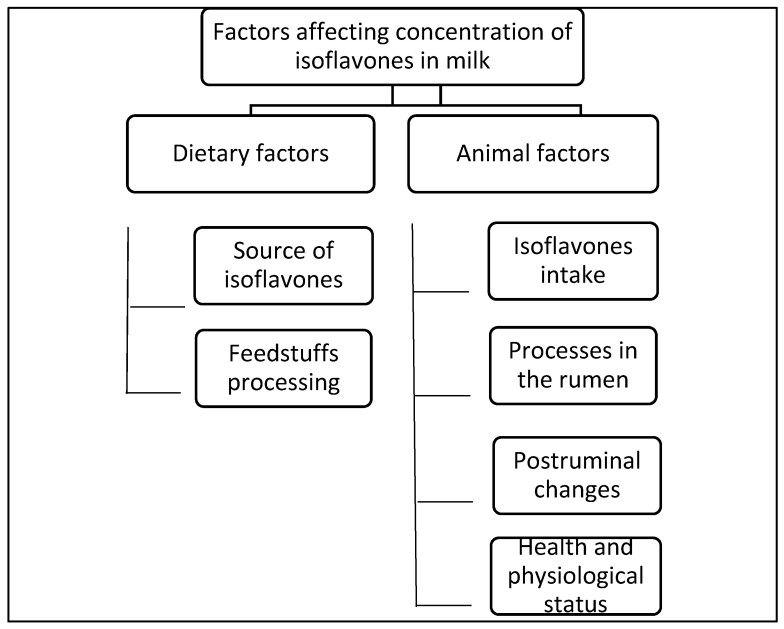
Milk and dairy products are important sources of nutrients in the human diet because they contain a number of essential substances and other biologically active components. Many of these substances can be modified, and thus offer opportunities to use milk and dairy products as functional food. Isoflavones are particularly important in human nutrition due to their diverse pharmacological and antioxidant properties. The clinical effectiveness of isoflavone-rich products is believed to be dependent on their ability to metabolize daidzein to equol, which may directly exert cancer preventive effects. However, only approximately 30-40% of humans are able to produce equol, while animals, in general, produce equol. Equol is the predominant product of bacterial metabolism of isoflavones and can be found in various amounts in some food of animal origin, especially in milk. Therefore, milk and dairy products can be considered to be sources of equol for humans who are not able to produce this metabolite. When the content of isoflavones in milk is to be modified, two groups of factors should be considered, i.e., dietary factors that include the source of isoflavones and the processing effects on feedstuffs and animal factors that include the intake of isoflavones, ruminal and postruminal changes, and the health and physiological status of animals. The approximate content of isoflavones in milk can be predicted using carry-over rates for different dietary sources or using a formula that describes the relationship between equol concentration in milk and formononetin intake. Processing and storage can affect the content and profile of isoflavones in milk and dairy products.
牛奶和奶制品是人类饮食中重要的营养来源,因为它们含有许多必需物质和其他生物活性成分。这些物质中的许多都可以被改变,从而为将牛奶和奶制品用作功能性食品提供了机会。异黄酮因其多样的药理和抗氧化特性,在人类营养中尤为重要。富含异黄酮的产品的临床效果被认为取决于它们将大豆苷元代谢为雌马酚的能力,而雌马酚可能直接发挥防癌作用。然而,只有大约30%-40%的人能够产生雌马酚,而一般来说动物能够产生雌马酚。雌马酚是异黄酮细菌代谢的主要产物,在一些动物源性食物中,尤其是牛奶中,可以发现不同含量的雌马酚。因此,对于无法产生这种代谢物的人来说,牛奶和奶制品可以被视为雌马酚的来源。当要改变牛奶中的异黄酮含量时,应考虑两组因素,即饮食因素,包括异黄酮的来源和对饲料的加工影响,以及动物因素,包括异黄酮的摄入量、瘤胃和瘤胃后变化以及动物的健康和生理状态。牛奶中异黄酮的大致含量可以使用不同饮食来源的残留率或使用描述牛奶中雌马酚浓度与芒柄花黄素摄入量之间关系的公式来预测。加工和储存会影响牛奶和奶制品中异黄酮的含量和分布。