Department of Positron Emission Tomography‑Computed Tomography (PET‑CT), First Affiliated Hospital of Guangxi Medical University, Nanning, Guangxi Zhuang Autonomous Region 530021, P.R. China.
Ultrasonics Division of Radiology Department, First Affiliated Hospital of Guangxi Medical University, Nanning, Guangxi Zhuang Autonomous Region 530021, P.R. China.
Mol Med Rep. 2020 Sep;22(3):2199-2218. doi: 10.3892/mmr.2020.11310. Epub 2020 Jul 8.
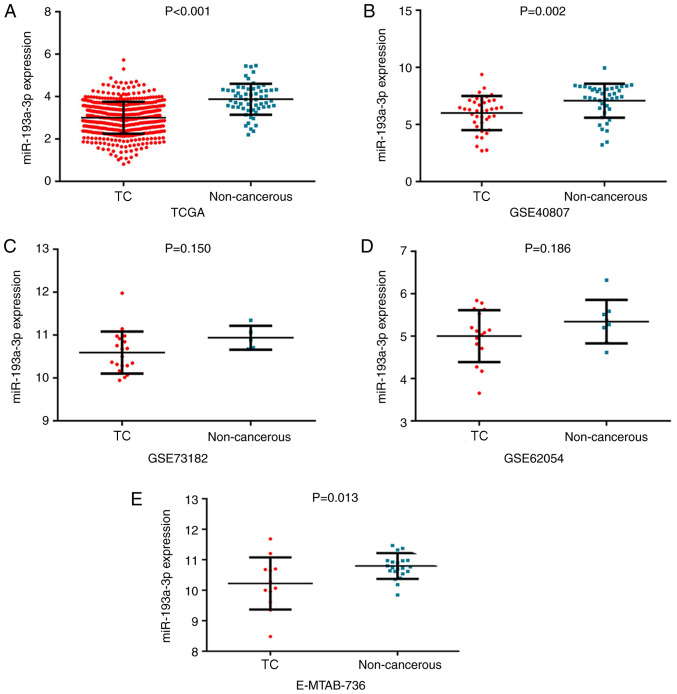
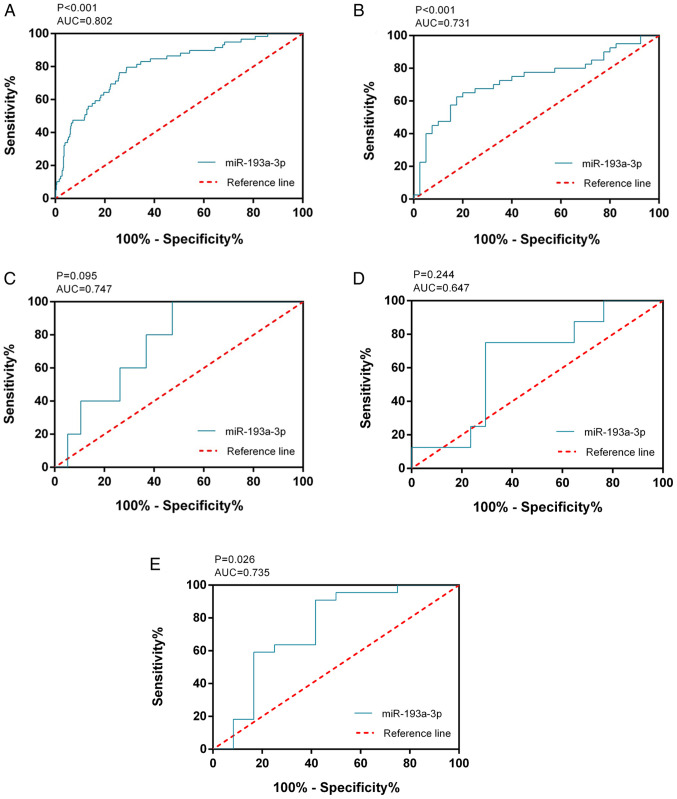
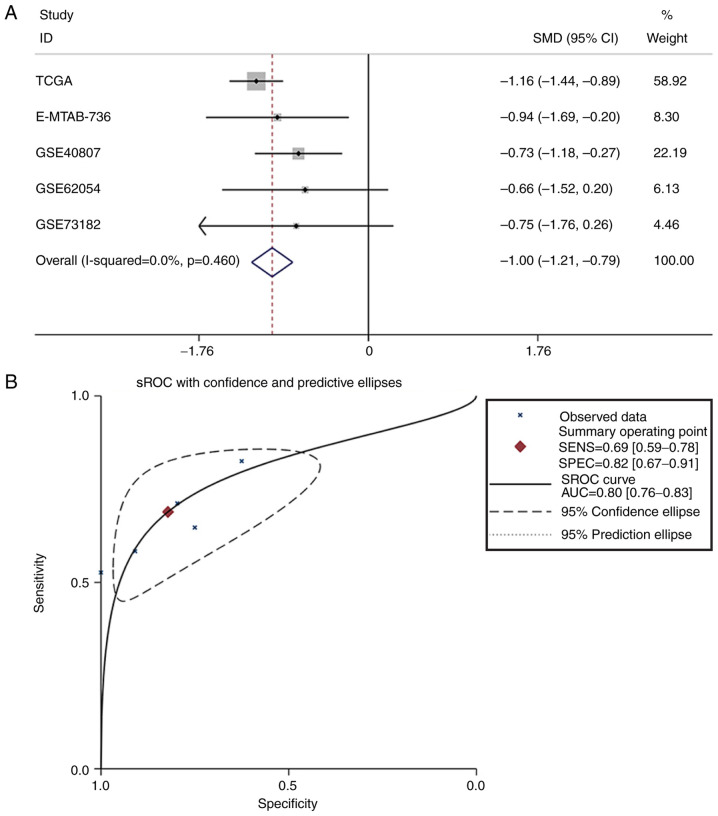
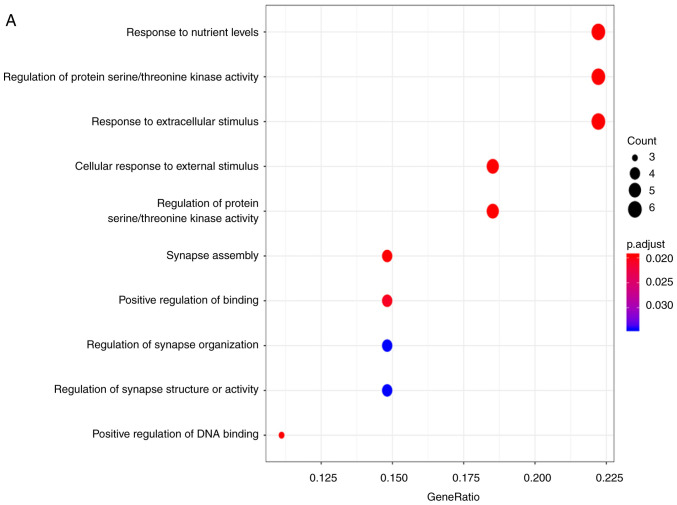
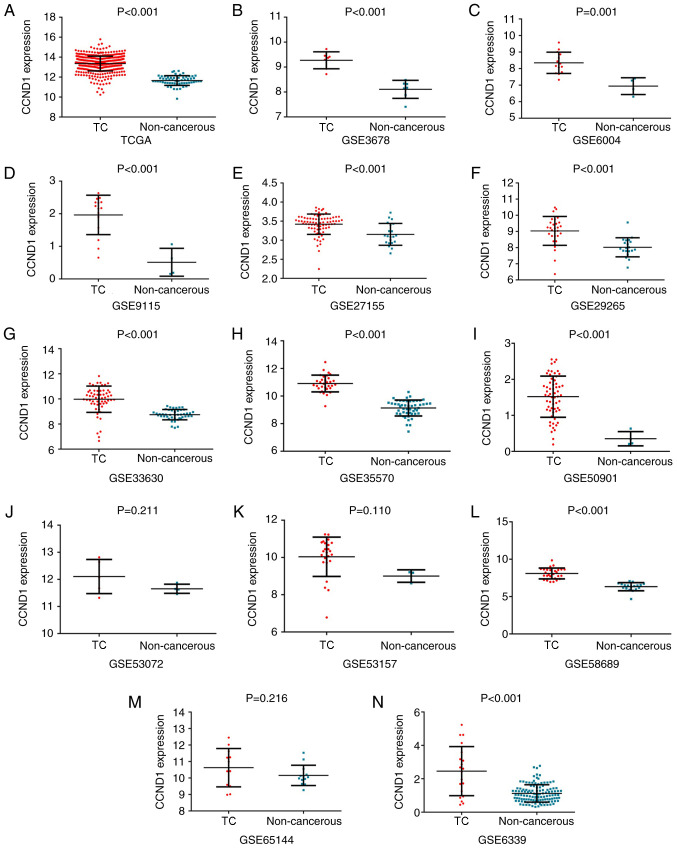
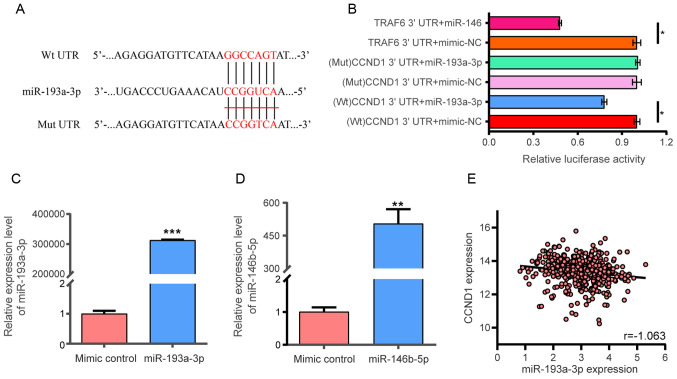
Thyroid cancer (TC) is a frequently occurring malignant tumor with a rising steadily incidence. microRNA (miRNA/miR)‑193a‑3p is an miRNA that is associated with tumors, playing a crucial role in the genesis and progression of various cancers. However, the expression levels of miR‑193a‑3p and its molecular mechanisms in TC remain to be elucidated. The present study aimed to probe the expression of miR‑193a‑3p and its clinical significance in TC, including its underlying molecular mechanisms. Microarray and RNA sequencing data gathered from three major databases, specifically Gene Expression Omnibus (GEO), ArrayExpress and The Cancer Genome Atlas (TCGA) databases, and the relevant data from the literature were used to examine miR‑193a‑3p expression. Meta‑analysis was also conducted to evaluate the association between clinicopathological parameters and miR‑193a‑3p in 510 TC and 59 normal samples from the TCGA database. miRWalk 3.0, and the TCGA and GEO databases were used to predict the candidate target genes of miR‑193a‑3p. Gene Ontology, Kyoto Encyclopedia of Genes and Genomes and protein‑protein interaction network enrichment analyses were conducted by using the predicted candidate target genes to investigate the underlying carcinogenic mechanisms. A dual luciferase assay was performed to validate the targeting regulatory association between the most important hub gene cyclin D1 (CCND1) and miR‑193a‑3p. miR‑193a‑3p expression was considerably downregulated in TC compared with in the non‑cancer controls (P<0.001). The area under the curve of the summary receiver operating characteristic was 0.80. Downregulation of miR‑193a‑3p was also significantly associated with age, sex and metastasis (P=0.020, 0.044 and 0.048, respectively). Bioinformatics analysis indicated that a low miR‑193a‑3p expression may augment CCND1 expression to affect the biological processes of TC. In addition, CCND1, as a straightforward target, was validated through a dual luciferase assay. miR‑193a‑3p and CCND1 may serve as prognostic biomarkers of TC. Finally, miR‑193a‑3p may possess a crucial role in the genesis and progression of TC by altering the CCND1 expression.
甲状腺癌 (TC) 是一种发病率不断上升的常见恶性肿瘤。microRNA (miRNA/miR)-193a-3p 是一种与肿瘤相关的 miRNA,在各种癌症的发生和进展中起着关键作用。然而,miR-193a-3p 在 TC 中的表达水平及其分子机制仍有待阐明。本研究旨在探讨 miR-193a-3p 在 TC 中的表达及其临床意义,包括其潜在的分子机制。从三个主要数据库,即基因表达综合数据库 (GEO)、ArrayExpress 和癌症基因组图谱 (TCGA) 数据库中收集 microarray 和 RNA 测序数据,并从文献中获取相关数据,以检测 miR-193a-3p 的表达。还对 TCGA 数据库中 510 例 TC 组织和 59 例正常样本的临床病理参数与 miR-193a-3p 的相关性进行了荟萃分析。使用 miRWalk 3.0 以及 TCGA 和 GEO 数据库预测 miR-193a-3p 的候选靶基因。使用预测的候选靶基因进行基因本体论、京都基因与基因组百科全书和蛋白质-蛋白质相互作用网络富集分析,以研究潜在的致癌机制。通过双荧光素酶报告基因实验验证了最重要的枢纽基因 cyclin D1 (CCND1) 与 miR-193a-3p 之间的靶向调节关系。与非癌对照相比,TC 中 miR-193a-3p 的表达显著下调 (P<0.001)。汇总受试者工作特征曲线下面积为 0.80。miR-193a-3p 的下调与年龄、性别和转移显著相关 (P=0.020、0.044 和 0.048)。生物信息学分析表明,miR-193a-3p 的低表达可能通过上调 CCND1 表达来影响 TC 的生物学过程。此外,通过双荧光素酶报告基因实验验证了 CCND1 作为直接靶点的作用。miR-193a-3p 和 CCND1 可能作为 TC 的预后生物标志物。最后,miR-193a-3p 可能通过改变 CCND1 的表达在 TC 的发生和进展中发挥关键作用。