Baruch Ivcher School of Psychology, Interdisciplinary Center, Herzliya, Israel.
Center for m2Health, Palo Alto University, Palo Alto, California, USA.
Int J Eat Disord. 2020 Sep;53(9):1526-1533. doi: 10.1002/eat.23338. Epub 2020 Jul 24.
Eating disorders (EDs) compromise the health and functioning of affected individuals, but it can often take them several years to acknowledge their illness and seek treatment. Early identification of individuals with EDs is a public health priority, and innovative approaches are needed for such identification and ultimate linkage with evidence-based interventions. This study examined whether Internet activity data can predict ED risk/diagnostic status, potentially informing timely interventions.
Participants were 936 women who completed a clinically validated online survey for EDs, and 231 of them (24.7%) contributed their Internet browsing history. A machine learning algorithm used key attributes from participants' Internet activity histories to predict their ED status: clinical/subclinical ED, high risk for an ED, or no ED.
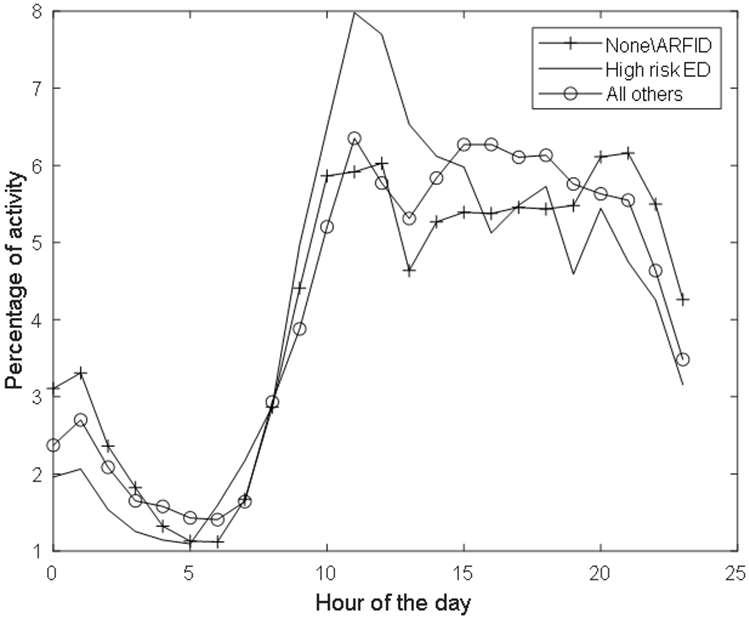
The algorithm reached an accuracy of 52.6% in predicting ED risk/diagnostic status, compared to random decision accuracy of 38.1%, a relative improvement of 38%. The most predictive Internet search history variables were the following: use of keywords related to ED symptoms and websites promoting ED content, participant age, median browsing events per day, and fraction of daily activity at noon.
ED risk or clinical status can be predicted via machine learning with moderate accuracy using Internet activity variables. This model, if replicated in larger samples where it demonstrates stronger predictive value, could identify populations where further assessment is merited. Future iterations could also inform tailored digital interventions, timed to be provided when target online behaviors occur, thereby potentially improving the well-being of many individuals who may otherwise remain undetected.
饮食失调(EDs)会影响患者的健康和功能,但他们通常需要数年时间才能承认自己的疾病并寻求治疗。早期发现 ED 患者是公共卫生的重点,需要创新的方法来进行这种识别,并最终与基于证据的干预措施联系起来。本研究探讨了互联网活动数据是否可以预测 ED 风险/诊断状况,从而为及时干预提供信息。
参与者为 936 名完成了临床验证的在线 ED 调查的女性,其中 231 名(24.7%)提供了他们的互联网浏览历史。机器学习算法使用参与者互联网活动历史记录中的关键属性来预测他们的 ED 状况:临床/亚临床 ED、ED 高风险或无 ED。
与随机决策准确率 38.1%相比,该算法预测 ED 风险/诊断状况的准确率达到 52.6%,相对提高了 38%。最具预测性的互联网搜索历史变量包括:使用与 ED 症状相关的关键字和宣传 ED 内容的网站、参与者年龄、每天的平均浏览事件数以及每天中午活动的比例。
使用互联网活动变量,通过机器学习可以以中等准确性预测 ED 风险或临床状况。如果在更大的样本中复制该模型并证明其具有更强的预测价值,则可以确定需要进一步评估的人群。未来的迭代还可以为量身定制的数字干预措施提供信息,以便在目标在线行为发生时提供,从而有可能改善许多可能未被发现的个体的幸福感。