Taylor C Barr, Bryson Susan, Luce Kristine H, Cunning Darby, Doyle Angela Celio, Abascal Liana B, Rockwell Roxanne, Dev Pavarti, Winzelberg Andrew J, Wilfley Denise E
Department of Psychiatry, Stanford University Medical School, Stanford, CA 94305-5722, USA.
Arch Gen Psychiatry. 2006 Aug;63(8):881-8. doi: 10.1001/archpsyc.63.8.881.
Eating disorders, an important health problem among college-age women, may be preventable, given that modifiable risk factors for eating disorders have been identified and interventions have been evaluated to reduce these risk factors.
To determine if an Internet-based psychosocial intervention can prevent the onset of eating disorders (EDs) in young women at risk for developing EDs.
San Diego and the San Francisco Bay Area in California.
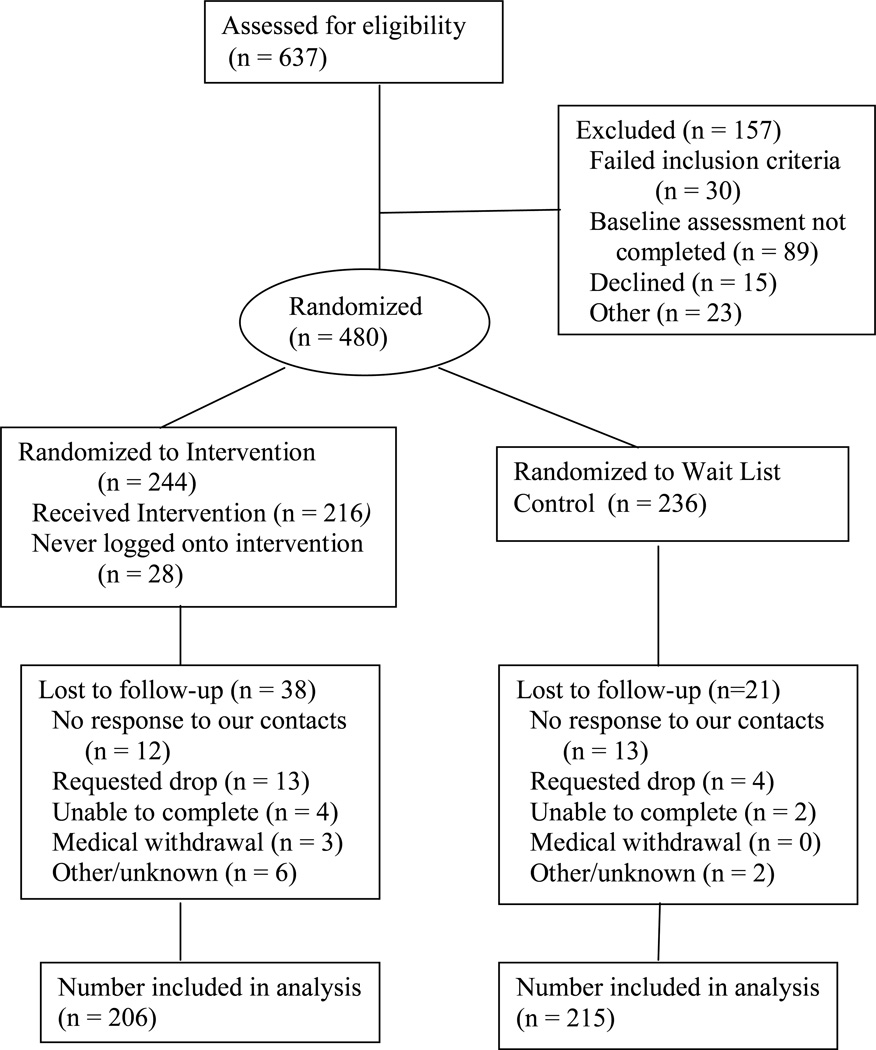
College-age women with high weight and shape concerns were recruited via campus e-mails, posters, and mass media. Six hundred thirty-seven eligible participants were identified, of whom 157 were excluded, for a total sample of 480. Recruitment occurred between November 13, 2000, and October 10, 2003. Intervention A randomized controlled trial of an 8-week, Internet-based cognitive-behavioral intervention (Student Bodies) that included a moderated online discussion group. Participants were studied for up to 3 years.
The main outcome measure was time to onset of a subclinical or clinical ED. Secondary measures included change in scores on the Weight Concerns Scale, Global Eating Disorder Examination Questionnaire, and Eating Disorder Inventory drive for thinness and bulimia subscales and depressed mood. Moderators of outcome were examined.
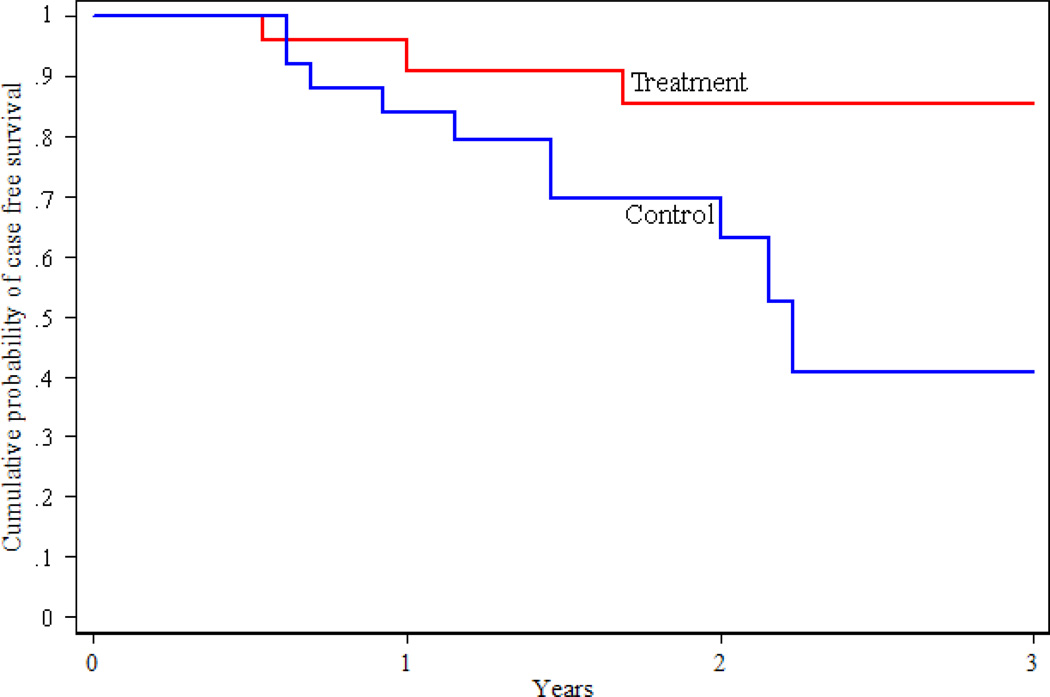
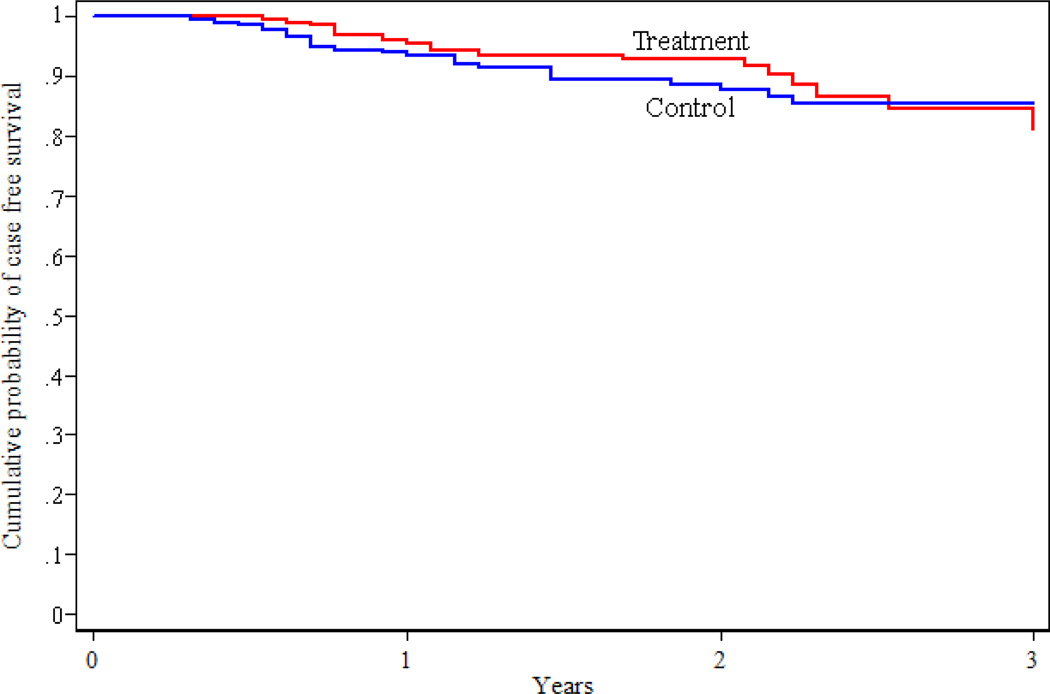
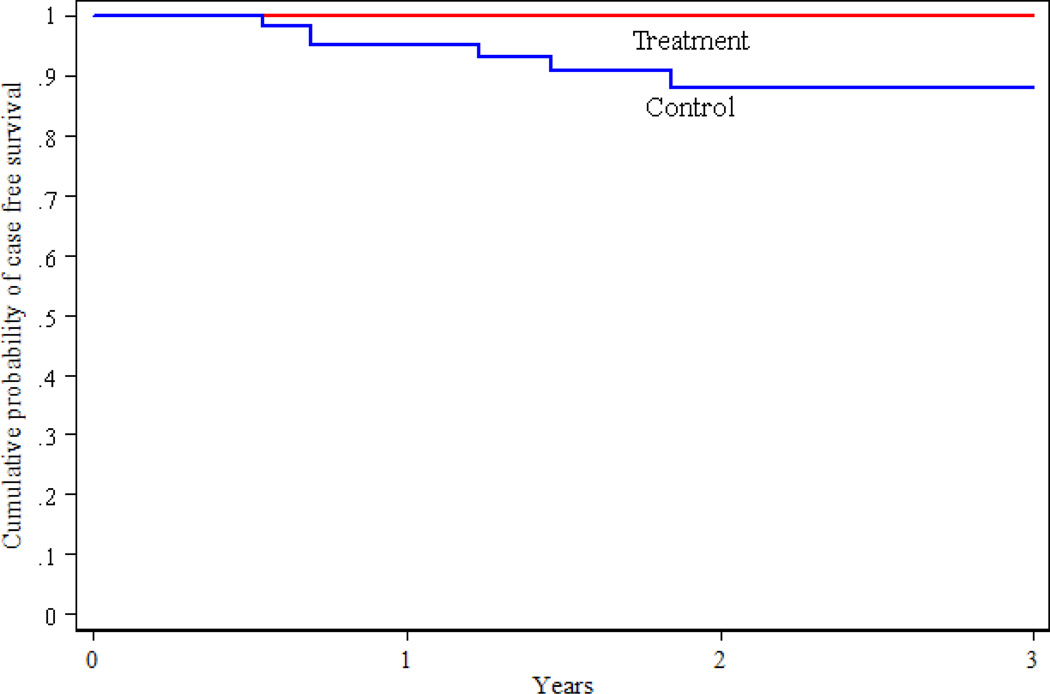
There was a significant reduction in Weight Concerns Scale scores in the Student Bodies intervention group compared with the control group at postintervention (P < .001), 1 year (P < .001), and 2 years (P < .001). The slope for reducing Weight Concerns Scale score was significantly greater in the treatment compared with the control group (P = .02). Over the course of follow-up, 43 participants developed subclinical or clinical EDs. While there was no overall significant difference in onset of EDs between the intervention and control groups, the intervention significantly reduced the onset of EDs in 2 subgroups identified through moderator analyses: (1) participants with an elevated body mass index (BMI) (> or =25, calculated as weight in kilograms divided by height in meters squared) at baseline and (2) at 1 site, participants with baseline compensatory behaviors (eg, self-induced vomiting, laxative use, diuretic use, diet pill use, driven exercise). No intervention participant with an elevated baseline BMI developed an ED, while the rates of onset of ED in the comparable BMI control group (based on survival analysis) were 4.7% at 1 year and 11.9% at 2 years. In the subgroup with a BMI of 25 or higher, the cumulative survival incidence was significantly lower at 2 years for the intervention compared with the control group (95% confidence interval, 0% for intervention group; 2.7% to 21.1% for control group). For the San Francisco Bay Area site sample with baseline compensatory behaviors, 4% of participants in the intervention group developed EDs at 1 year and 14.4%, by 2 years. Rates for the comparable control group were 16% and 30.4%, respectively.
Among college-age women with high weight and shape concerns, an 8-week, Internet-based cognitive-behavioral intervention can significantly reduce weight and shape concerns for up to 2 years and decrease risk for the onset of EDs, at least in some high-risk groups. To our knowledge, this is the first study to show that EDs can be prevented in high-risk groups.
饮食失调是大学年龄段女性中的一个重要健康问题,鉴于已确定饮食失调的可改变风险因素并对减少这些风险因素的干预措施进行了评估,饮食失调或许是可预防的。
确定基于互联网的心理社会干预能否预防有饮食失调风险的年轻女性发生饮食失调(ED)。
加利福尼亚州的圣地亚哥和旧金山湾区。
通过校园电子邮件、海报和大众媒体招募了对体重和体型高度关注的大学年龄段女性。确定了637名符合条件的参与者,其中157名被排除,最终样本为480名。招募时间为2000年11月13日至2003年10月10日。干预一项为期8周、基于互联网的认知行为干预(学生健康计划)的随机对照试验,其中包括一个有主持人的在线讨论组。对参与者进行了长达3年的研究。
主要结局指标是出现亚临床或临床饮食失调的时间。次要指标包括体重关注量表、全球饮食失调检查问卷、饮食失调量表中追求瘦身和暴食分量表以及抑郁情绪得分的变化。对结局的调节因素进行了检查。
与对照组相比,学生健康计划干预组在干预后(P <.001)、1年(P <.001)和2年(P <.001)时体重关注量表得分显著降低。与对照组相比,治疗组降低体重关注量表得分的斜率显著更大(P =.02)。在随访过程中,43名参与者出现了亚临床或临床饮食失调。虽然干预组和对照组之间饮食失调的发生没有总体显著差异,但通过调节因素分析确定的2个亚组中,干预显著降低了饮食失调的发生:(1)基线时体重指数(BMI)升高(≥25,计算方法为体重(千克)除以身高(米)的平方)的参与者;(2)在1个地点,有基线代偿行为(如自我催吐、使用泻药、使用利尿剂、使用减肥药、强迫性运动)的参与者。基线BMI升高的干预组参与者中没有出现饮食失调,而在可比BMI对照组中(基于生存分析),饮食失调的发生率在1年时为4.7%,在2年时为11.9%。在BMI为25或更高的亚组中,与对照组相比,干预组在2年时的累积生存发生率显著更低(95%置信区间,干预组为0%;对照组为2.7%至21.1%)。对于有基线代偿行为的旧金山湾区样本,干预组中4%的参与者在1年时出现饮食失调,到2年时为14.4%。可比对照组的发生率分别为16%和30.4%。
在对体重和体型高度关注的大学年龄段女性中,一项为期8周、基于互联网的认知行为干预可在长达2年的时间内显著减轻对体重和体型的关注,并降低饮食失调发生的风险,至少在一些高危组中如此。据我们所知,这是第一项表明可在高危组中预防饮食失调的研究。