Giallongo Cesarina, Tibullo Daniele, Puglisi Fabrizio, Barbato Alessandro, Vicario Nunzio, Cambria Daniela, Parrinello Nunziatina Laura, Romano Alessandra, Conticello Concetta, Forte Stefano, Parenti Rosalba, Amorini Angela Maria, Lazzarino Giuseppe, Li Volti Giovanni, Palumbo Giuseppe Alberto, Di Raimondo Francesco
Department of Medical and Surgical Sciences and Advanced Technologies "G.F. Ingrassia", University of Catania, 95123 Catania, Italy.
Section of Biochemistry, Department of Biomedical and Biotechnological Sciences, University of Catania, 95123 Catania, Italy.
Cancers (Basel). 2020 Jul 22;12(8):1999. doi: 10.3390/cancers12081999.
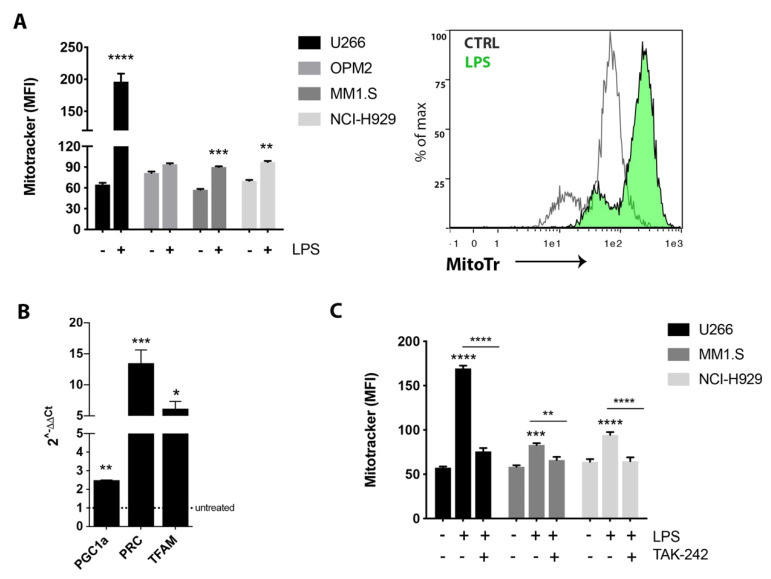
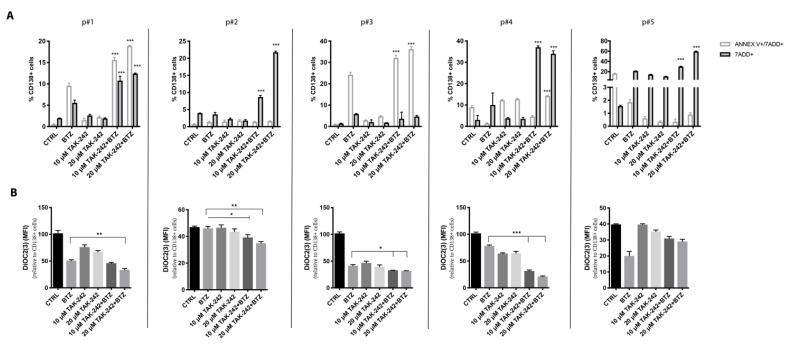
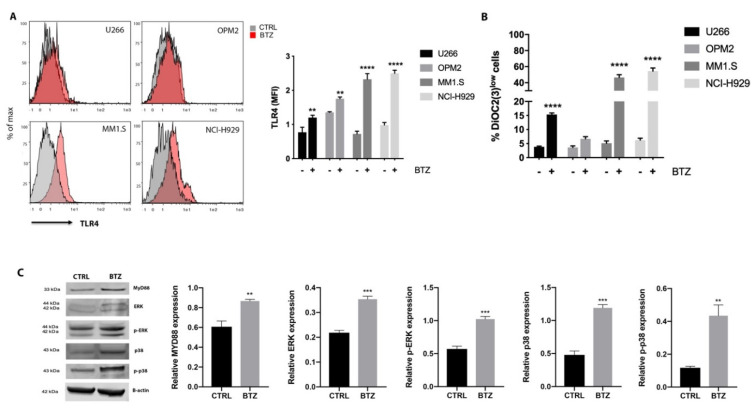
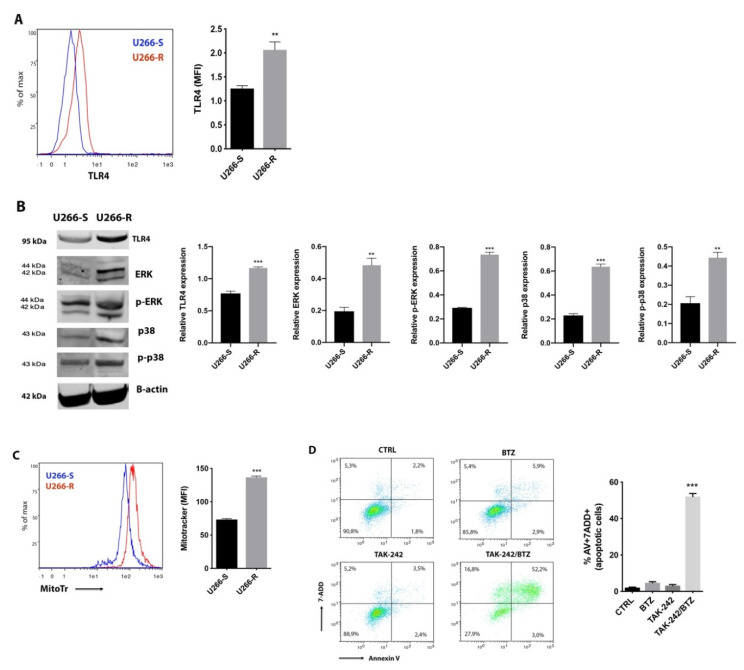
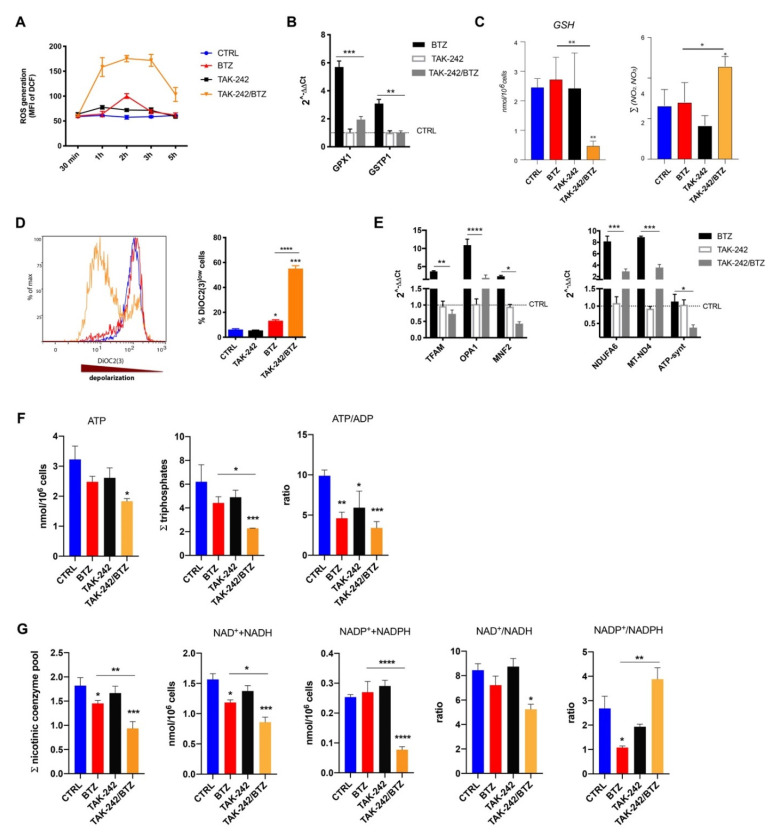
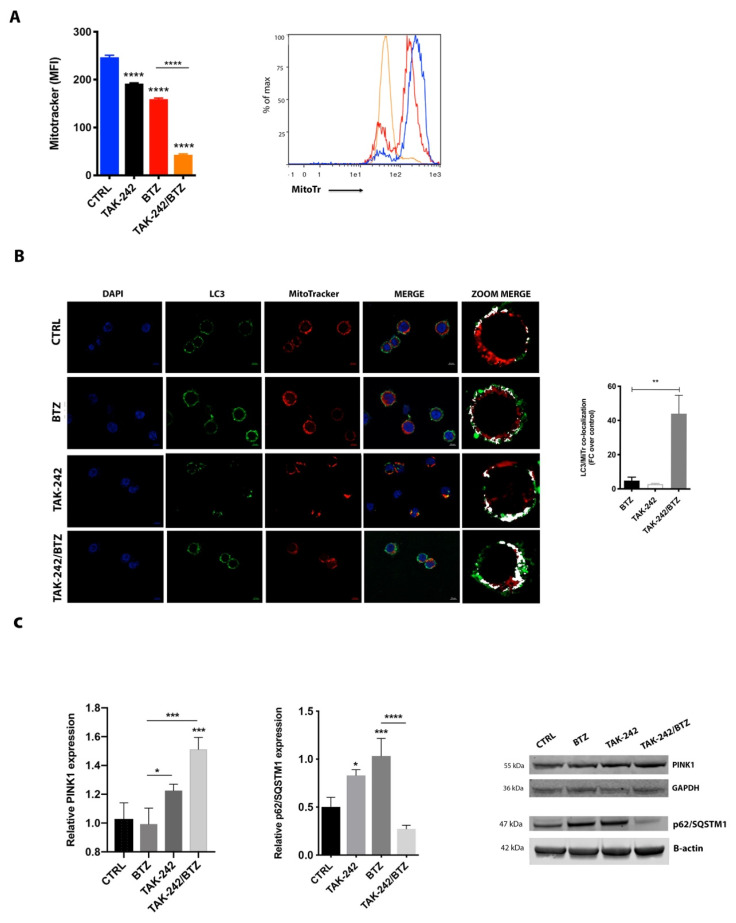
Multiple myeloma (MM) is a B-cell malignancy requiring inflammatory microenvironment signals for cell survival and proliferation. Despite improvements in pharmacological tools, MM remains incurable mainly because of drug resistance. The present study aimed to investigate the implication of Toll-like receptor 4 (TLR4) as the potential mechanism of bortezomib (BTZ) resistance. We found that TLR4 activation induced mitochondrial biogenesis and increased mitochondrial mass in human MM cell lines. Moreover, TLR4 signaling was activated after BTZ exposure and was increased in BTZ-resistant U266 (U266-R) cells. A combination of BTZ with TAK-242, a selective TLR4 inhibitor, overcame drug resistance through the generation of higher and extended oxidative stress, strong mitochondrial depolarization and severe impairment of mitochondrial fitness which in turn caused cell energy crisis and activated mitophagy and apoptosis. We further confirmed the efficacy of a TAK-242/BTZ combination in plasma cells from refractory myeloma patients. Consistently, inhibition of TLR4 increased BTZ-induced mitochondrial depolarization, restoring pharmacological response. Taken together, these findings indicate that TLR4 signaling acts as a stress-responsive mechanism protecting mitochondria during BTZ exposure, sustaining mitochondrial metabolism and promoting drug resistance. Inhibition of TLR4 could be therefore be a possible target in patients with refractory MM to overcome BTZ resistance.
多发性骨髓瘤(MM)是一种B细胞恶性肿瘤,需要炎症微环境信号来维持细胞存活和增殖。尽管药物治疗手段有所改进,但MM仍然无法治愈,主要原因是耐药性。本研究旨在探讨Toll样受体4(TLR4)作为硼替佐米(BTZ)耐药潜在机制的作用。我们发现,TLR4激活可诱导人MM细胞系中的线粒体生物合成并增加线粒体质量。此外,BTZ暴露后TLR4信号被激活,且在对BTZ耐药的U266(U266-R)细胞中增强。BTZ与选择性TLR4抑制剂TAK-242联合使用,通过产生更高且持久的氧化应激、强烈的线粒体去极化以及线粒体适应性的严重受损,克服了耐药性,进而导致细胞能量危机并激活线粒体自噬和凋亡。我们进一步证实了TAK-242/BTZ联合用药对难治性骨髓瘤患者浆细胞的疗效。一致的是,抑制TLR4可增加BTZ诱导的线粒体去极化,恢复药理反应。综上所述,这些发现表明TLR4信号作为一种应激反应机制,在BTZ暴露期间保护线粒体,维持线粒体代谢并促进耐药性。因此,抑制TLR4可能是难治性MM患者克服BTZ耐药的一个潜在靶点。