Felkai Luca, Krencz Ildikó, Kiss Dorottya Judit, Nagy Noémi, Petővári Gábor, Dankó Titanilla, Micsík Tamás, Khoor András, Tornóczky Tamás, Sápi Zoltán, Sebestyén Anna, Csóka Monika
2nd Department of Pediatrics, Semmelweis University, 1094 Budapest, Hungary.
1st Department of Pathology and Experimental Cancer Research, Semmelweis University, 1085 Budapest, Hungary.
Cancers (Basel). 2020 Jul 17;12(7):1947. doi: 10.3390/cancers12071947.
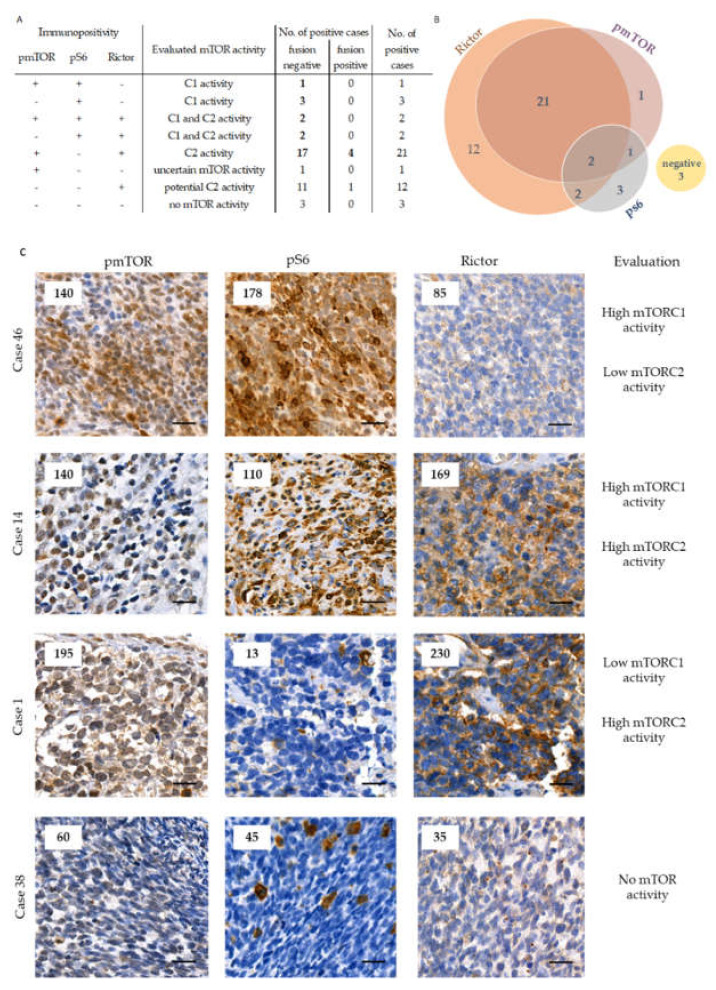
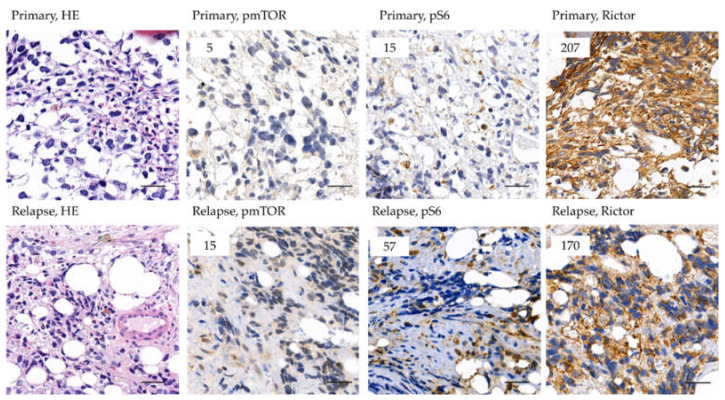
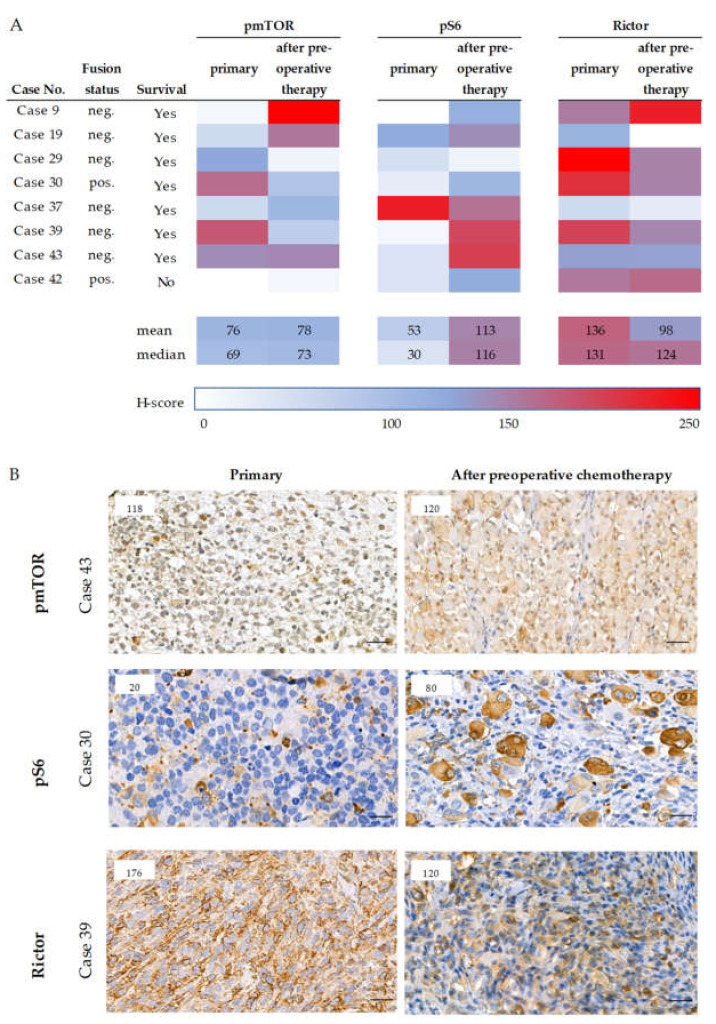
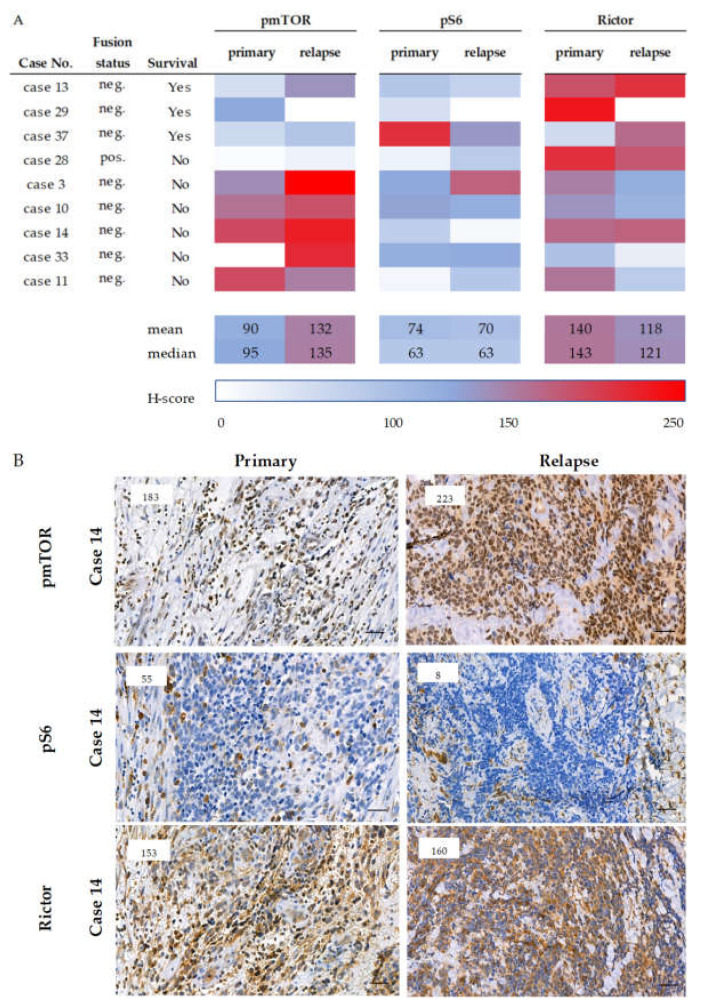
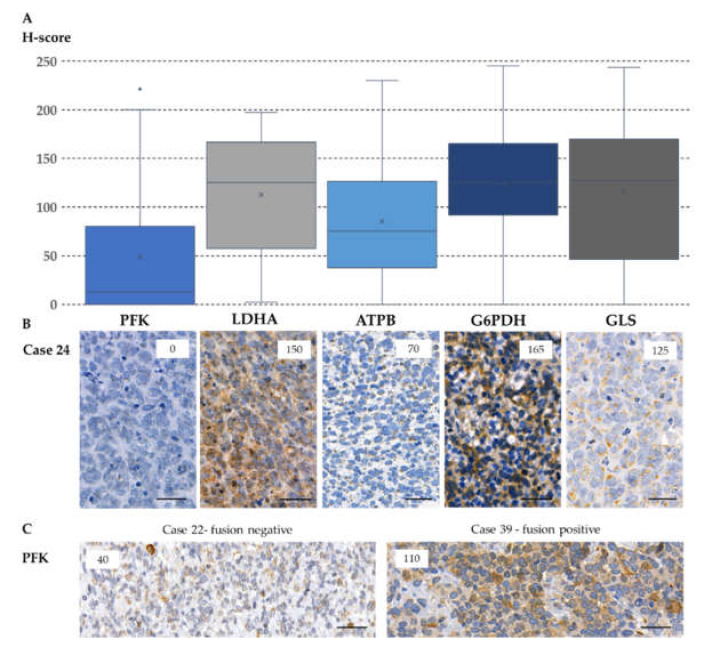
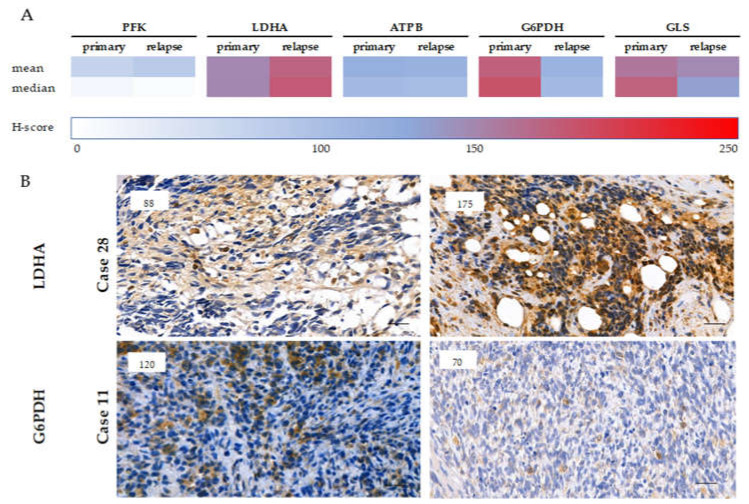
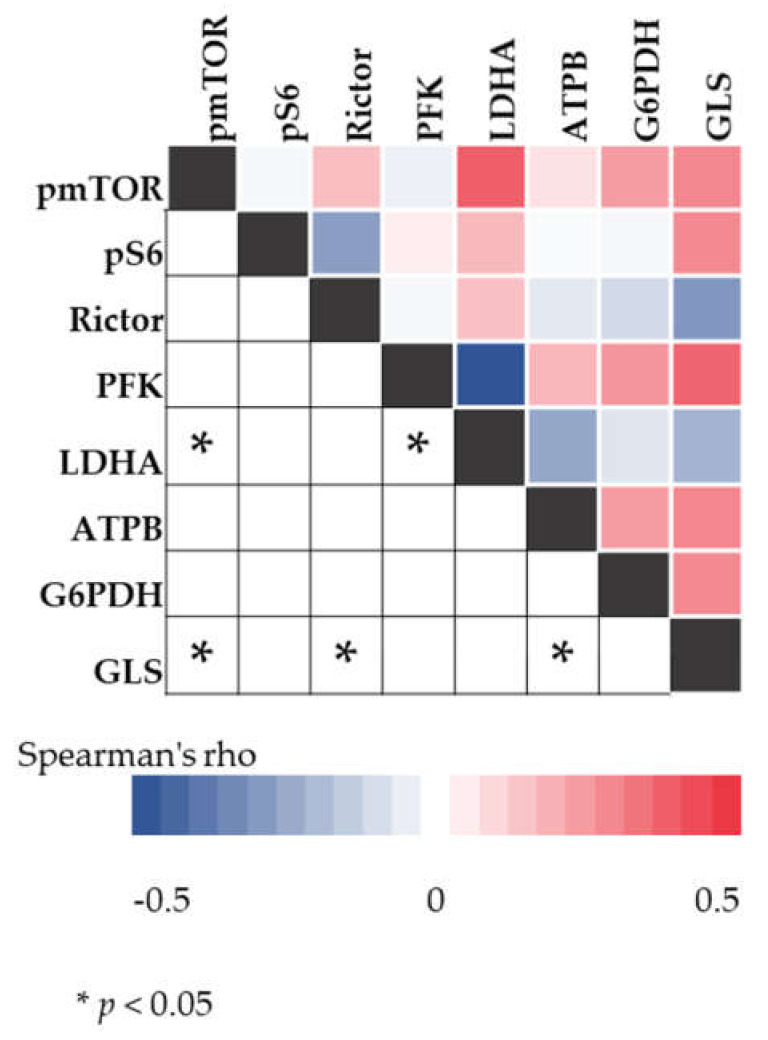
mTOR activation has been observed in rhabdomyosarcoma (RMS); however, mTOR complex (mTORC) 1 inhibition has had limited success thus far. mTOR activation alters the metabolic pathways, which is linked to survival and metastasis. These pathways have not been thoroughly analyzed in RMSs. We performed immunohistochemistry on 65 samples to analyze the expression of mTOR complexes (pmTOR, pS6, Rictor), and several metabolic enzymes (phosphofructokinase, lactate dehydrogenase-A, β-F1-ATPase, glucose-6-phosphate dehydrogenase, glutaminase). amplification, as a potential mechanism of Rictor overexpression, was analyzed by FISH and digital droplet PCR. In total, 64% of the studied primary samples showed mTOR activity with an mTORC2 dominance (82%). Chemotherapy did not cause any relevant change in mTOR activity. Elevated mTOR activity was associated with a worse prognosis in relapsed cases. amplification was not confirmed in any of the cases. Our findings suggest the importance of the Warburg effect and the pentose-phosphate pathway beside a glutamine demand in RMS cells. The expression pattern of the studied mTOR markers can explain the inefficacy of mTORC1 inhibitor therapy. Therefore, we suggest performing a detailed investigation of the mTOR profile before administering mTORC1 inhibitor therapy. Furthermore, our findings highlight that targeting the metabolic plasticity could be an alternative therapeutic approach.
在横纹肌肉瘤(RMS)中已观察到mTOR激活;然而,迄今为止,mTOR复合物(mTORC)1抑制的成效有限。mTOR激活会改变代谢途径,这与生存和转移相关。这些途径在RMS中尚未得到充分分析。我们对65个样本进行了免疫组织化学分析,以检测mTOR复合物(磷酸化mTOR、磷酸化核糖体蛋白S6、rictor)以及几种代谢酶(磷酸果糖激酶、乳酸脱氢酶-A、β-F1-ATP酶、葡萄糖-6-磷酸脱氢酶、谷氨酰胺酶)的表达。通过荧光原位杂交(FISH)和数字液滴PCR分析了作为rictor过表达潜在机制的扩增情况。总体而言,64%的研究原发性样本显示出mTOR活性,且以mTORC2为主导(82%)。化疗未引起mTOR活性的任何相关变化。mTOR活性升高与复发病例的预后较差相关。在任何病例中均未证实存在扩增。我们的研究结果表明,除了RMS细胞对谷氨酰胺的需求外,瓦伯格效应和磷酸戊糖途径也很重要。所研究的mTOR标志物的表达模式可以解释mTORC1抑制剂治疗无效的原因。因此,我们建议在给予mTORC1抑制剂治疗前,对mTOR谱进行详细研究。此外,我们的研究结果强调,针对代谢可塑性可能是一种替代治疗方法。