Department of Neurosurgery, First Affiliated Hospital, Wenzhou Medical University, Wenzhou, China.
Department of Neurosurgery, Xinhua Hospital Affiliated to Shanghai Jiaotong University School of Medicine, Shanghai, China.
Cell Death Dis. 2020 Jul 24;11(7):575. doi: 10.1038/s41419-020-02778-2.
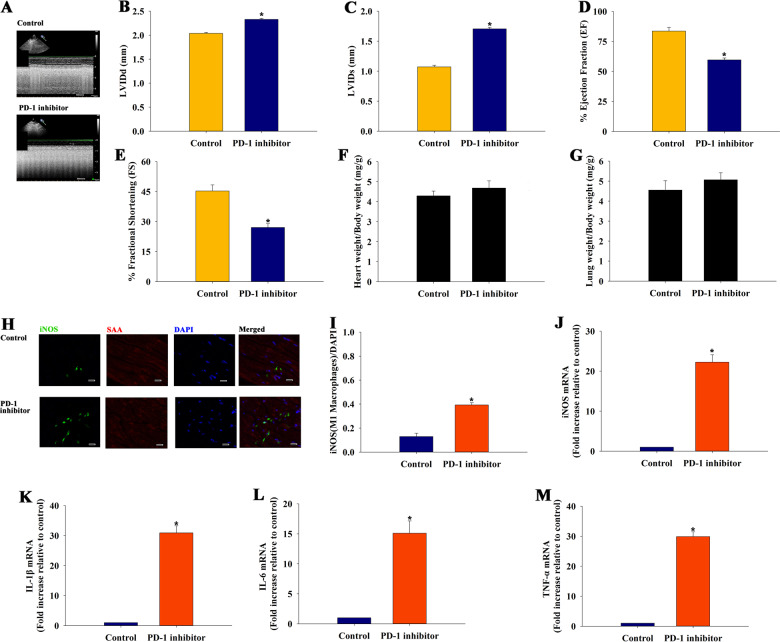
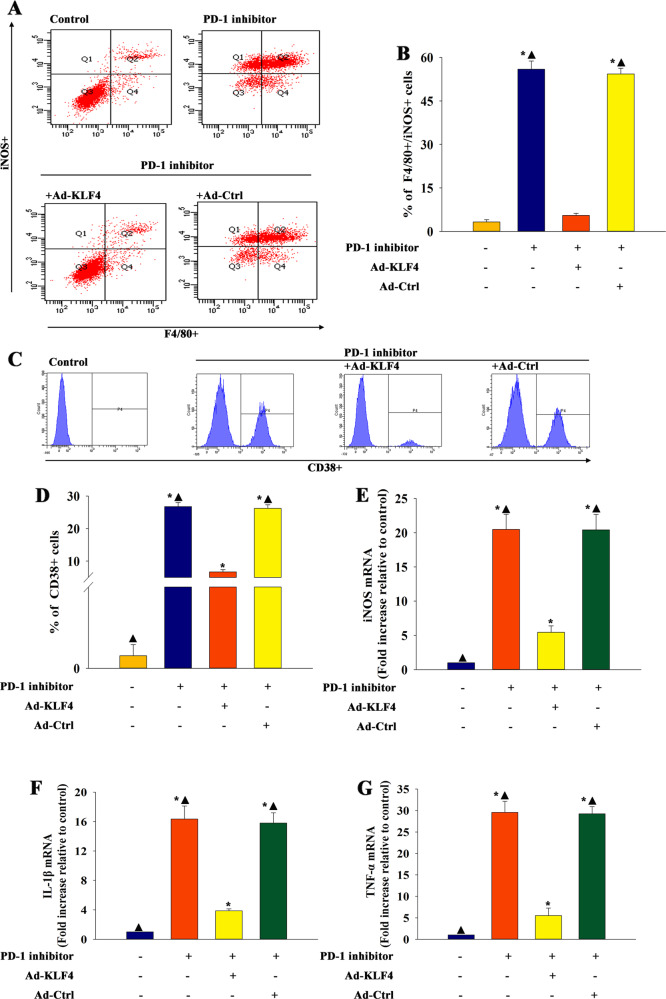
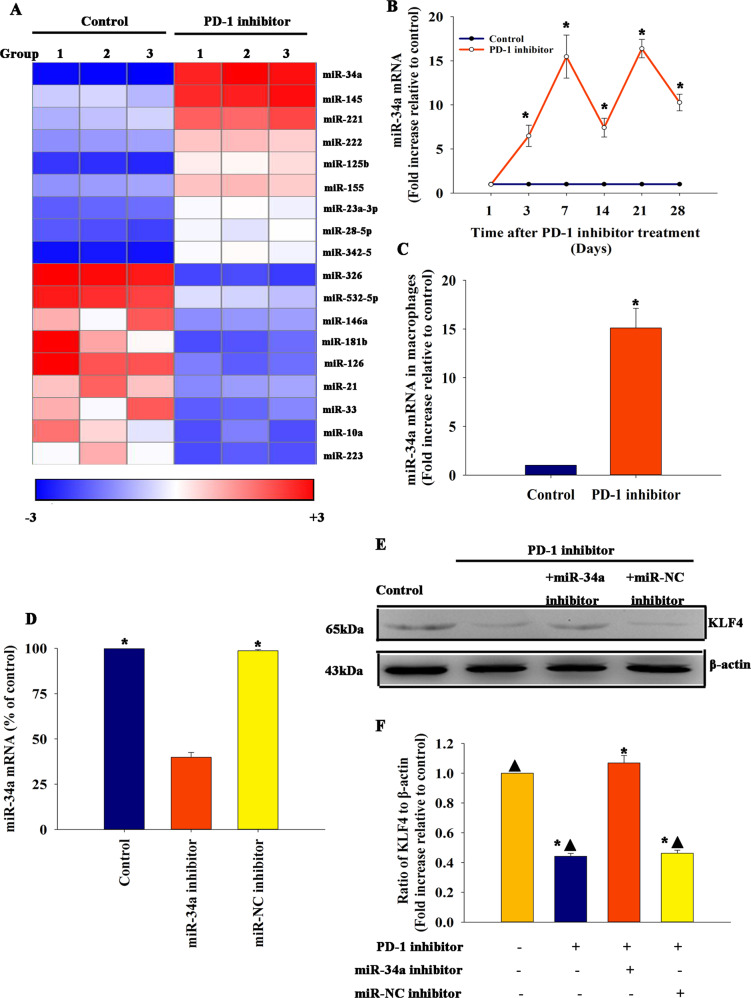
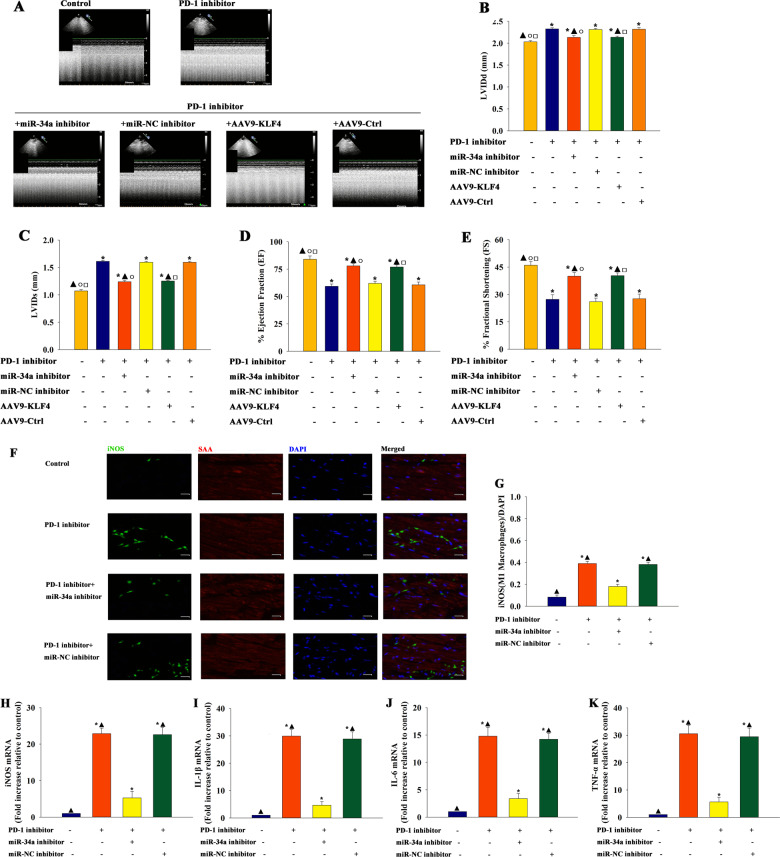
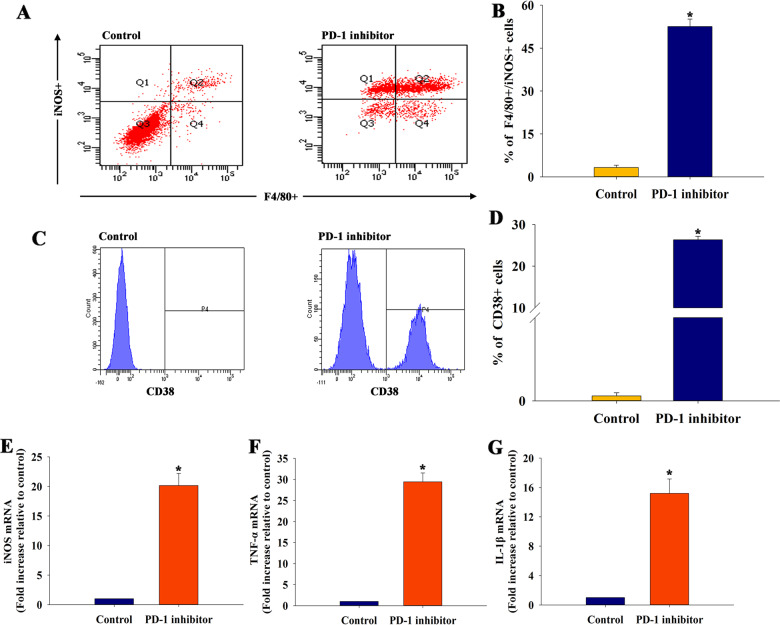
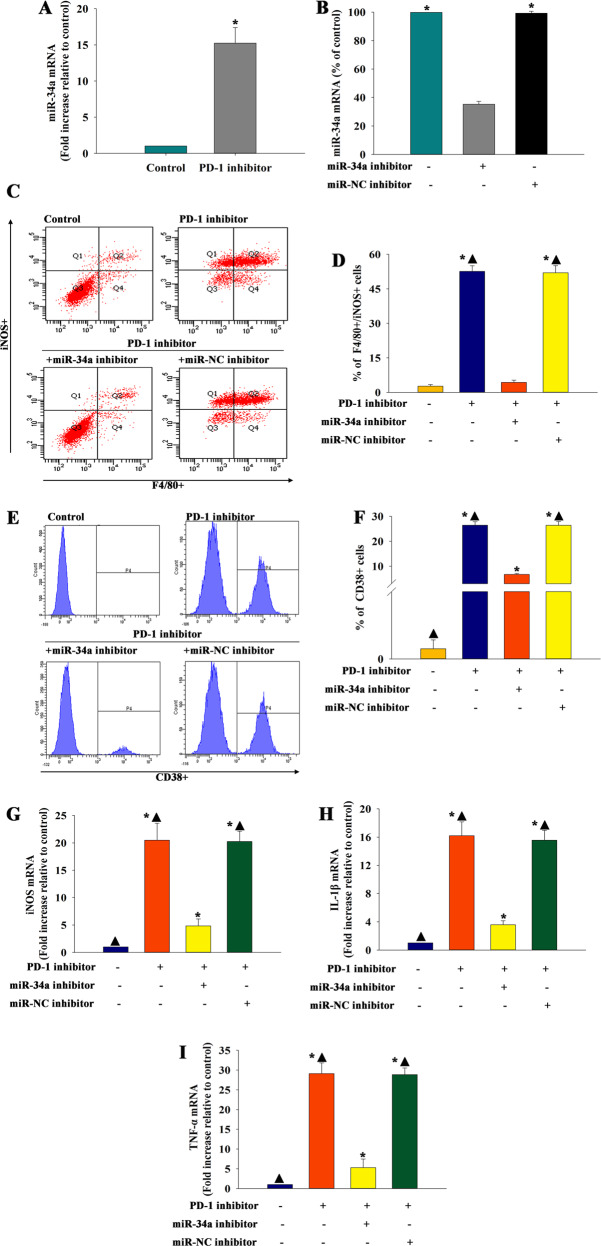
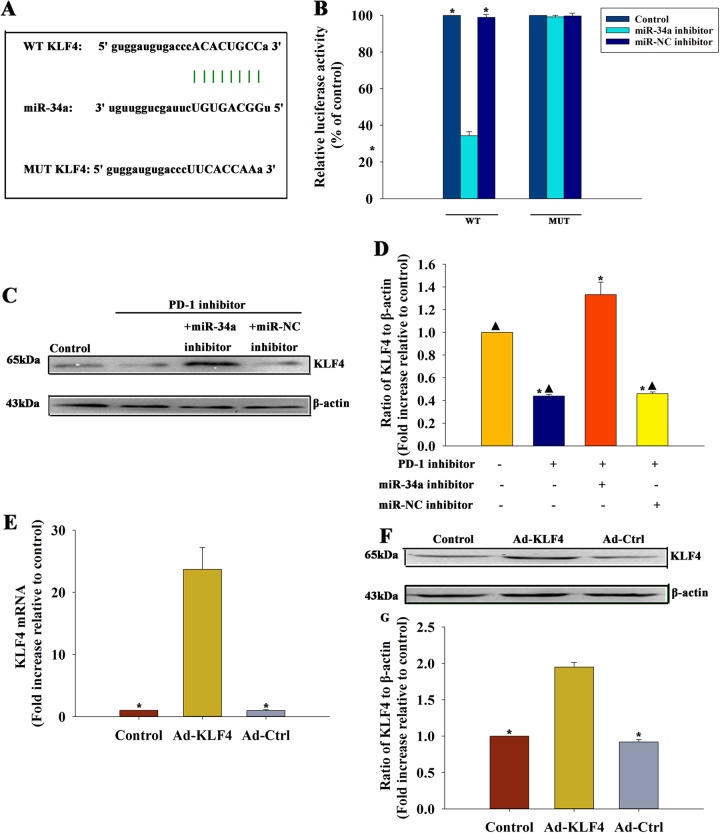
Cancer immunotherapy has become a well-established treatment option for some cancers; however, its use is hampered by its cardiovascular adverse effects. Immune checkpoint inhibitors (ICIs)-related cardiac toxicity took place in kinds of different forms, such as myocarditis, acute coronary syndrome, and pericardial disease, with high mortality rates. This study aimed to investigate the roles of programmed death-1 (PD-1) inhibitor, one of widespread used ICIs, in the development of murine cardiac injury. PD-1 inhibitor is known to transduce immunoregulatory signals that modulate macrophages polarization to attack tumor cells. Hence, this study explored whether the cardiovascular adverse effects of PD-1 inhibitor were related to macrophage polarization. MicroRNA-34a (miR-34a), which appears to regulate the polarization of cultured macrophages to induce inflammation, is examined in cardiac injury and macrophage polarization induced by the PD-1 inhibitor. As a target of miR-34a, Krüppel-like factor 4 (KLF4) acted as an anti-inflammation effector to take cardiac protective effect. Further, it investigated whether modulating the miR-34a/KLF4-signaling pathway could influence macrophage polarization. The PD-1 inhibitor markedly induced M1 phenotype macrophage polarization with impaired cardiac function, whereas miR-34a inhibitor transfection treatment reversed M1 polarization and cardiac injury in vivo. In vitro, PD-1 inhibitor-induced M1 polarization was accompanied by an increase in the expression of miR-34a but a decrease in the expression of KLF4. TargetScan and luciferase assay showed that miR-34a targeted the KLF4 3'-untranslated region. Either miR-34a inhibition or KLF4 overexpression could abolish M1 polarization induced by the PD-1 inhibitor. The findings strongly suggested that the PD-1 inhibitor exerted its effect in promoting M1 polarization and cardiac injury by modulating the miR-34a/KLF4-signaling pathway and inducing myocardial inflammation. These findings might help us to understand the pathogenesis of cardiac injury during immunotherapy, and provide new targets in ameliorating cardiac injury in patients with cancer receiving PD-1 inhibitor treatment.
癌症免疫疗法已成为某些癌症的一种成熟治疗选择;然而,其应用受到心血管不良事件的阻碍。免疫检查点抑制剂(ICI)相关的心脏毒性以多种不同形式发生,如心肌炎、急性冠状动脉综合征和心包疾病,死亡率较高。本研究旨在探讨广泛应用的免疫检查点之一——程序性死亡受体-1(PD-1)抑制剂在小鼠心脏损伤中的作用。PD-1 抑制剂已知传递免疫调节信号,调节巨噬细胞极化以攻击肿瘤细胞。因此,本研究探讨了 PD-1 抑制剂的心血管不良事件是否与巨噬细胞极化有关。微小 RNA-34a(miR-34a)似乎调节培养的巨噬细胞极化,诱导炎症,在 PD-1 抑制剂诱导的心脏损伤和巨噬细胞极化中进行了研究。miR-34a 的靶基因——Krüppel 样因子 4(KLF4)作为一种抗炎效应因子,发挥心脏保护作用。此外,还研究了调节 miR-34a/KLF4 信号通路是否会影响巨噬细胞极化。PD-1 抑制剂显著诱导 M1 表型巨噬细胞极化,导致心脏功能受损,而 miR-34a 抑制剂转染治疗可逆转体内 M1 极化和心脏损伤。体外实验中,PD-1 抑制剂诱导的 M1 极化伴随着 miR-34a 表达增加和 KLF4 表达减少。TargetScan 和荧光素酶报告基因检测显示,miR-34a 靶向 KLF4 的 3'非翻译区。miR-34a 抑制或 KLF4 过表达均可消除 PD-1 抑制剂诱导的 M1 极化。这些发现强烈表明,PD-1 抑制剂通过调节 miR-34a/KLF4 信号通路和诱导心肌炎症,发挥促进 M1 极化和心脏损伤的作用。这些发现可能有助于我们了解免疫治疗期间心脏损伤的发病机制,并为改善接受 PD-1 抑制剂治疗的癌症患者的心脏损伤提供新的靶点。