Khan Mohd Junaid, Singh Prithvi, Dohare Ravins, Jha Rishabh, Rahmani Arshad H, Almatroodi Saleh A, Ali Shakir, Syed Mansoor Ali
Translational Research Lab, Department of Biotechnology, Faculty of Natural Sciences, Jamia Millia Islamia, New Delhi 110025, India.
Centre for Interdisciplinary Research in Basic Sciences, Jamia Millia Islamia, New Delhi 110025, India.
Genes (Basel). 2020 Aug 20;11(9):966. doi: 10.3390/genes11090966.
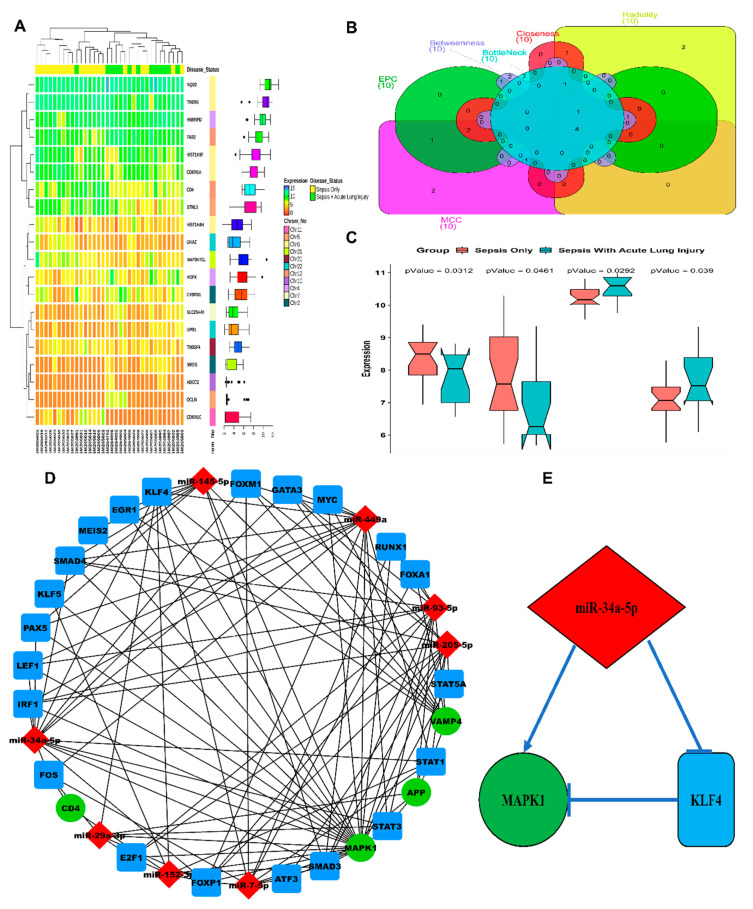
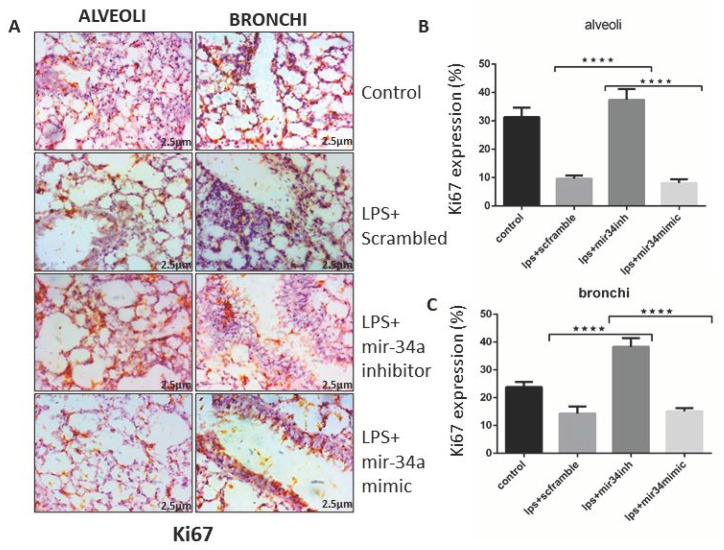
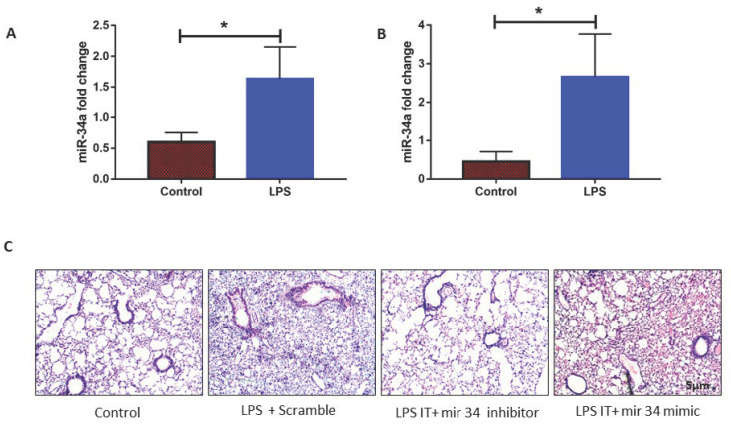
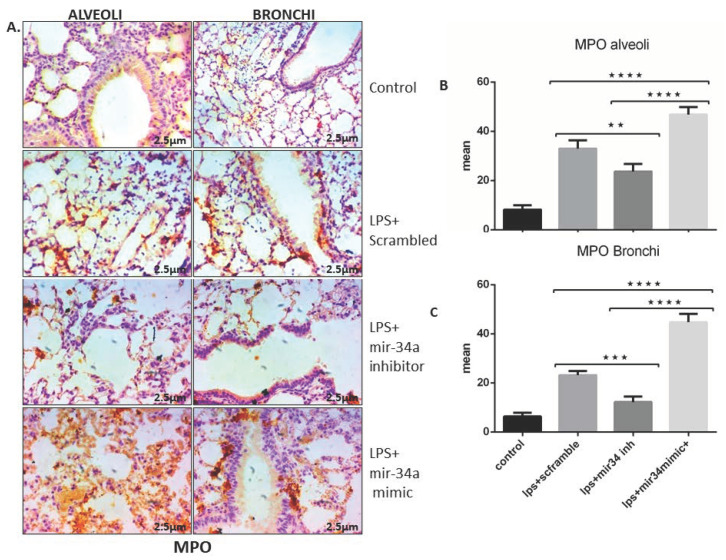
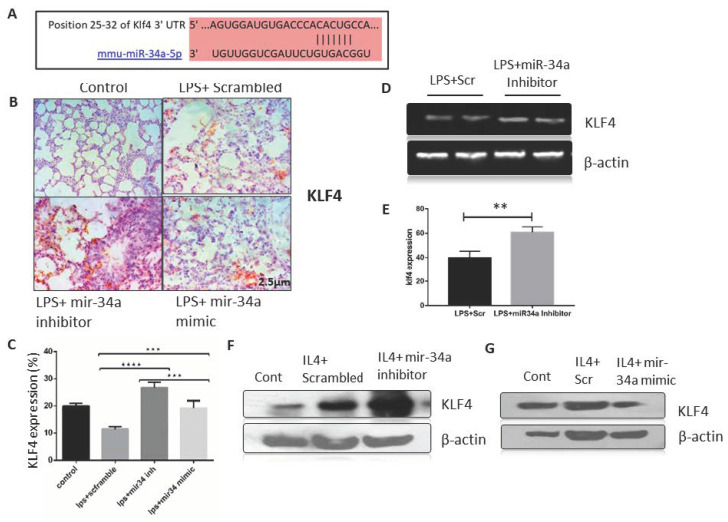
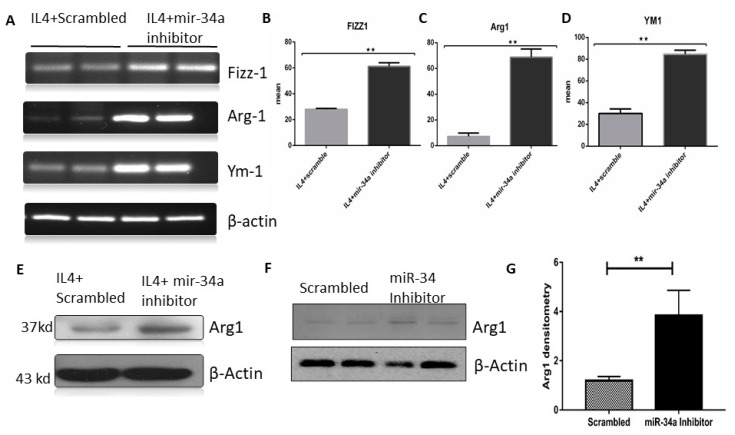
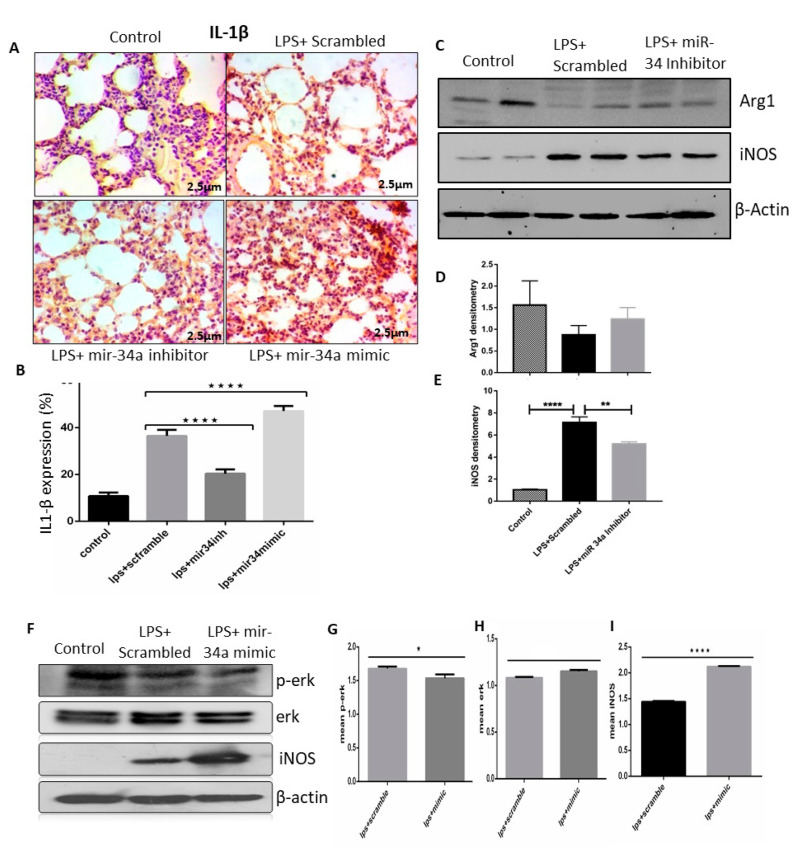
Acute respiratory distress syndrome (ARDS) is an outcome of an accelerated immune response that starts initially as a defensive measure, however, due to non-canonical signaling, it later proves to be fatal not only to the affected tissue but to the whole organ system. microRNAs are known for playing a decisive role in regulating the expression of genes involved in diverse functions such as lung development, repair, and inflammation. In-silico analyses of clinical data and microRNA databases predicted a probable interaction between miRNA-34a (miR-34a), mitogen-activated protein kinase 1 (ERK), and kruppel like factor 4 (Klf4). Parallel to in silico results, here, we show that intra-tracheal instillation of lipopolysaccharides (LPS) to mice enhanced miR-34a expression in lung macrophages. Inhibition of miR-34a significantly improved lung histology, whereas over-expression of miR-34a worsened the lung injury phenotype. miR-34a over-expression in macrophages were also demonstrated to favour pro-inflammatory M1 phenotype and inhibition of M2 polarization. In a quest to confirm this likely interaction, expression profiles of Klf4 as the putative target were analyzed in different macrophage polarizing conditions. Klf4 expression was found to be prominent in the miR-34a inhibitor-treated group but down-regulated in the miR-34a mimic treated group. Immuno-histopathological analyses of lung tissue from the mice treated with miR-34a inhibitor also showed reduced inflammatory M1 markers as well as enhanced cell proliferation. The present study indicates that miR-34a intensified LPS-induced lung injury and inflammation by regulating Klf4 and macrophage polarization, which may serve as a potential therapeutic target for acute lung injury/ARDS.
急性呼吸窘迫综合征(ARDS)是一种加速免疫反应的结果,这种免疫反应最初作为一种防御措施启动,然而,由于非经典信号传导,它后来不仅对受影响的组织,而且对整个器官系统都具有致命性。微小RNA(microRNAs)在调节参与多种功能(如肺发育、修复和炎症)的基因表达中起决定性作用。对临床数据和微小RNA数据库的计算机分析预测了miRNA - 34a(miR - 34a)、丝裂原活化蛋白激酶1(ERK)和克鲁ppel样因子4(Klf4)之间可能存在相互作用。与计算机分析结果平行,在此我们表明,给小鼠气管内注入脂多糖(LPS)可增强肺巨噬细胞中miR - 34a的表达。抑制miR - 34a可显著改善肺组织学,而miR - 34a的过表达则会加重肺损伤表型。巨噬细胞中miR - 34a的过表达也被证明有利于促炎M1表型并抑制M2极化。为了证实这种可能的相互作用,在不同的巨噬细胞极化条件下分析了作为假定靶点的Klf4的表达谱。发现Klf4表达在miR - 34a抑制剂处理组中显著,但在miR - 34a模拟物处理组中下调。对用miR - 34a抑制剂处理的小鼠肺组织进行免疫组织病理学分析也显示炎症M1标志物减少以及细胞增殖增强。本研究表明,miR - 34a通过调节Klf4和巨噬细胞极化加剧LPS诱导的肺损伤和炎症,这可能作为急性肺损伤/ARDS的潜在治疗靶点。