Balasukumaran Tharani, Gottlieb Uri, Springer Shmuel
Faculty of Health Sciences, Department of Physical Therapy, Ariel University, Ariel, Israel.
BMC Musculoskelet Disord. 2020 Jul 25;21(1):489. doi: 10.1186/s12891-020-03512-x.
Altered walking patterns are often described in individuals with chronic ankle instability (CAI). Contemporary treatment paradigms recommend backward walking (BW) to improve locomotion in people with musculoskeletal disorders. The purpose of this study was to determine whether muscle activity and activation variability during BW differs between subjects with and without CAI.
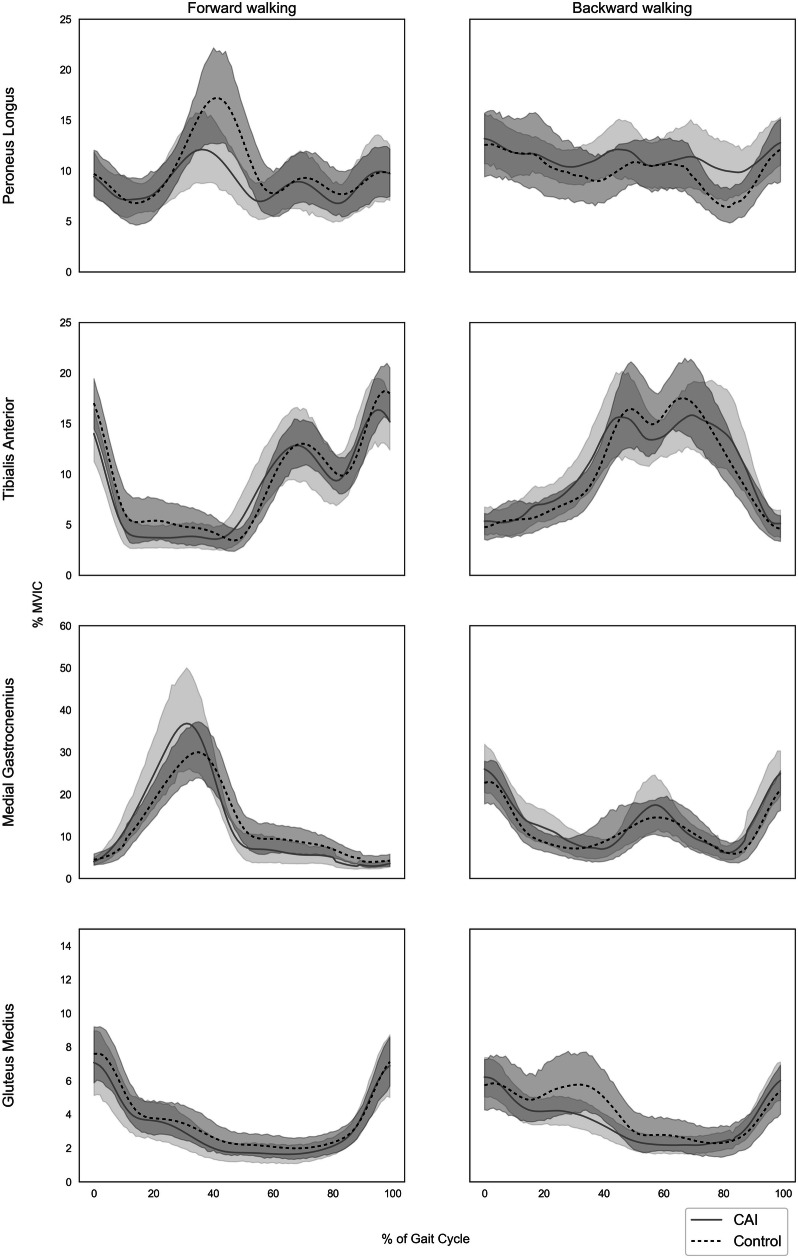
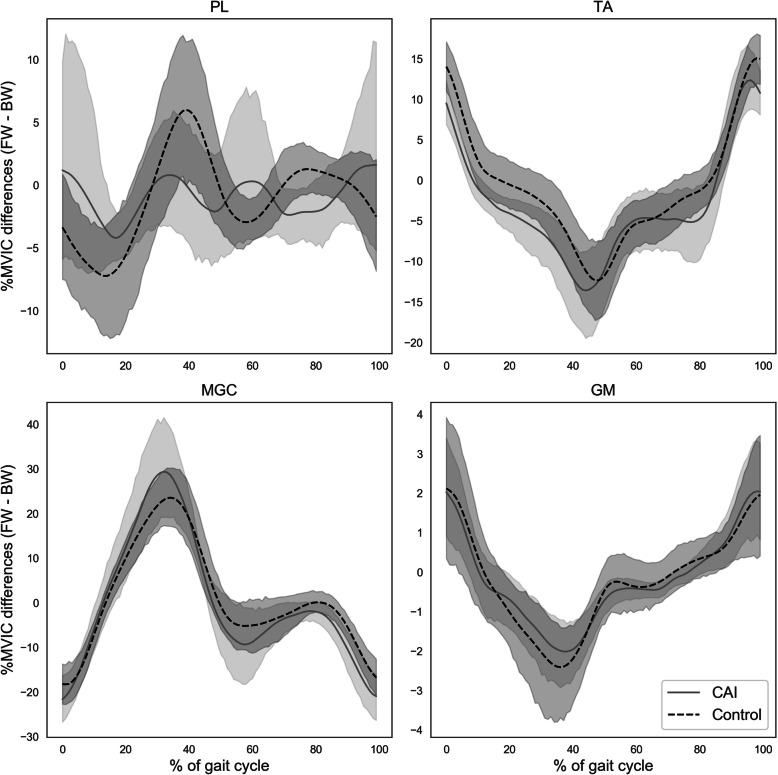
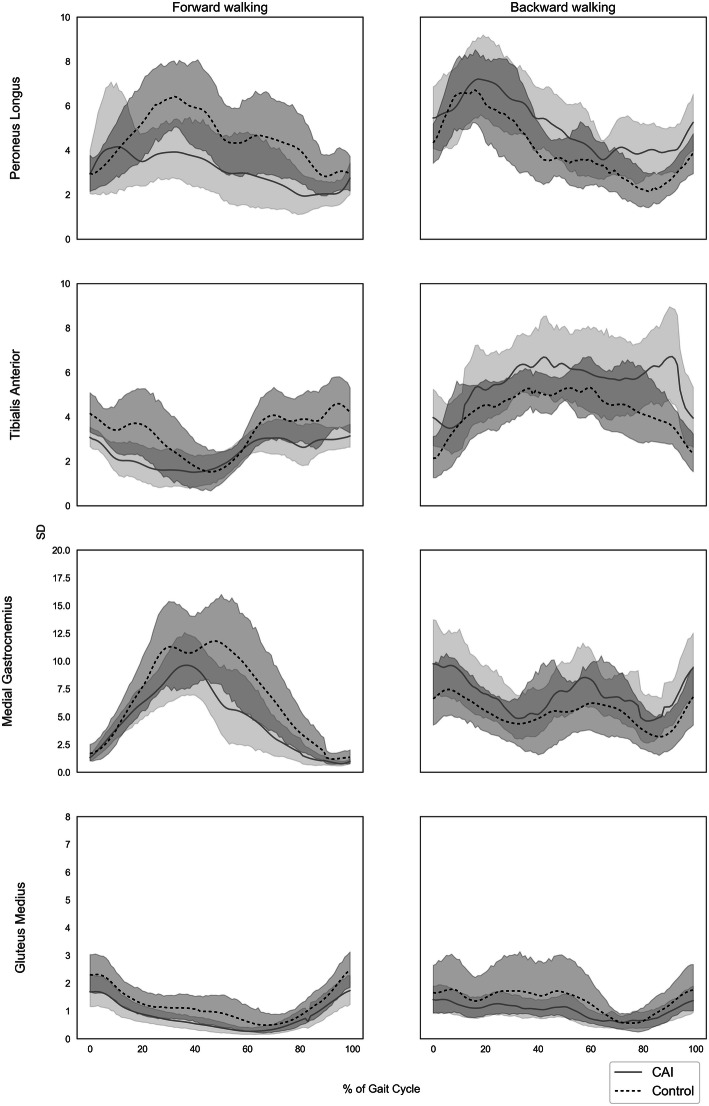
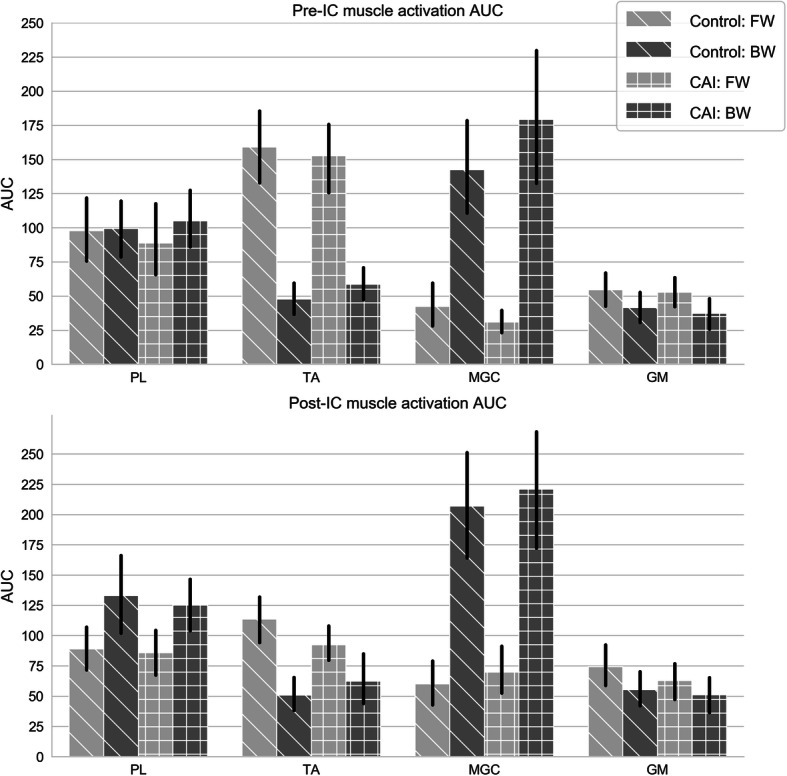
Sixteen participants with CAI and 16 healthy controls walked on a treadmill at their self-selected speed under BW and forward walking (FW) conditions. Surface electromyography (EMG) data for the peroneus longus, tibialis anterior, medial gastrocnemius and gluteus medius muscles were collected. EMG amplitude normalized to maximum voluntary isometric contraction (%MVIC) and the standard deviation (SD) of the %MVIC EMG amplitude was calculated throughout the gait cycle. In addition, the area under the curve (AUC) of the %MVIC EMG amplitude was calculated before and after initial contact (pre-IC: 90-100% of stride; post-IC: 0-10% of stride).
No differences between groups were noted in the %MVIC amplitude or activation variability (SD of %MVIC EMG) under BW or FW. In both groups, decreased tibialis anterior (p < 0.001) and gluteus medius (p = 0.01), and increased medial gastrocnemius (p < 0.001) activation were observed during pre- and post-IC under BW condition.
Participants with CAI and healthy controls have similar muscle activity patterns during BW. Yet, the results should be interpreted with caution due to the heterogeneity of the CAI population.
慢性踝关节不稳(CAI)患者常表现出行走模式改变。当代治疗模式推荐向后行走(BW)以改善肌肉骨骼疾病患者的运动能力。本研究的目的是确定有和没有CAI的受试者在BW过程中的肌肉活动和激活变异性是否存在差异。
16名CAI患者和16名健康对照者在跑步机上以自定速度在BW和向前行走(FW)条件下行走。收集腓骨长肌、胫骨前肌、腓肠肌内侧头和臀中肌的表面肌电图(EMG)数据。计算整个步态周期中归一化至最大自主等长收缩的EMG幅度(%MVIC)以及%MVIC EMG幅度的标准差(SD)。此外,计算初始接触前后(接触前:步幅的90 - 100%;接触后:步幅的0 - 10%)%MVIC EMG幅度的曲线下面积(AUC)。
在BW或FW条件下,两组之间在%MVIC幅度或激活变异性(%MVIC EMG的SD)方面未观察到差异。在两组中,在BW条件下的接触前和接触后期间,观察到胫骨前肌激活降低(p < 0.001)和臀中肌激活降低(p = 0.01),以及腓肠肌内侧头激活增加(p < 0.001)。
CAI患者和健康对照者在BW过程中具有相似的肌肉活动模式。然而,由于CAI人群的异质性,对结果的解释应谨慎。