Zou Huixi, Banerjee Parikshit, Leung Sharon Shui Yee, Yan Xiaoyu
School of Pharmacy, Faculty of Medicine, The Chinese University of Hong Kong, Hong Kong, Hong Kong.
Front Pharmacol. 2020 Jul 3;11:997. doi: 10.3389/fphar.2020.00997. eCollection 2020.
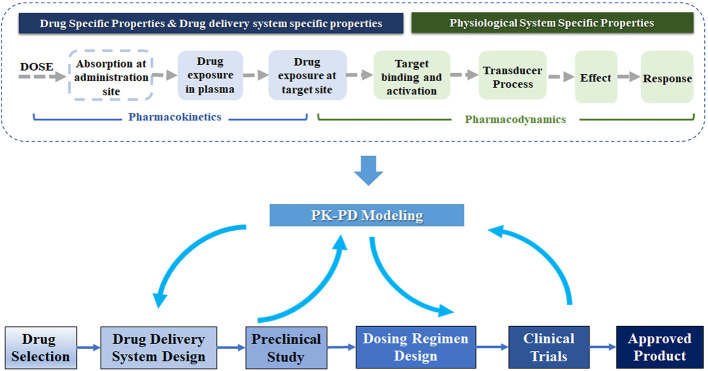
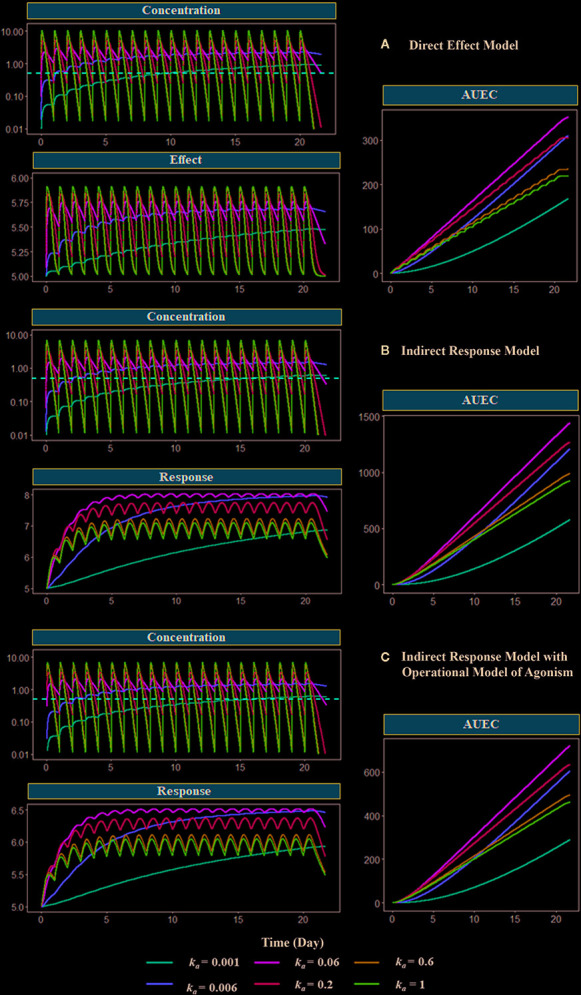
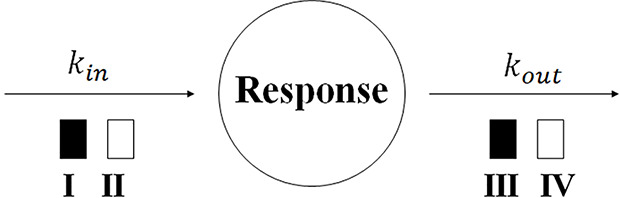
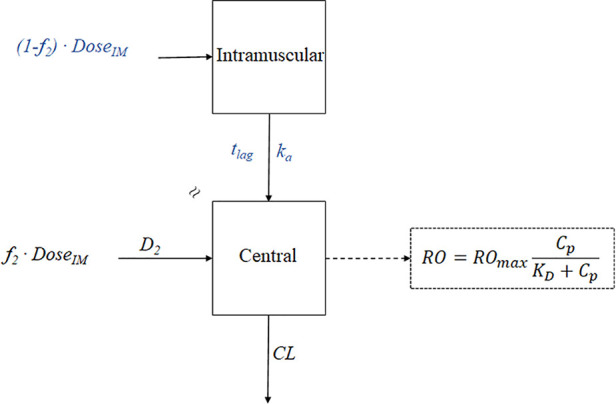
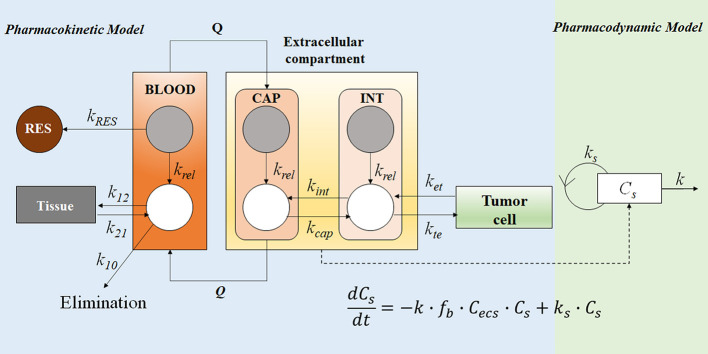
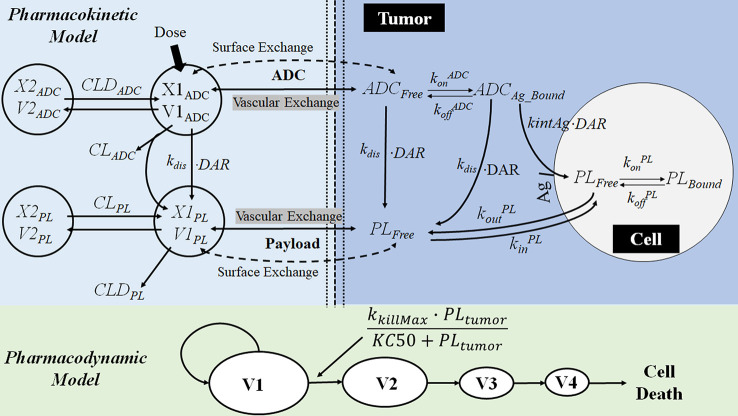
With the advancement of technology, drug delivery systems and molecules with more complex architecture are developed. As a result, the drug absorption and disposition processes after administration of these drug delivery systems and engineered molecules become exceedingly complex. As the pharmacokinetic and pharmacodynamic (PK-PD) modeling allows for the separation of the drug-, carrier- and pharmacological system-specific parameters, it has been widely used to improve understanding of the behavior of these complex delivery systems and help their development. In this review, we summarized the basic PK-PD modeling theory in drug delivery and demonstrated how it had been applied to help the development of new delivery systems and modified large molecules. The linkage between PK and PD was highlighted. In particular, we exemplified the application of PK-PD modeling in the development of extended-release formulations, liposomal drugs, modified proteins, and antibody-drug conjugates. Furthermore, the model-based simulation using primary PD models for direct and indirect PD responses was conducted to explain the assertion of hypothetical minimal effective concentration or threshold in the exposure-response relationship of many drugs and its misconception. The limitations and challenges of the mechanism-based PK-PD model were also discussed.
随着技术的进步,人们开发出了结构更为复杂的药物递送系统和分子。因此,这些药物递送系统和工程分子给药后的药物吸收和处置过程变得极其复杂。由于药代动力学和药效学(PK-PD)建模能够分离药物、载体和药理系统特异性参数,它已被广泛用于增进对这些复杂递送系统行为的理解,并助力其研发。在本综述中,我们总结了药物递送中基本的PK-PD建模理论,并展示了其如何被应用于帮助新型递送系统和修饰大分子的研发。重点强调了PK与PD之间的联系。我们特别举例说明了PK-PD建模在缓释制剂、脂质体药物、修饰蛋白和抗体-药物偶联物研发中的应用。此外,还使用主要的PD模型对直接和间接PD反应进行了基于模型的模拟,以解释许多药物暴露-反应关系中假设的最小有效浓度或阈值的主张及其误解。还讨论了基于机制的PK-PD模型的局限性和挑战。