Zhu Zhiwen, Zhang Baiyu, Cai Qinhong, Ling Jingjing, Lee Kenneth, Chen Bing
NRPOP Laboratory, Faculty of Engineering and Applied Science, Memorial University of Newfoundland, St. John's, NL, Canada.
Biotechnology Research Institute of the National Research Council of Canada, Montreal, QC, Canada.
Front Bioeng Biotechnol. 2020 Jul 3;8:734. doi: 10.3389/fbioe.2020.00734. eCollection 2020.
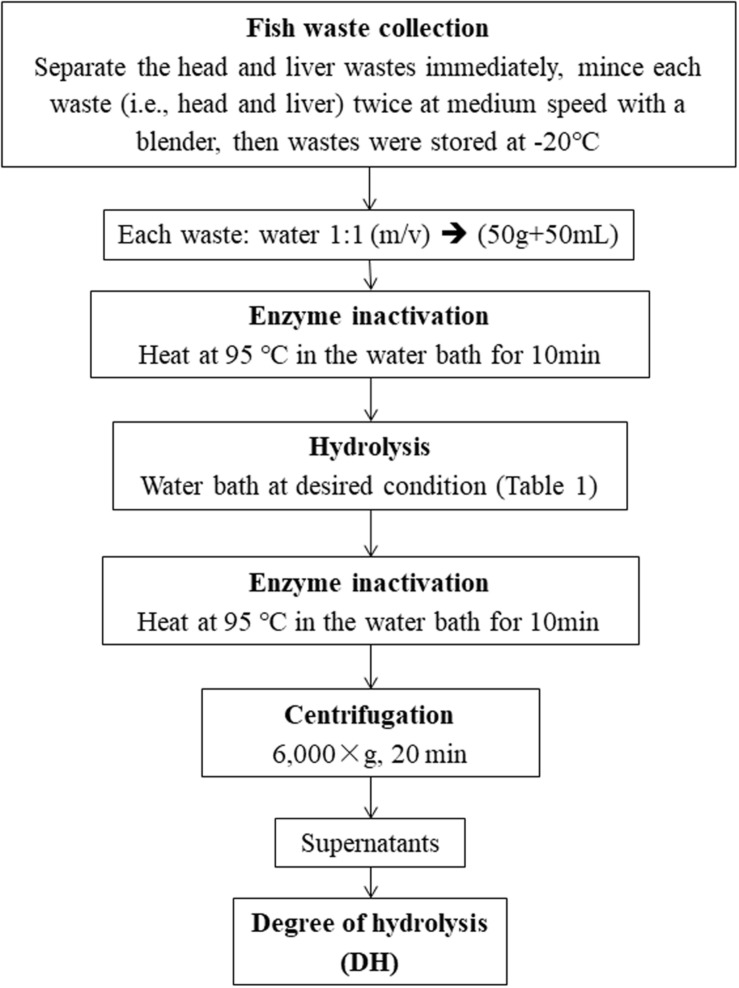
There is a growing acceptance worldwide for the application of dispersants as a marine oil spill response strategy. The development of more effective dispersants with less toxicity and higher biodegradability would be a step forward in improving public acceptance and regulatory approvals for their use. By applying advances in environmental biotechnology, a bio-dispersant agent with a lipopeptide biosurfactant produced by N3-1P as the key component was formulated in this study. The economic feasibility of producing biosurfactant (a high-added-value bioproduct) from fish waste-based peptone as a nutrient substrate was evaluated. Protein hydrolyzate was prepared from cod liver and head wastes obtained from fish processing facilities. Hydrolysis conditions (i.e., time, temperature, pH and enzyme to substrate level) for preparing protein hydrolyzates were optimized by response surface methodology using a factorial design. The critical micelle dilution (CMD) value for biosurfactant produced from the fish liver and head waste generated peptones was 54.72 and 47.59 CMD, respectively. Biosurfactant product generated by fish liver peptone had a low critical micelle concentration of 0.18 g L and could reduce the surface tension of distilled water to 27.9 mN/m. Structure characterization proved that the generated biosurfactant product belongs to the lipopeptide class. An alternative to the key surfactant dioctyl sulfosuccinate sodium (DOSS) used in Corexit 9500 has been proposed based on a binary mixture of lipopeptides and DOSS that exhibited synergistic effects. Using the standard baffled flask test, a high dispersion efficiency of 76.8% for Alaska North Slope oil was achieved at a biodispersant composition of 80/20 (v/v) of lipopeptides/DOSS. The results show that fish waste can be utilized to produce a more effective, environmentally acceptable and cost-efficient biodispersant that can be applied to oil spills in the marine environment.
在全球范围内,分散剂作为应对海上溢油的策略越来越被接受。开发毒性更低、生物降解性更高的更有效分散剂将是提高公众对其使用的接受度和监管批准的一个进步。通过应用环境生物技术的进展,本研究配制了一种以N3-1P产生的脂肽生物表面活性剂为关键成分的生物分散剂。评估了以鱼废料蛋白胨作为营养底物生产生物表面活性剂(一种高附加值生物产品)的经济可行性。从鱼类加工设施获得的鳕鱼肝和鱼头废料制备了蛋白质水解物。使用析因设计通过响应面法优化了制备蛋白质水解物的水解条件(即时间、温度、pH值和酶与底物水平)。由鱼肝和鱼头废料产生的蛋白胨制备的生物表面活性剂的临界胶束稀释(CMD)值分别为54.72和47.59 CMD。鱼肝蛋白胨产生的生物表面活性剂产品的临界胶束浓度低至0.18 g/L,可将蒸馏水的表面张力降低至27.9 mN/m。结构表征证明所产生的生物表面活性剂产品属于脂肽类。基于表现出协同效应的脂肽和二辛基磺基琥珀酸钠(DOSS)的二元混合物,提出了用于Corexit 9500的关键表面活性剂二辛基磺基琥珀酸钠(DOSS)的替代品。使用标准的摇瓶试验,在脂肽/DOSS的生物分散剂组成为80/20(v/v)时,对阿拉斯加北坡原油的分散效率高达76.8%。结果表明,鱼废料可用于生产更有效、环境可接受且成本效益高的生物分散剂,可应用于海洋环境中的溢油处理。