Marion Murray Spinal Cord Research Center, Department of Neurobiology and Anatomy, Drexel University, Philadelphia, PA, 19129.
J Physiol. 2020 Oct;598(20):4621-4642. doi: 10.1113/JP280070. Epub 2020 Aug 13.
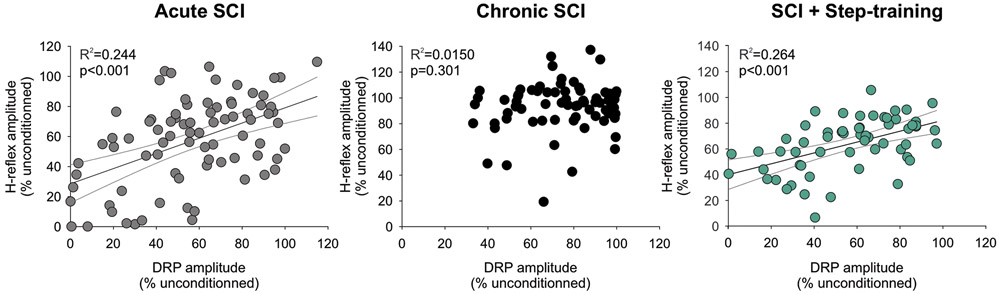
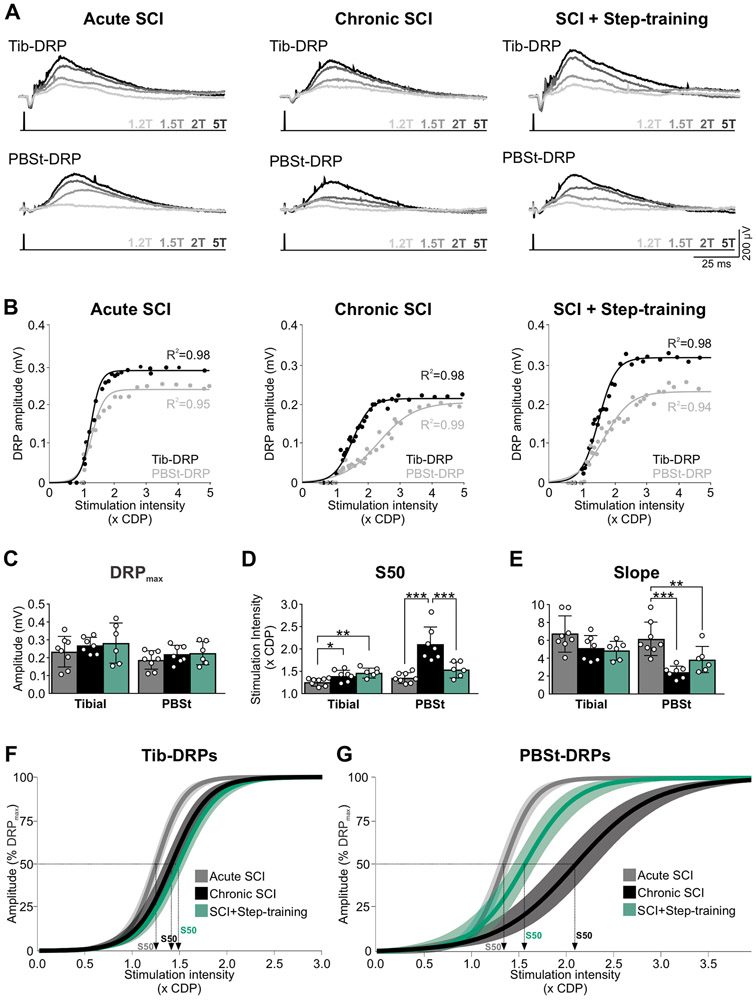
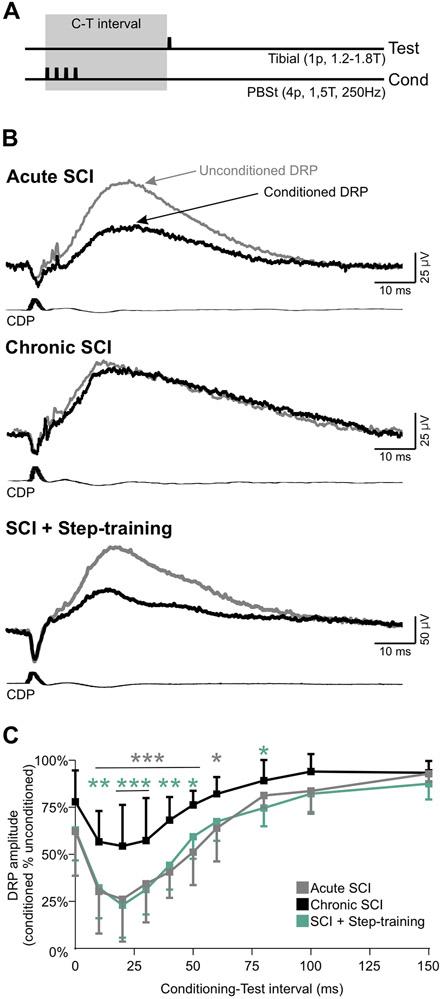
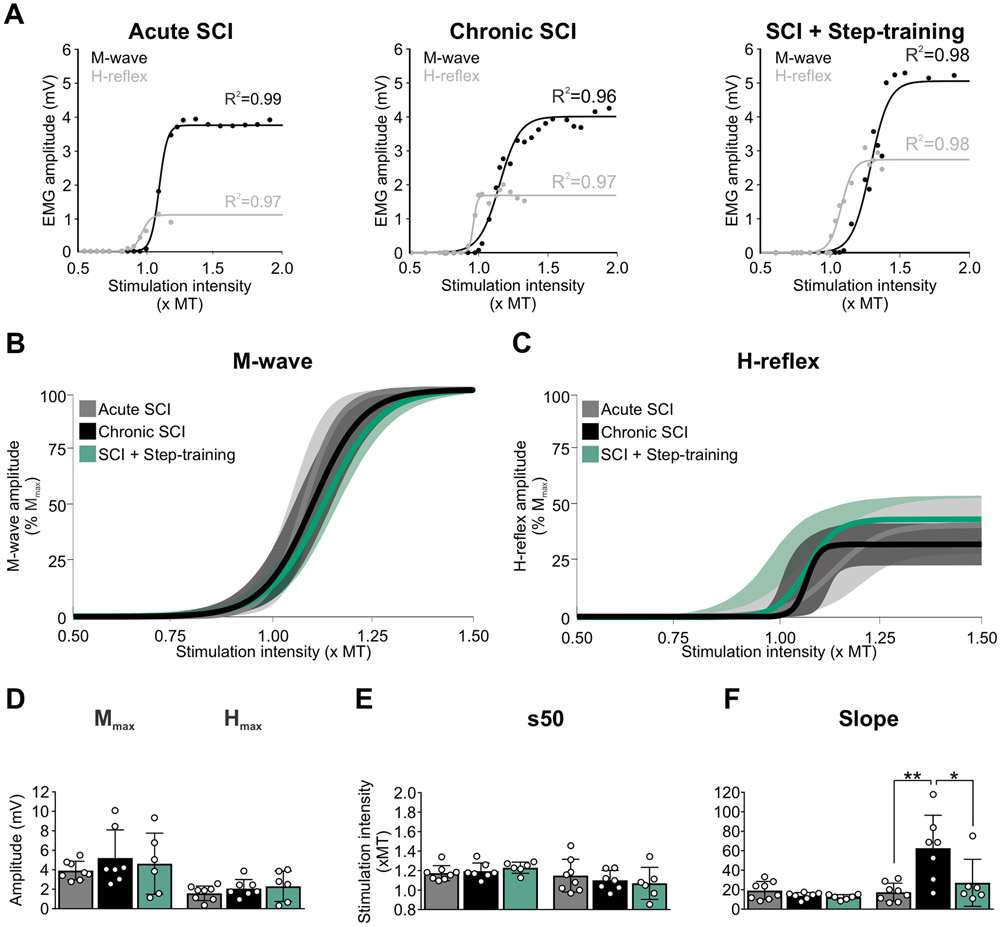
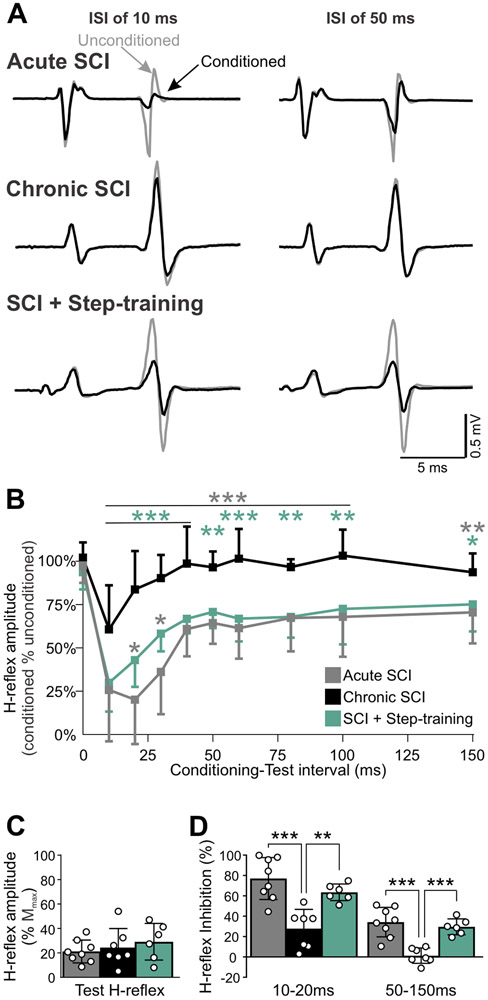
Presynaptic inhibition is modulated by supraspinal centres and primary afferents in order to filter sensory information, adjust spinal reflex excitability, and ensure smooth movement. After spinal cord injury (SCI), the supraspinal control of primary afferent depolarization (PAD) interneurons is disengaged, suggesting an increased role for sensory afferents. While increased H-reflex excitability in spastic individuals indicates a possible decrease in presynaptic inhibition, it remains unclear whether a decrease in sensory-evoked PAD contributes to this effect. We investigated whether the PAD evoked by hindlimb afferents contributes to the change in presynaptic inhibition of the H-reflex in a decerebrated rat preparation. We found that chronic SCI decreases presynaptic inhibition of the plantar H-reflex through a reduction in PAD evoked by posterior biceps-semitendinosus (PBSt) muscle group I afferents. We further found that step-training restored presynaptic inhibition of the plantar H-reflex evoked by PBSt, suggesting the presence of activity-dependent plasticity of PAD pathways activated by flexor muscle group I afferents.
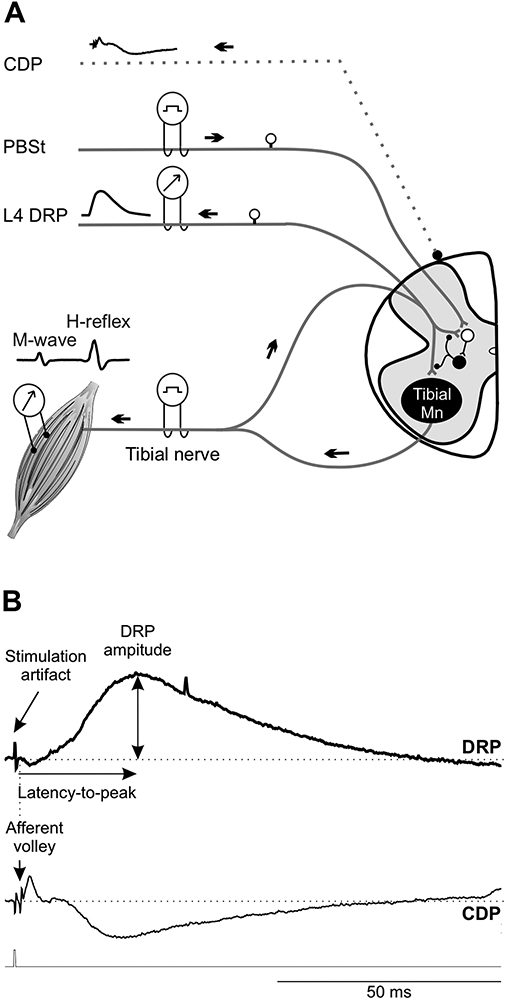
Spinal cord injury (SCI) results in the disruption of supraspinal control of spinal networks and an increase in the relative influence of afferent feedback to sublesional neural networks, both of which contribute to enhancing spinal reflex excitability. Hyperreflexia occurs in ∼75% of individuals with a chronic SCI and critically hinders functional recovery and quality of life. It is suggested that it results from an increase in motoneuronal excitability and a decrease in presynaptic and postsynaptic inhibitory mechanisms. In contrast, locomotor training decreases hyperreflexia by restoring presynaptic inhibition. Primary afferent depolarization (PAD) is a powerful presynaptic inhibitory mechanism that selectively gates primary afferent transmission to spinal neurons to adjust reflex excitability and ensure smooth movement. However, the effect of chronic SCI and step-training on the reorganization of presynaptic inhibition evoked by hindlimb afferents, and the contribution of PAD has never been demonstrated. The objective of this study is to directly measure changes in presynaptic inhibition through dorsal root potentials (DRPs) and its association with plantar H-reflex inhibition. We provide direct evidence that H-reflex hyperexcitability is associated with a decrease in transmission of PAD pathways activated by posterior biceps-semitendinosus (PBSt) afferents after chronic SCI. More precisely, we illustrate that the pattern of inhibition evoked by PBSt group I muscle afferents onto both L4-DRPs and plantar H-reflexes evoked by the distal tibial nerve is impaired after chronic SCI. These changes are not observed in step-trained animals, suggesting a role for activity-dependent plasticity to regulate PAD pathways activated by flexor muscle group I afferents.
突触前抑制受脊髓以上中枢和初级传入的调节,以过滤感觉信息、调节脊髓反射兴奋性,并确保运动平稳。脊髓损伤 (SCI) 后,初级传入去极化 (PAD) 中间神经元的脊髓以上控制被解除,表明感觉传入的作用增加。痉挛个体的 H 反射兴奋性增加表明突触前抑制可能减少,但尚不清楚感觉诱发的 PAD 减少是否有助于这种效应。我们研究了在后肢传入的诱发下,足底 H 反射的突触前抑制是否会发生变化。我们发现慢性 SCI 通过减少由后二头肌-半腱肌 (PBSt) 肌肉群 I 传入引起的 PAD,降低了足底 H 反射的突触前抑制。我们进一步发现,步训恢复了由 PBSt 诱发的足底 H 反射的突触前抑制,表明激活屈肌群 I 传入的 PAD 通路存在活动依赖性可塑性。
脊髓损伤 (SCI) 导致脊髓网络的脊髓以上控制中断,以及下位神经元网络中传入反馈的相对影响增加,这两者都有助于增强脊髓反射兴奋性。大约 75%的慢性 SCI 患者会出现反射亢进,严重阻碍了功能恢复和生活质量。它被认为是由于运动神经元兴奋性增加和突触前和突触后抑制机制减少引起的。相比之下,运动训练通过恢复突触前抑制来降低反射亢进。初级传入去极化 (PAD) 是一种强大的突触前抑制机制,它选择性地调节初级传入向脊髓神经元的传递,以调整反射兴奋性并确保运动平稳。然而,慢性 SCI 和步训对后肢传入诱发的突触前抑制的重组以及 PAD 的作用从未被证明过。本研究的目的是通过背根电位 (DRP) 直接测量突触前抑制的变化及其与足底 H 反射抑制的关系。我们提供了直接的证据,表明慢性 SCI 后,后二头肌-半腱肌 (PBSt) 传入引起的 PAD 通路的传递减少与 H 反射兴奋性增加有关。更准确地说,我们说明了慢性 SCI 后,由 PBSt 肌肉群 I 传入引起的 L4-DRP 和由远端胫神经诱发的足底 H 反射的抑制模式受损。在接受步训的动物中没有观察到这些变化,这表明活动依赖性可塑性在调节由屈肌群 I 传入激活的 PAD 通路方面起着作用。