Higuchi Rumi, Goto Taichiro, Hirotsu Yosuke, Yokoyama Yujiro, Nakagomi Takahiro, Otake Sotaro, Amemiya Kenji, Oyama Toshio, Mochizuki Hitoshi, Omata Masao
Lung Cancer and Respiratory Disease Center, Yamanashi Central Hospital, Yamanashi 400-8506, Japan.
Genome Analysis Center, Yamanashi Central Hospital, Yamanashi 400-8506, Japan.
Cancers (Basel). 2020 Jul 24;12(8):2032. doi: 10.3390/cancers12082032.
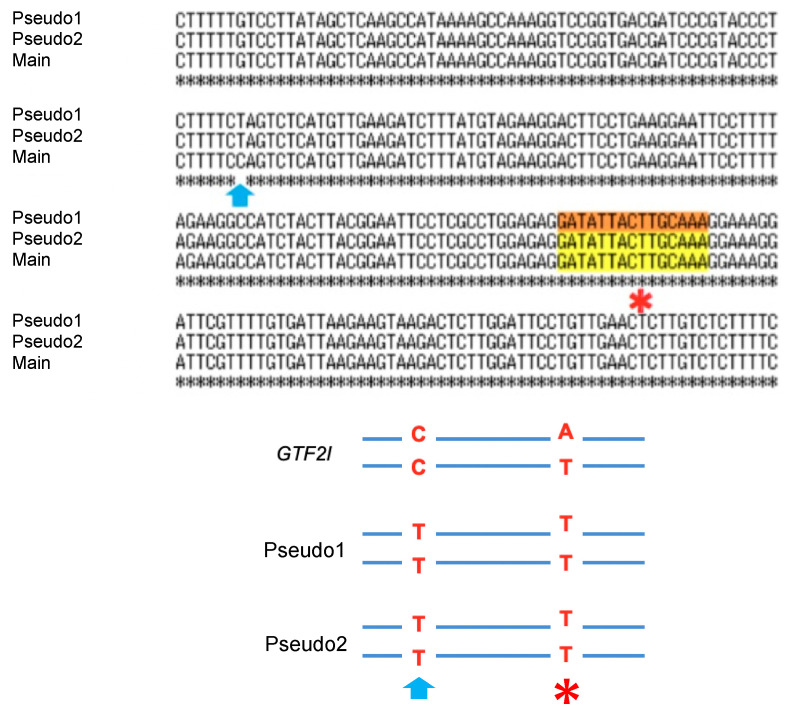
Thymomas are rare mediastinal tumors that are difficult to treat and pose a major public health concern. Identifying mutations in target genes is vital for the development of novel therapeutic strategies. Type A thymomas possess a missense mutation in (chromosome 7 c.74146970T>A) with high frequency. However, the molecular pathways underlying the tumorigenesis of other thymomas remain to be elucidated. We aimed to detect this missense mutation in in other thymoma subtypes (types B). This study involved 22 patients who underwent surgery for thymomas between January 2014 and August 2019. We isolated tumor cells from formalin-fixed paraffin-embedded tissues from the primary lesions using laser-capture microdissection. Subsequently, we performed targeted sequencing to detect mutant coupled with molecular barcoding. We used PyClone analysis to determine the fraction of tumor cells harboring mutant . We detected the missense mutation (chromosome 7 c.74146970T>A) in in 14 thymomas among the 22 samples (64%). This mutation was harbored in many type B thymomas as well as type A and AB thymomas. The allele fraction for the tumors containing the mutations was variable, primarily owing to the coexistence of normal lymphocytes in the tumors, especially in type B thymomas. PyClone analysis revealed a high cellular prevalence of mutant in tumor cells. Mutant was not detected in other carcinomas (lung, gastric, colorectal, or hepatocellular carcinoma) or lymphomas. In conclusion, the majority of thymomas harbor mutations in that can be potentially used as a novel therapeutic target in patients with thymomas.
胸腺瘤是罕见的纵隔肿瘤,难以治疗,是一个重大的公共卫生问题。识别靶基因突变对于开发新的治疗策略至关重要。A型胸腺瘤在(染色体7 c.74146970T>A)中高频存在错义突变。然而,其他胸腺瘤发生肿瘤的分子途径仍有待阐明。我们旨在检测其他胸腺瘤亚型(B型)中的这种错义突变。本研究纳入了2014年1月至2019年8月间接受胸腺瘤手术的22例患者。我们使用激光捕获显微切割技术从原发性病变的福尔马林固定石蜡包埋组织中分离肿瘤细胞。随后,我们进行靶向测序以检测突变的 并结合分子条形码技术。我们使用PyClone分析来确定携带突变 的肿瘤细胞比例。我们在22个样本中的14个胸腺瘤(64%)中检测到了(染色体7 c.74146970T>A)的错义突变。许多B型胸腺瘤以及A型和AB型胸腺瘤都存在这种突变。含有突变的肿瘤的等位基因比例各不相同,主要是由于肿瘤中正常淋巴细胞的共存,尤其是在B型胸腺瘤中。PyClone分析显示肿瘤细胞中突变 的细胞患病率很高。在其他癌症(肺癌、胃癌、结直肠癌或肝细胞癌)或淋巴瘤中未检测到突变 。总之,大多数胸腺瘤都存在 突变,这有可能作为胸腺瘤患者的新治疗靶点。