Department of Women's and Children's Health, Institute of Translational Medicine, Liverpool Health Partners, University of Liverpool, Liverpool, UK.
Department of Paediatric Nephrology, Liverpool Health Partners, Alder Hey Children's NHS Foundation Trust Hospital, Liverpool, UK.
Pediatr Nephrol. 2021 Jun;36(6):1377-1385. doi: 10.1007/s00467-020-04686-1. Epub 2020 Jul 28.
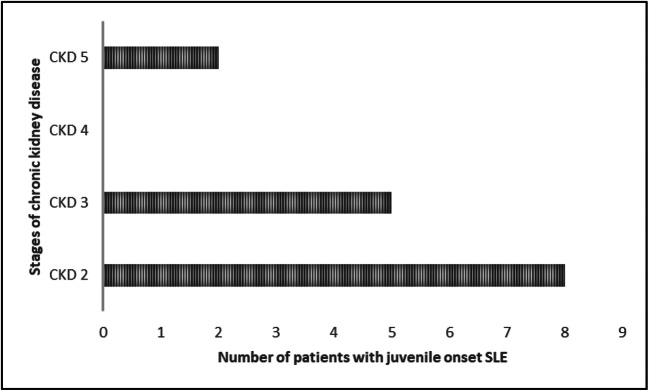
Systemic lupus erythematosus is a rare lifelong multi-systemic autoimmune condition. Juvenile-onset SLE (JSLE) is recognized to have a more active disease course when compared with adult-onset disease and patients have a worse long-term survival. Kidney involvement occurs in over 50% of children and treatment decisions are guided by the histological classification. Several international groups have produced treatment protocols that rely on an intense period of immunosuppression to halt the acute kidney inflammatory process, followed by maintenance therapy with close observation for disease improvement and prompt evaluation of disease flares. A reduced glomerular filtration rate at presentation is predictive of later stage chronic kidney disease (CKD) in multivariate analysis. Kidney remission remains suboptimal with only 40-60% of patients achieving complete remission. Kidney flares are seen in over a third of patients. The rate of CKD 5 is reported to be up to 15% and the presence of lupus nephritis (LN) has an established link with an associated increase in mortality. In established kidney failure, transplantation seems to be the optimal kidney replacement modality for this group of patients, ideally after a period of disease quiescence. Modified outcome measures in clinical trials have demonstrated that biologic agents can be effective in this disease. Current biologic agents under investigation include obinutuzimab, belimumab, atacicept, anifrolumab, tocilizumab, eculizumab, dapirolizumab, and abatacept. Future research should focus on discovering early disease biomarkers, including surrogates for later cardiovascular disease, and evaluating biological agents as adjuncts to improve the rates of complete remission and subsequently influence the kidney outcome. The aim of this review article is to summarize the current kidney outcomes for this disease with a view to identifying key areas that may help to reduce the risk of long-term CKD.
系统性红斑狼疮是一种罕见的终身多系统自身免疫性疾病。与成人发病相比,青少年发病的系统性红斑狼疮(SLE)被认为具有更活跃的疾病过程,患者的长期生存率更差。超过 50%的儿童会出现肾脏受累,治疗决策取决于组织学分类。一些国际组织制定了治疗方案,这些方案依赖于强烈的免疫抑制期来阻止急性肾脏炎症过程,然后进行维持治疗,并密切观察疾病改善情况,以及及时评估疾病复发。多变量分析显示,就诊时肾小球滤过率降低预示着后期慢性肾脏病(CKD)。肾脏缓解并不理想,只有 40-60%的患者达到完全缓解。超过三分之一的患者出现肾脏复发。据报道,CKD 5 的发生率高达 15%,狼疮肾炎(LN)的存在与死亡率的增加有明确关联。在已建立的肾衰竭中,移植似乎是这群患者的最佳肾脏替代方式,理想情况下是在疾病静止期之后。临床试验中的改良疗效指标表明,生物制剂在这种疾病中可能有效。目前正在研究的生物制剂包括奥滨尤妥珠单抗、贝利尤单抗、阿巴西普、依那西普、托珠单抗、依库珠单抗、达普洛单抗和阿巴西普。未来的研究应集中在发现早期疾病生物标志物,包括预测后期心血管疾病的替代标志物,以及评估生物制剂作为辅助治疗以提高完全缓解率,进而影响肾脏结局。本文的目的是总结该疾病的当前肾脏结局,以期确定有助于降低长期 CKD 风险的关键领域。