Consejo Nacional de Investigaciones Científicas y Técnicas (CONICET), Godoy Cruz 2290, C1425FQB, Ciudad Autónoma de Buenos Aires, Argentina.
División Paleontología Vertebrados, Facultad de Ciencias Naturales y Museo, Universidad Nacional de La Plata, Paseo del Bosque s/n, B1900FWA, La Plata, Argentina.
Sci Rep. 2020 Jul 29;10(1):12782. doi: 10.1038/s41598-020-67854-1.
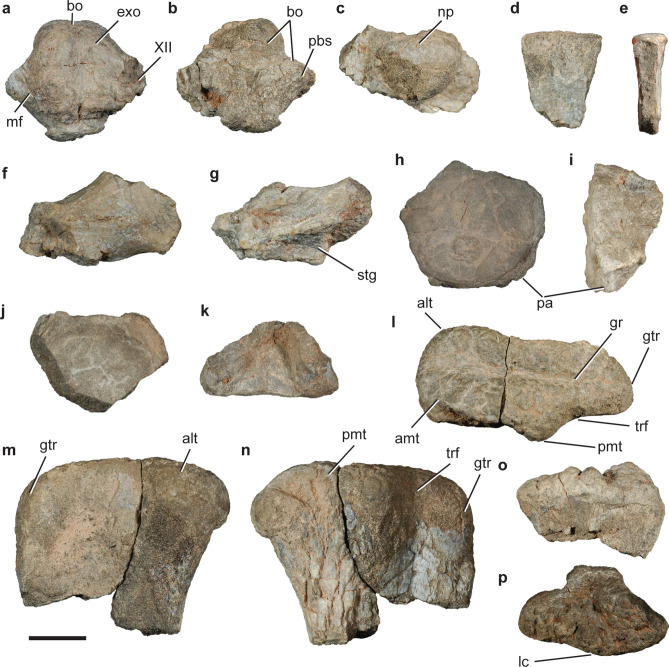
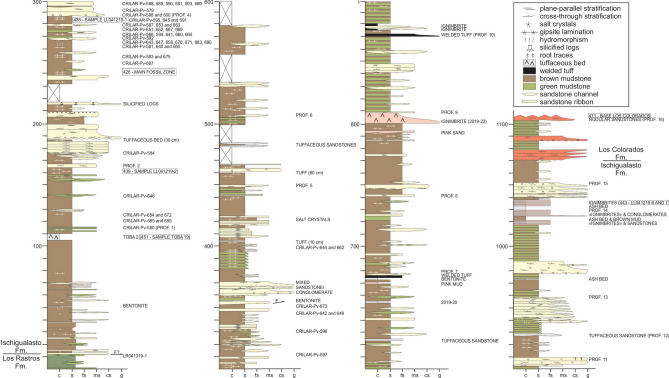
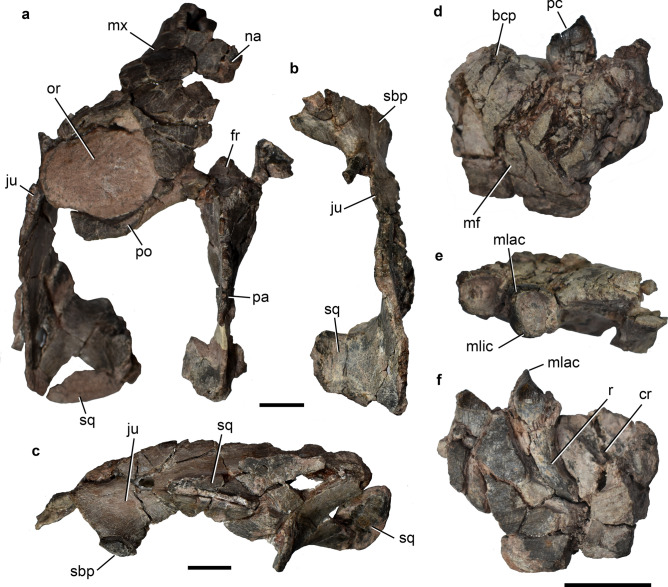
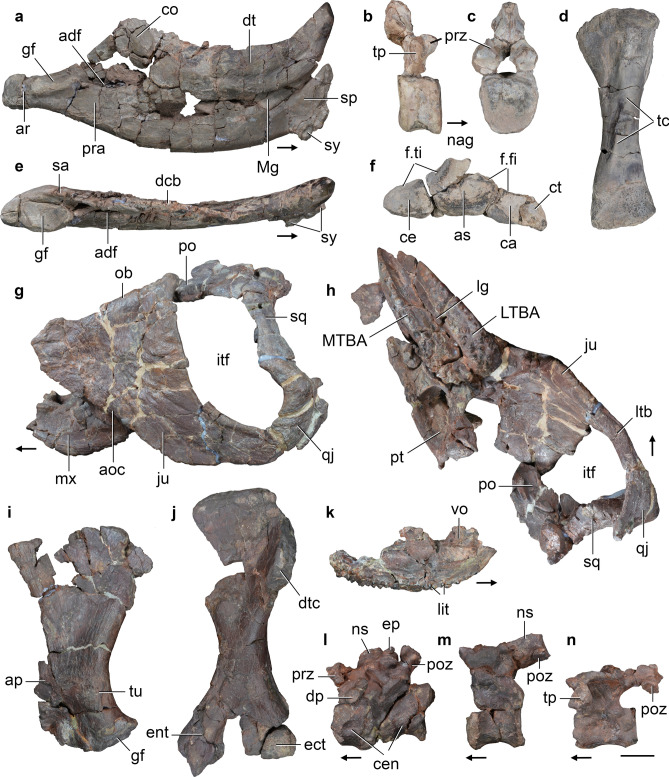
Present knowledge of Late Triassic tetrapod evolution, including the rise of dinosaurs, relies heavily on the fossil-rich continental deposits of South America, their precise depositional histories and correlations. We report on an extended succession of the Ischigualasto Formation exposed in the Hoyada del Cerro Las Lajas (La Rioja, Argentina), where more than 100 tetrapod fossils were newly collected, augmented by historical finds such as the ornithosuchid Venaticosuchus rusconii and the putative ornithischian Pisanosaurus mertii. Detailed lithostratigraphy combined with high-precision U-Pb geochronology from three intercalated tuffs are used to construct a robust Bayesian age model for the formation, constraining its deposition between 230.2 ± 1.9 Ma and 221.4 ± 1.2 Ma, and its fossil-bearing interval to 229.20 + 0.11/- 0.15-226.85 + 1.45/- 2.01 Ma. The latter is divided into a lower Hyperodapedon and an upper Teyumbaita biozones, based on the ranges of the eponymous rhynchosaurs, allowing biostratigraphic correlations to elsewhere in the Ischigualasto-Villa Unión Basin, as well as to the Paraná Basin in Brazil. The temporally calibrated Ischigualasto biostratigraphy suggests the persistence of rhynchosaur-dominated faunas into the earliest Norian. Our ca. 229 Ma age assignment to Pi. mertii partially fills the ghost lineage between younger ornithischian records and the oldest known saurischians at ca. 233 Ma.
目前关于三叠纪晚期四足动物的演化知识,包括恐龙的兴起,主要依赖于富含化石的南美洲大陆沉积层,以及它们确切的沉积历史和对比。我们报告了在拉雷多省拉霍亚·德尔塞罗·拉拉萨(阿根廷)暴露的伊希瓜拉斯托组的一个扩展连续体,在那里新收集了 100 多个四足动物化石,此外还有历史发现,如鸟鳄兽属的沃纳提克斯库斯和假定的鸟臀目恐龙皮萨诺龙。详细的岩性地层学结合来自三个互层凝灰岩的高精度 U-Pb 年代学,用于构建该地层的稳健贝叶斯年龄模型,约束其沉积时间在 230.2±1.9 Ma 和 221.4±1.2 Ma 之间,其含化石间隔在 229.20+0.11/-0.15-226.85+1.45/-2.01 Ma 之间。后者分为下部的 Hyperodapedon 和上部的 Teyumbaita 生物带,基于同名的有颌齿龙的范围,允许与伊希瓜拉斯托-维拉联盟盆地的其他地方以及巴西的帕拉纳盆地进行生物地层对比。时间校准的伊希瓜拉斯托生物地层学表明,有颌齿龙主导的动物群一直持续到早诺利期。我们对 Pi. mertii 的大约 229 Ma 的年龄赋值部分填补了年轻的鸟臀目记录和已知最早的 233 Ma 的蜥脚类恐龙之间的幽灵谱系。