Kurar Langhit, Nash William, Faroug Radwane, Hussain Laila, Walker Roland, Abbasian Ali, Latif Ahmed, Singh Samrendu
Department of Orthopedics, Guy's and St Thomas' NHS Foundation Trust, London, United Kingdom.
J Med Life. 2020 Apr-Jun;13(2):160-163. doi: 10.25122/jml-2019-0109.
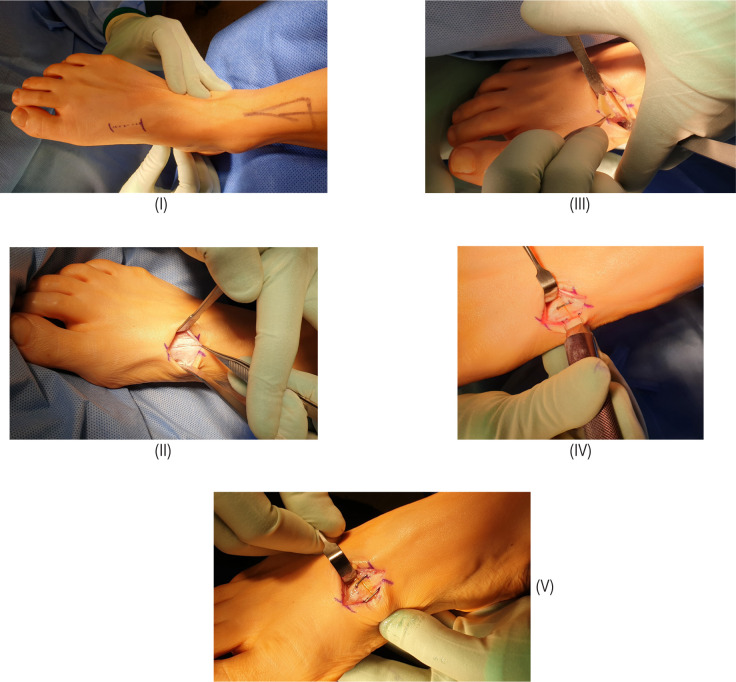
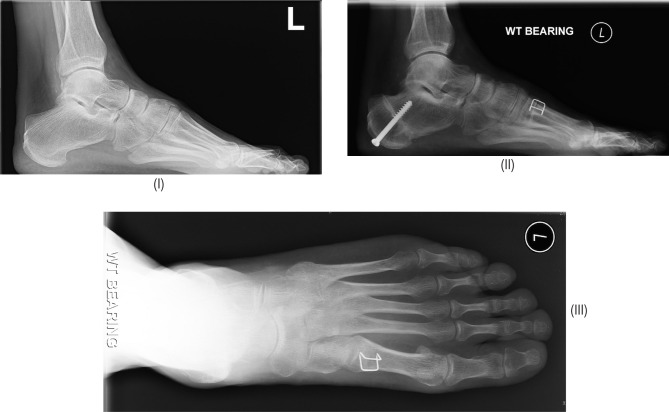
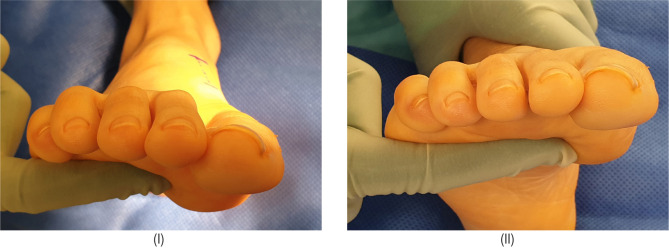
A first ray dorsiflexion osteotomy is commonly performed for cavovarus foot correction. There are multiple techniques to fix this osteotomy, ranging from wires, screws, and plates or a combination of these. We present our results using a varisation staple (Biomet©) as an alternative fixation device. We performed a retrospective outcome analysis of a consecutive series of 10 cavovarus feet that underwent a dorsiflexion osteotomy (dorsal closing wedge) of the first metatarsal fixed with two varisation staples. The results were measured at a mean three monthly follow-ups and included union and complication rates, as well as clinical and radiographic assessment of cavus deformity correction. There was a 100% union rate with no complications or cases of delayed union. No metalwork removal was requested in any case at follow-up. First ray dorsiflexion osteotomies are most commonly fixed using a 3.5mm cortical screw. We demonstrate that our alternative and novel technique using varisation staples achieved a 100% union rate while avoiding the prominent hardware complications known to occur with cortical screws or plates.
第一跖骨背屈截骨术常用于治疗高弓内翻足。固定该截骨术有多种技术,包括钢丝、螺钉、钢板或这些方法的组合。我们展示了使用一种可变型钉(Biomet©)作为替代固定装置的结果。我们对连续10例接受第一跖骨背屈截骨术(背侧闭合楔形截骨)并使用两枚可变型钉固定的高弓内翻足进行了回顾性结果分析。结果在平均每三个月的随访中进行测量,包括骨愈合率和并发症发生率,以及对高弓畸形矫正的临床和影像学评估。骨愈合率为100%,无并发症或延迟愈合病例。随访期间,任何病例均未要求取出内固定物。第一跖骨背屈截骨术最常用3.5毫米皮质骨螺钉固定。我们证明,我们使用可变型钉的替代新技术实现了100%的骨愈合率,同时避免了已知与皮质骨螺钉或钢板相关的明显内固定并发症。