
社会奖励和非社会奖励对学龄前儿童执行功能的影响。
Effects of social and nonsocial reward on executive function in preschoolers.
机构信息
Research Center for Neuroscience, Institute of Molecular Biosciences, Mahidol University, Nakhon Pathom, Thailand.
Department of Psychology, The University of Edinburgh, Edinburgh, UK.
出版信息
Brain Behav. 2020 Sep;10(9):e01763. doi: 10.1002/brb3.1763. Epub 2020 Jul 30.
INTRODUCTION
Executive function, a set of higher order cognitive skills underlying goal-directed behaviors, develops rapidly during preschool years. Reward increases executive function engagement in adolescents and adults. However, there is still a scarcity of data on how reward affects executive function in young children. The present study examines whether different incentive types contribute differently to executive function performance and neural activity in children.
METHODS
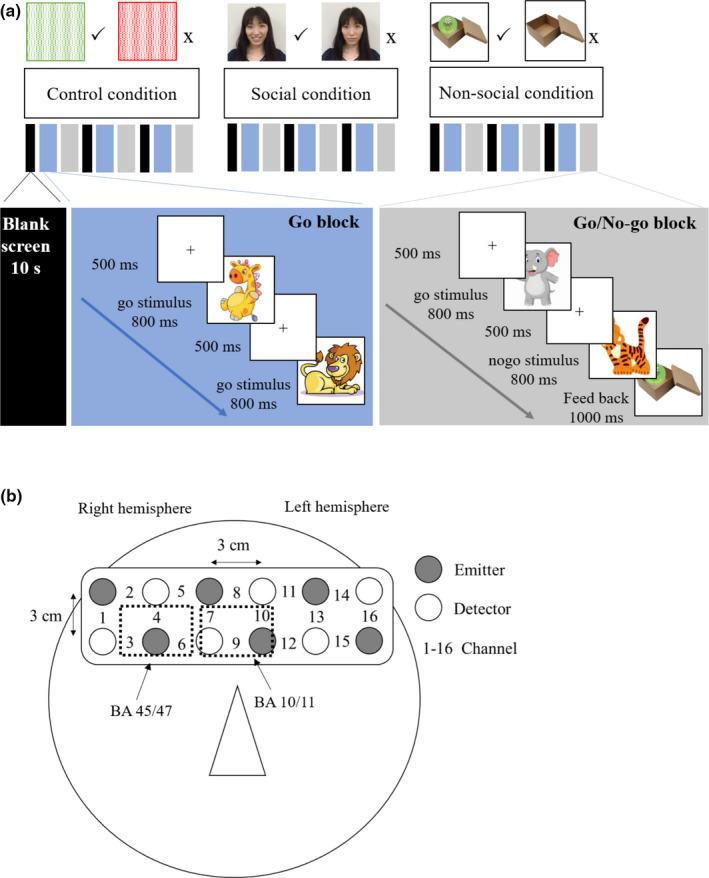
Twenty-five preschoolers of 5-6 years old were provided an incentive Go/No-go task, comparing social, nonsocial, and nonreward conditions. Activations in the prefrontal regions during the tasks were measured using functional near-infrared spectroscopy.
RESULTS
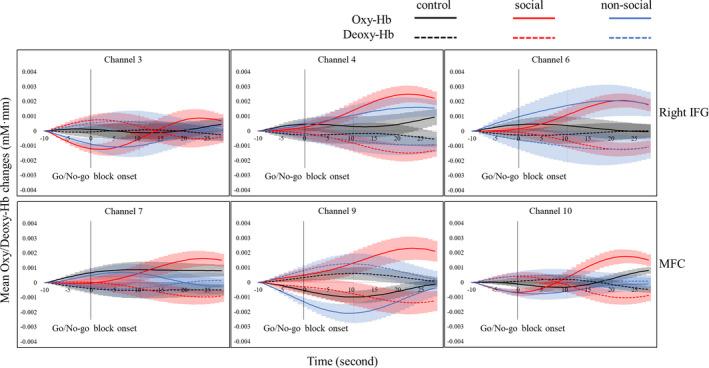
The results revealed that social reward enhanced right prefrontal activations in young children. In contrast to adult literature, younger children did not show any significant differences in executive function performance across conditions.
CONCLUSION
This study expands our understanding of motivation and EF engagement in preschoolers. Specifically, social reward enhanced prefrontal activations in young children. The implications and recommendations for future research are discussed.
简介
执行功能是一组高级认知技能,是目标导向行为的基础,在学龄前迅速发展。奖励可以提高青少年和成年人的执行功能参与度。然而,关于奖励如何影响幼儿的执行功能,数据仍然匮乏。本研究旨在探讨不同激励类型对儿童执行功能表现和神经活动的影响是否不同。
方法
对 25 名 5-6 岁的学龄前儿童进行激励 Go/No-go 任务,比较社会、非社会和非奖励条件。使用功能近红外光谱法测量任务期间前额叶区域的激活。
结果
结果表明,社会奖励增强了幼儿的右前额叶激活。与成人文献不同的是,年幼的儿童在不同条件下的执行功能表现没有显著差异。
结论
本研究扩展了我们对学龄前儿童动机和 EF 参与的理解。具体来说,社会奖励增强了幼儿的前额叶激活。讨论了对未来研究的影响和建议。

 Zotero 插件