,.
J Vis. 2020 Jul 1;20(7):33. doi: 10.1167/jov.20.7.33.
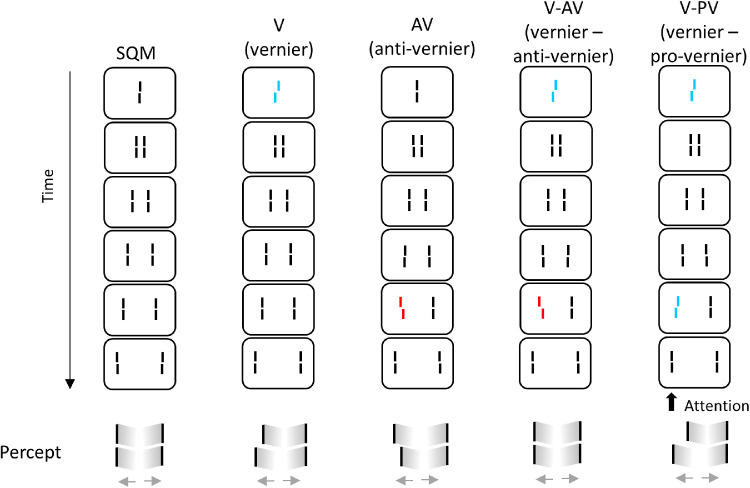
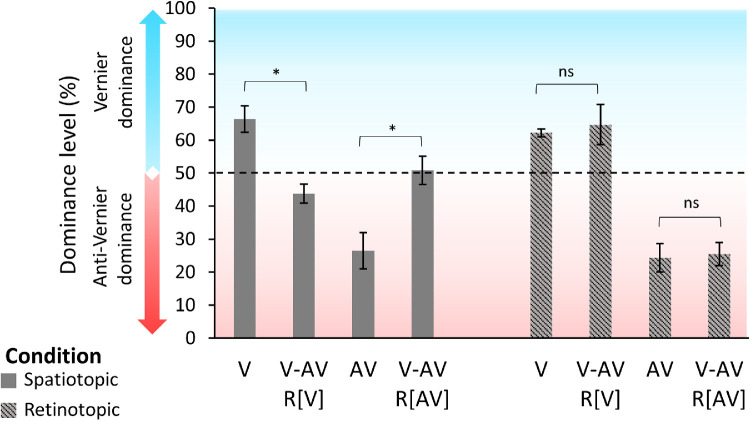
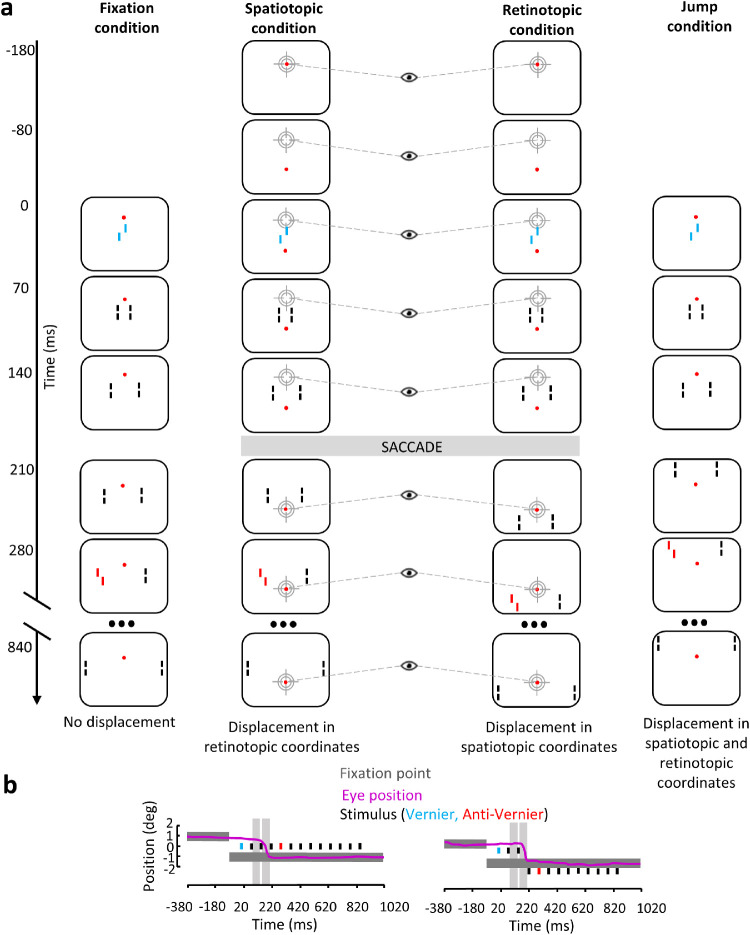
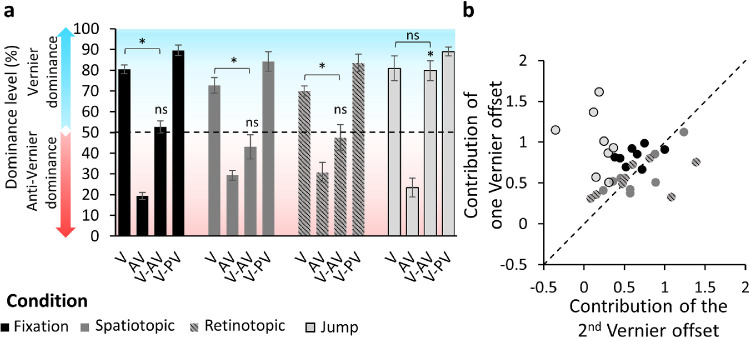
Humans make two to four rapid eye movements (saccades) per second, which, surprisingly, does not lead to abrupt changes in vision. To the contrary, we perceive a stable world. Hence, an important question is how information is integrated across saccades. To investigate this question, we used the sequential metacontrast paradigm (SQM), where two expanding streams of lines are presented. When one line is spatially offset, the other lines are perceived as being offset, too. When more lines are offset, all offsets integrate mandatorily; that is, observers cannot report the individual offsets but perceive one integrated offset. Here, we asked observers to make a saccade during the SQM. Even though the saccades caused a highly disrupted motion trajectory on the retina, offsets presented before and after the saccade integrated mandatorily. When observers made no saccade and the streams were displaced on the screen so that a similarly disrupted retinal image occurred as in the previous condition, no integration occurred. We suggest that trans-saccadic integration and perception are determined by object identity in spatiotopic coordinates and not by the retinal image.
人类平均每秒会进行两到四次快速眼动(眼跳),但令人惊讶的是,这并不会导致视觉出现明显变化。相反,我们感知到的是一个稳定的世界。因此,一个重要的问题是信息如何在眼跳之间进行整合。为了研究这个问题,我们使用了序列对比反转范式(SQM),在该范式中呈现两个不断扩展的线流。当一条线在空间上发生偏移时,其他线也会被感知为发生了偏移。当更多的线发生偏移时,所有的偏移都会强制性地整合;也就是说,观察者无法报告各个偏移,而是感知到一个整合的偏移。在这里,我们要求观察者在 SQM 期间进行眼跳。尽管眼跳导致视网膜上的运动轨迹高度混乱,但在眼跳之前和之后呈现的偏移仍然强制性地整合。当观察者不进行眼跳,并且线流在线上发生位移,导致与之前的条件相同的视网膜图像混乱时,就不会发生整合。我们认为,跨眼跳的整合和感知是由空间坐标中的物体身份决定的,而不是由视网膜图像决定的。