The Christopher Chen Oocyte Biology Research Laboratory, Centre for Clinical Research, The University of Queensland, Herston, Qld, Australia.
Aging Cell. 2020 Sep;19(9):e13204. doi: 10.1111/acel.13204. Epub 2020 Jul 30.
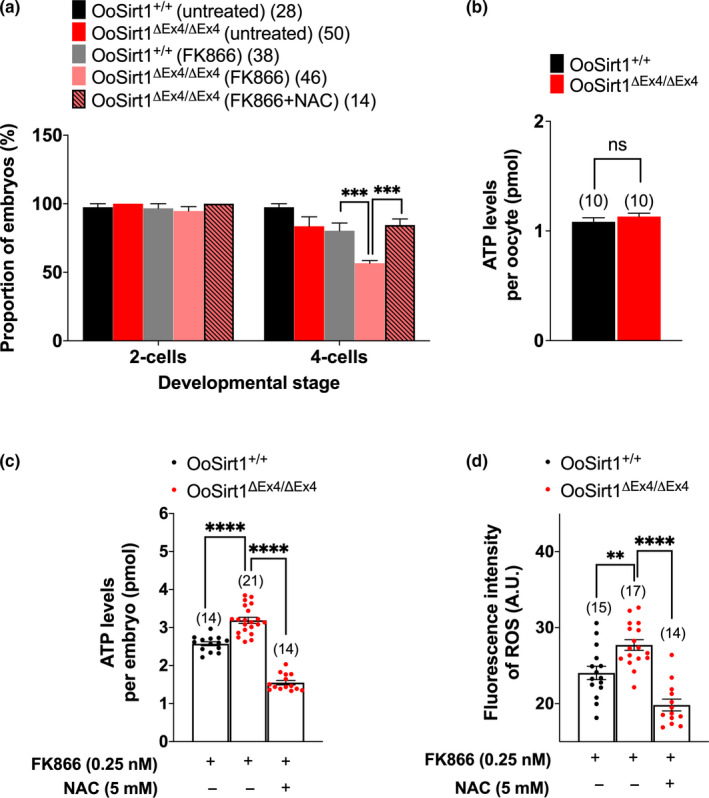
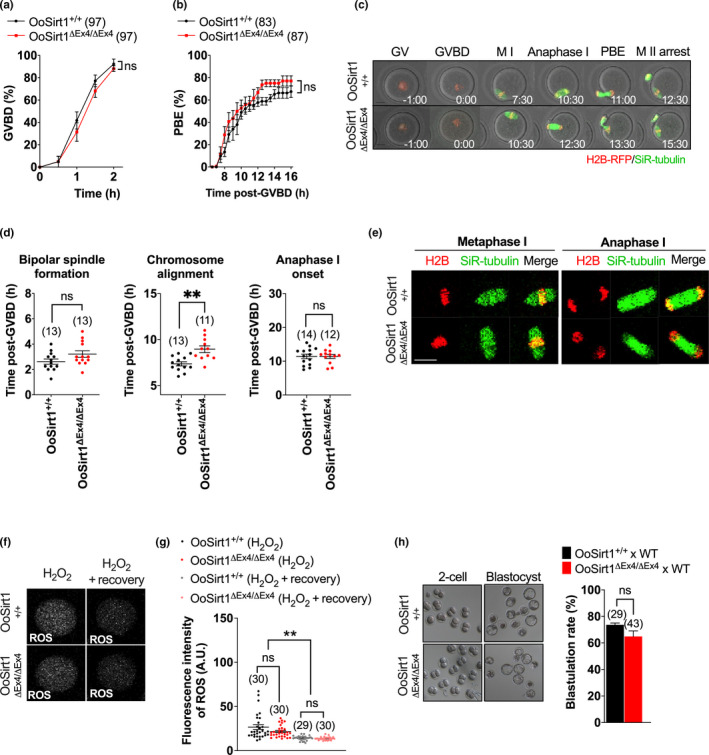
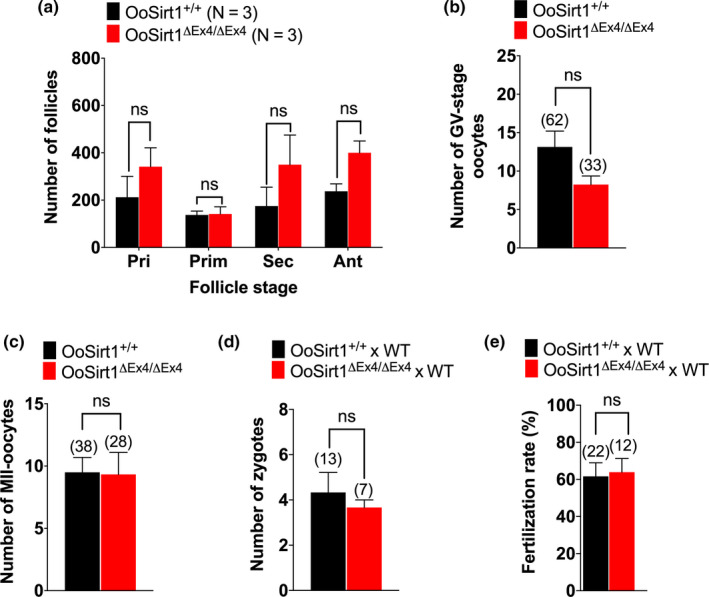
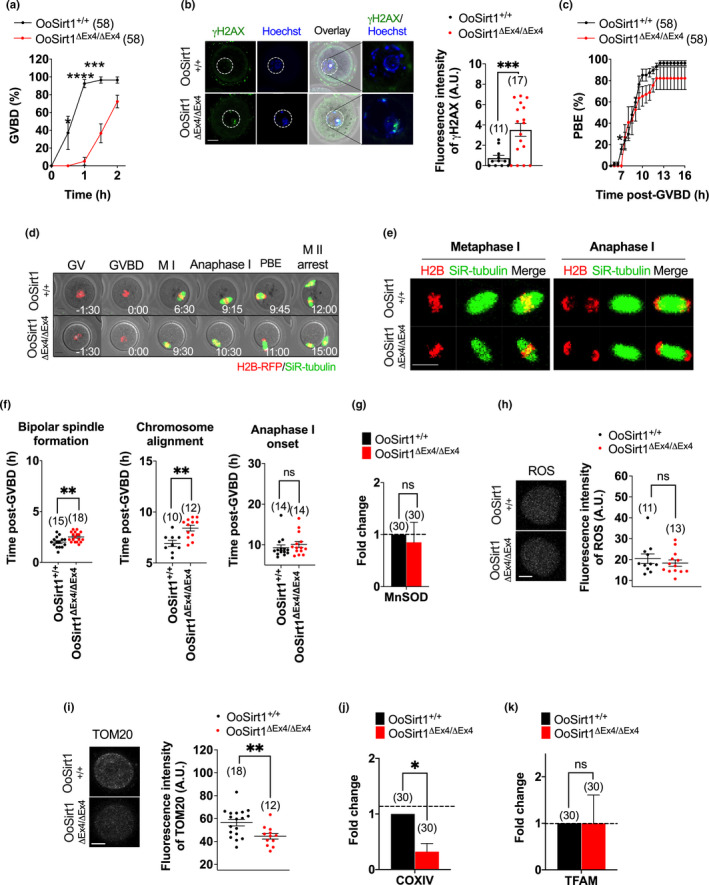
The NAD -dependent sirtuin deacetylase, Sirt1, regulates key transcription factors strongly implicated in ageing and lifespan. Due to potential confounding effects secondary to loss of Sirt1 function from the soma in existing whole-animal mutants, the in vivo role of Sirt1 in oocytes (oocyte-Sirt1) for female fertility remains unknown. We deleted Sirt1 specifically in growing oocytes and study how loss of oocyte-Sirt1 affects a comprehensive range of female reproductive parameters including ovarian follicular reservoir, oocyte maturation, oocyte mitochondrial abundance, oxidative stress, fertilization, embryo development and fertility during ageing. Surprisingly, eliminating this key sirtuin from growing oocytes has no effect in young females. During a 10-month-long breeding trial, however, we find that 50% of females lacking oocyte-Sirt1 become prematurely sterile between 9 and 11 months of age when 100% of wild-type females remain fertile. This is not due to an accelerated age-related decline in oocyte numbers in the absence of oocyte-Sirt1 but to reduced oocyte developmental competence or quality. Compromised oocyte quality does not impact in vivo oocyte maturation or fertilization but leads to increased oxidative stress in preimplantation embryos that inhibits cleavage divisions. Our data suggest that defects emerge in aged females lacking oocyte-Sirt1 due to concurrent age-related changes such as reduced NAD and sirtuin expression levels, which compromise compensatory mechanisms that can cover for Sirt1 loss in younger oocytes. In contrast to evidence that increasing Sirt1 activity delays ageing, our data provide some of the only in vivo evidence that loss of Sirt1 induces premature ageing.
NAD 依赖性组蛋白去乙酰化酶 Sirt1 调节着关键的转录因子,这些转录因子强烈参与衰老和寿命。由于现有整体动物突变体中 Sirt1 功能丧失会导致体细胞的潜在混杂效应,因此 Sirt1 在卵母细胞(卵母细胞-Sirt1)中对雌性生育力的体内作用尚不清楚。我们特异性地在生长中的卵母细胞中删除了 Sirt1,并研究了卵母细胞-Sirt1 的缺失如何影响一系列广泛的雌性生殖参数,包括卵巢卵泡储备、卵母细胞成熟、卵母细胞线粒体丰度、氧化应激、受精、胚胎发育和衰老过程中的生育能力。令人惊讶的是,在年轻女性中,消除这种关键的组蛋白去乙酰化酶对卵母细胞没有影响。然而,在长达 10 个月的繁殖试验中,我们发现 50%的缺乏卵母细胞-Sirt1 的雌性在 9 到 11 个月大时会过早失去生育能力,而 100%的野生型雌性仍然保持生育能力。这不是由于缺乏卵母细胞-Sirt1 导致卵母细胞数量的加速衰老性下降,而是由于卵母细胞发育能力或质量降低。卵母细胞质量受损不会影响体内卵母细胞成熟或受精,但会导致着床前胚胎中的氧化应激增加,从而抑制卵裂分裂。我们的数据表明,缺乏卵母细胞-Sirt1 的老年雌性会出现缺陷,这是由于同时发生的与年龄相关的变化,如 NAD 和 Sirt1 表达水平降低,这些变化会损害补偿机制,而这些补偿机制可以弥补年轻卵母细胞中 Sirt1 的缺失。与增加 Sirt1 活性延缓衰老的证据相反,我们的数据提供了一些仅有的体内证据,表明 Sirt1 的缺失会导致过早衰老。