Wei Jiyong, Li Yicheng, Liu Qian, Lan Yanni, Wei Chengming, Tian Kun, Wu Liwei, Lin Chunbo, Xu Jiake, Zhao Jinmin, Yang Yuan
Research Centre for Regenerative Medicine, Guangxi Key Laboratory of Regenerative Medicine, Guangxi Medical University, Nanning, China.
Guangxi Collaborative Innovation Center for Biomedicine, Life Sciences Institute, Guangxi Medical University, Nanning, China.
Front Pharmacol. 2020 Jul 7;11:1025. doi: 10.3389/fphar.2020.01025. eCollection 2020.
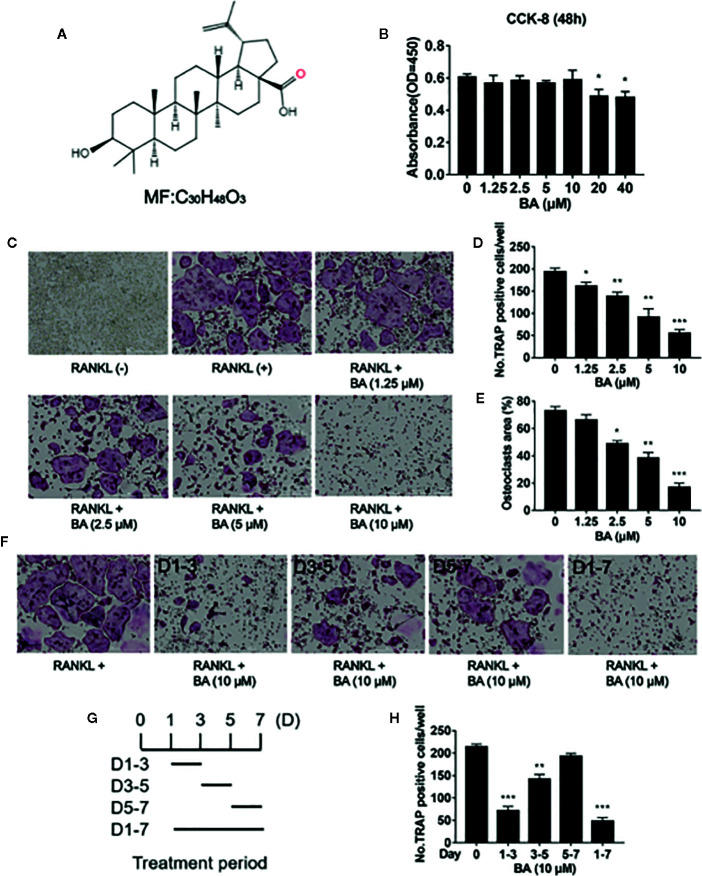
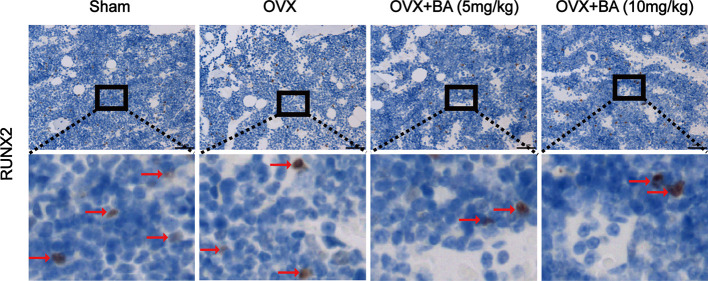
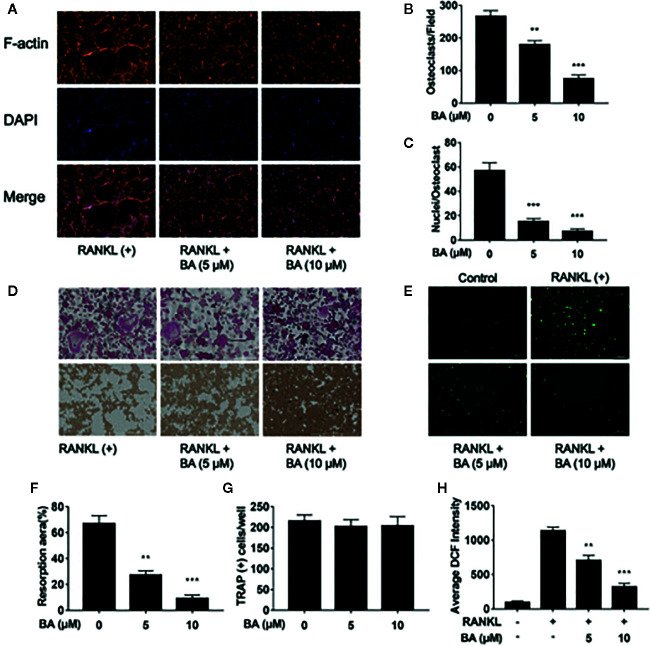
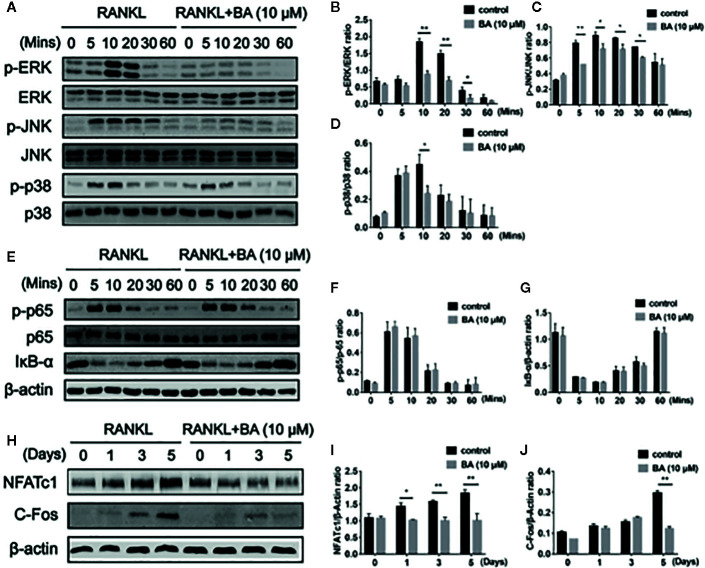
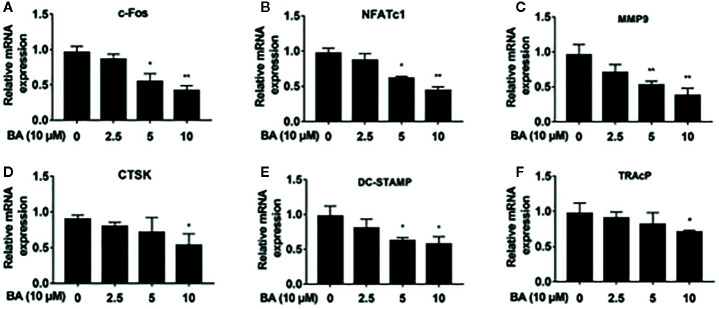
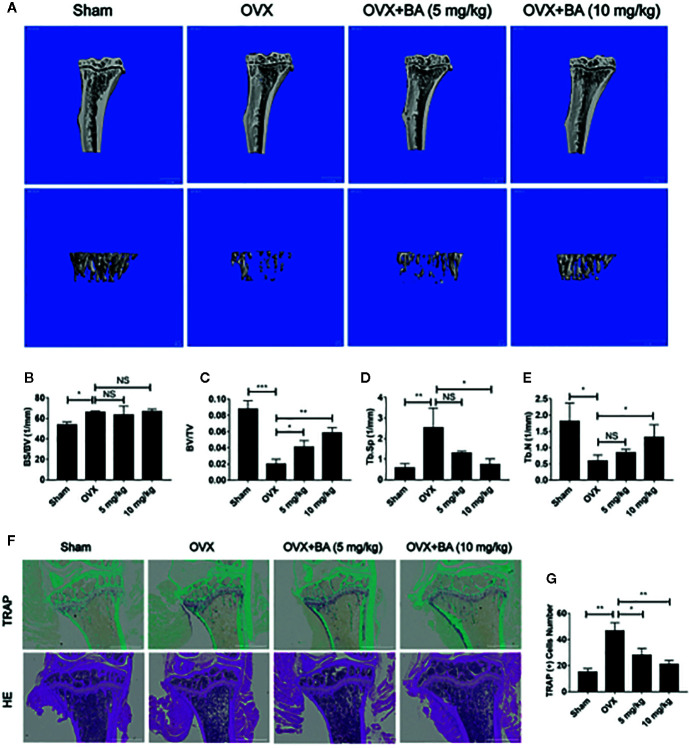
Osteoclasts with elevated bone resorption are commonly present in postmenopausal osteoporosis, and other osteolytic pathologies. Therefore, suppressing osteoclast generation and function has been the main focus of osteoporosis treatment. Betulinic acid (BA) represents a triterpenoid mainly purified from the bark of Betulaceae. BA shows multiple biological activities, including antitumor and anti-HIV properties, but its effect on osteolytic conditions is unknown. Here, BA suppressed receptor activator of nuclear factor-κB ligand (RANKL)-associated osteoclastogenesis and bone resorptive function, as assessed by tartrate-resistant acid phosphatase (TRAP) staining, fibrous actin ring generation, and hydroxyapatite resorption assays. Mechanistically, BA downregulated the expression of osteoclastic-specific genes. Western blot analysis revealed that BA significantly interrupted ERK, JNK and p38 MAPK activation as well as intracellular reactive oxygen species (ROS) production, thus altering c-Fos and NFATc1 activation. Corroborating the above findings in cell-based assays, BA prevented ovariectomy-associated bone loss in an animal model. In conclusion, these findings suggest that BA can inhibit osteoclast generation and function as well as the RANKL signaling pathway, and might be used for treating osteoclast-related osteoporosis.
骨吸收增加的破骨细胞常见于绝经后骨质疏松症和其他溶骨性病变中。因此,抑制破骨细胞的生成和功能一直是骨质疏松症治疗的主要重点。桦木酸(BA)是一种主要从桦木科树皮中纯化得到的三萜类化合物。BA具有多种生物学活性,包括抗肿瘤和抗HIV特性,但其对溶骨性疾病的影响尚不清楚。在此,通过抗酒石酸酸性磷酸酶(TRAP)染色、纤维肌动蛋白环生成和羟基磷灰石吸收试验评估,BA抑制了核因子κB受体激活剂配体(RANKL)相关的破骨细胞生成和骨吸收功能。从机制上讲,BA下调了破骨细胞特异性基因的表达。蛋白质印迹分析显示,BA显著阻断了ERK、JNK和p38丝裂原活化蛋白激酶(MAPK)的激活以及细胞内活性氧(ROS)的产生,从而改变了c-Fos和NFATc1的激活。在基于细胞的试验中证实上述发现后,BA在动物模型中预防了卵巢切除相关的骨质流失。总之,这些发现表明BA可以抑制破骨细胞的生成和功能以及RANKL信号通路,可能用于治疗与破骨细胞相关的骨质疏松症。