Ali Hazrat, Rahman Muhammad Meezanur, Rico Andreu, Jaman Ahmed, Basak Siddhwartha Kumar, Islam Mohammad Mahbubul, Khan Nazneen, Keus Hendrik Jan, Mohan Chadag Vishnumurthy
WorldFish, Bangladesh and South Asia Office, House #22/B, Road # 7, Block #F, Banani, Dhaka, Bangladesh.
IMDEA Water Institute, Science and Technology Campus of the University of Alcalá, Avenida Punto Com 2, P.O. Box 28805, Alcalá de Henares, Madrid, Spain.
Vet Anim Sci. 2018 Jan 6;5:10-19. doi: 10.1016/j.vas.2018.01.002. eCollection 2018 Jun.
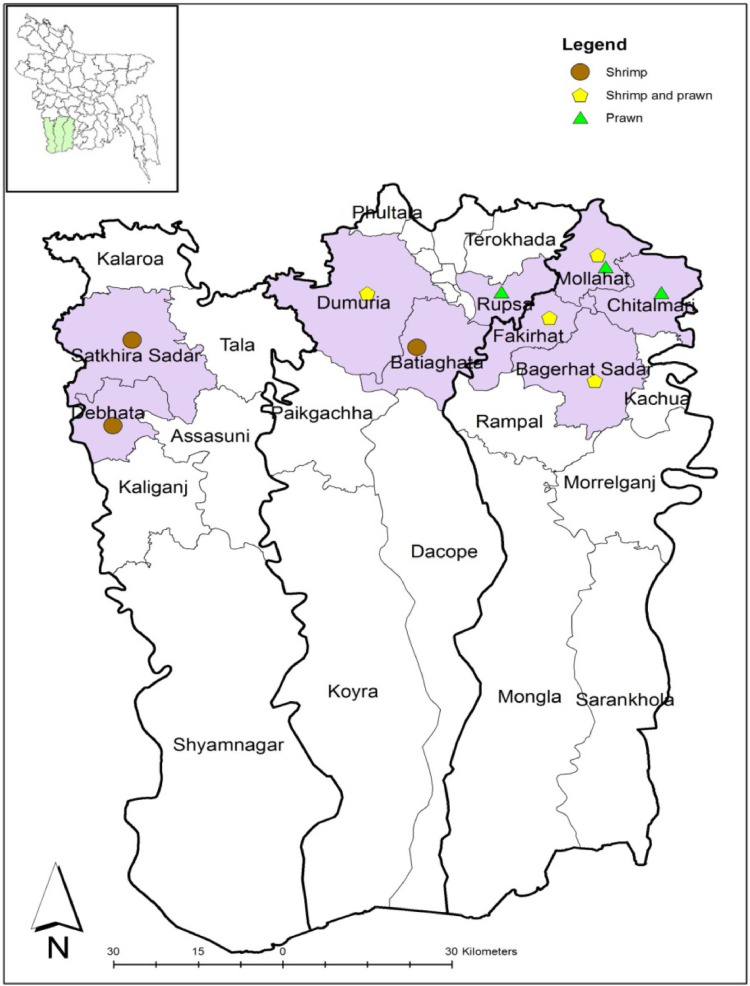
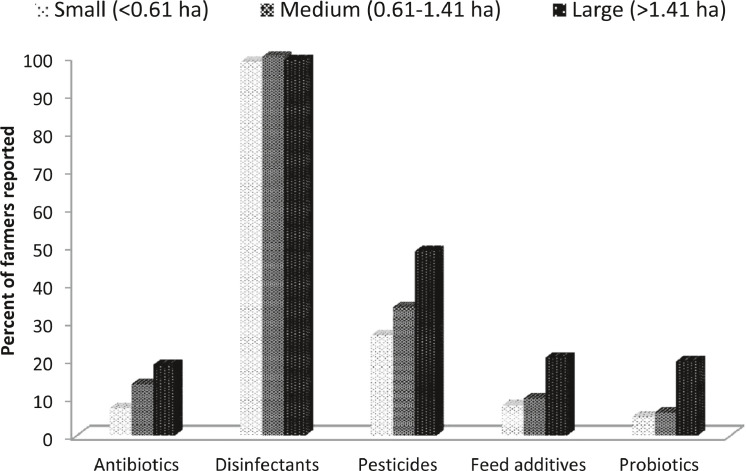
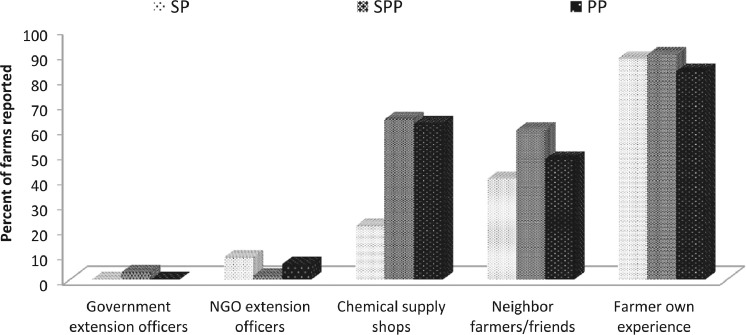
Diseases have been recognized as the major obstacle to the shrimp () and prawn () aquaculture production in Bangladesh. This study provides an assessment of shrimp and prawn diseases/syndromes, health management practices, and occupational health hazards associated with the handling of chemical and biological products to prevent and treat shrimp and prawn diseases. A survey was conducted using a semi-structured questionnaire with 380 shrimp and prawn farmers in the southwest of Bangladesh during February and June of 2016. The farms were categorized on the basis of the three cropping patterns: shrimp polyculture, prawn polyculture, and shrimp and prawn polyculture. Eight different diseases and/or symptoms were reported by the surveyed farmers. The white spot disease and the broken antenna and rostrum symptom were the most common in shrimp and prawn species, respectively. In total, 35 chemical and biological products (4 antibiotics, 15 disinfectants, 13 pesticides, 2 feed additives and probiotics) were used to treat and/or prevent diseases in the all farm categories. The major constraints for disease management were limited access to disease diagnostic service, inadequate product application information and lack of knowledge on better management practices. Handling chemicals and preparation of medicated feed with bare hands was identified as a potential occupational health hazard. This study suggests improvements in farmers' knowledge and skill in disease diagnostics and health management practices, and appropriate handling of potentially hazardous chemicals.
疾病已被公认为是孟加拉国虾类(对虾)养殖生产的主要障碍。本研究对虾类疾病/综合征、健康管理措施以及与处理用于预防和治疗虾类疾病的化学和生物制品相关的职业健康危害进行了评估。2016年2月至6月期间,采用半结构化问卷对孟加拉国西南部的380名虾农进行了调查。这些养殖场根据三种养殖模式进行分类:虾类混养、对虾类混养以及虾类和对虾类混养。受访虾农报告了八种不同的疾病和/或症状。白斑病和触角及额剑断裂症状分别在虾类和对虾类中最为常见。所有养殖场类别总共使用了35种化学和生物制品(4种抗生素、15种消毒剂、13种杀虫剂、2种饲料添加剂和益生菌)来治疗和/或预防疾病。疾病管理的主要制约因素包括疾病诊断服务获取有限、产品应用信息不足以及缺乏更好管理措施的知识。徒手处理化学品和制备药饵被确定为一种潜在的职业健康危害。本研究建议提高农民在疾病诊断和健康管理措施方面的知识和技能,并正确处理潜在危险化学品。