
迈向水产养殖中抗生素的可持续使用与抗菌药物耐药性:参与式专家概述与建议
Towards Sustainable Antibiotic Use in Aquaculture and Antimicrobial Resistance: Participatory Experts' Overview and Recommendations.
作者信息
Farías Daniela R, Ibarra Rolando, Estévez Rodrigo A, Tlusty Michael F, Nyberg Oskar, Troell Max, Avendaño-Herrera Ruben, Norden Wendy
机构信息
Monterey Bay Aquarium Global Oceans Conservation Program, 886 Cannery Row, Monterey, CA 93940, USA.
Centro de Investigación e Innovación para el Cambio Climático, Facultad de Ciencias, Universidad Santo Tomás, Santiago 8370003, Chile.
出版信息
Antibiotics (Basel). 2024 Sep 14;13(9):887. doi: 10.3390/antibiotics13090887.
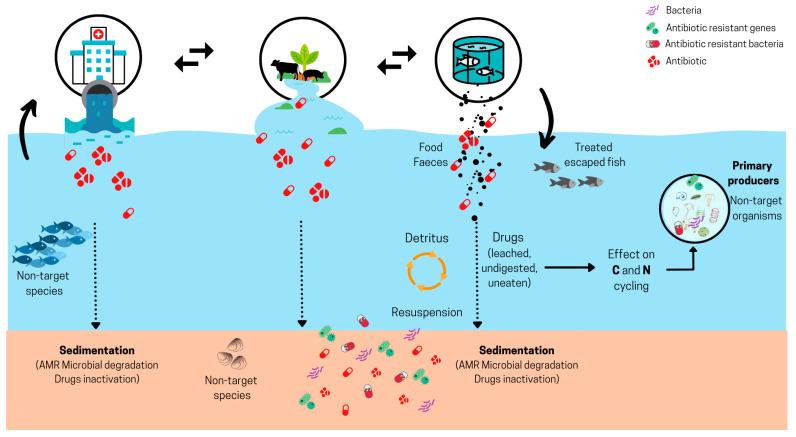
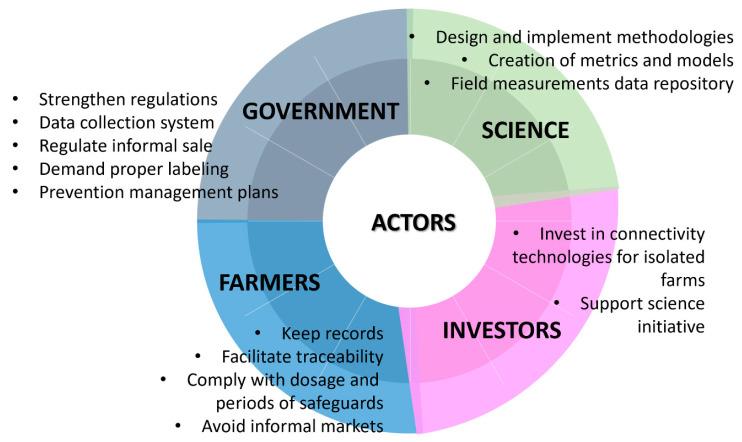
Notably, 56 worldwide experts gathered for the Antimicrobial Assessment on Global Aquaculture Production (AGAP) series of workshops to (1) evaluate the current state of knowledge on antimicrobial use and identify existing gaps; (2) formulate strategies to identify ecologically relevant impact indicators and establish thresholds for assessment; (3) identify pivotal socioeconomic factors and effective governance mechanisms essential for implementing monitoring practices in aquaculture and extending them across sectors and countries for aquaculture sustainability; (4) develop pathways to enhance our comprehension between antibiotic use in aquaculture and antimicrobial resistance; and (5) explore potential antibiotic monitoring tools that can be universally adapted and implemented across region and sectors. The main outcomes were a roadmap for establishing investigation priorities on the relevant topics regarding antibiotic use in aquaculture, socioeconomic drivers for using antibiotics and behaviors that need more robust and transparent regulatory frameworks to guide farmers, training on antimicrobial use, and access to veterinarians and extension services agents for education. Overall, the workshop evidenced the power of collaboration in addressing complex global challenges to achieve sustainable aquaculture. Despite diligent efforts, some constraints may have inadvertently narrowed the possibility of having more experts and left some pertinent topics unaddressed, but they are needed in the discussion.
值得注意的是,来自全球的56位专家齐聚全球水产养殖生产抗菌评估(AGAP)系列研讨会,目的是:(1)评估抗菌药物使用的现有知识水平并找出存在的差距;(2)制定战略,以确定与生态相关的影响指标并建立评估阈值;(3)确定关键的社会经济因素以及有效的治理机制,这些对于在水产养殖中实施监测实践并将其扩展到各个部门和国家以实现水产养殖可持续性至关重要;(4)探索增强我们对水产养殖中抗生素使用与抗菌药物耐药性之间理解的途径;(5)探索可在区域和部门间普遍适用和实施的潜在抗生素监测工具。主要成果包括一份路线图,用于确定水产养殖中抗生素使用相关主题的调查重点、使用抗生素的社会经济驱动因素以及需要更强大和透明监管框架来指导养殖户的行为、抗菌药物使用培训,以及让养殖户能够接触到兽医和推广服务人员以接受教育。总体而言,该研讨会证明了合作在应对复杂全球挑战以实现可持续水产养殖方面的力量。尽管付出了辛勤努力,但一些限制因素可能无意中缩小了邀请更多专家的可能性,并且留下了一些相关主题未得到讨论,但这些主题在讨论中是必要的。


 Zotero 插件