Bui Alex A T, Hosseini Anahita, Rocchio Rose, Jacobs Nate, Ross Mindy K, Okelo Sande, Lurmann Fred, Eckel Sandrah, Dzubur Eldin, Dunton Genevieve, Gilliland Frank, Sarrafzadeh Majid, Habre Rima
Medical and Imaging Informatics (MII) Group, Department of Radiological Sciences, UCLA, Los Angeles, California, USA.
Computer Science Department, UCLA, Los Angeles, California, USA.
JAMIA Open. 2020 May 7;3(2):190-200. doi: 10.1093/jamiaopen/ooaa011. eCollection 2020 Jul.
To describe a configurable mobile health (mHealth) framework for integration of physiologic and environmental sensors to be used in studies focusing on the domain of pediatric asthma.
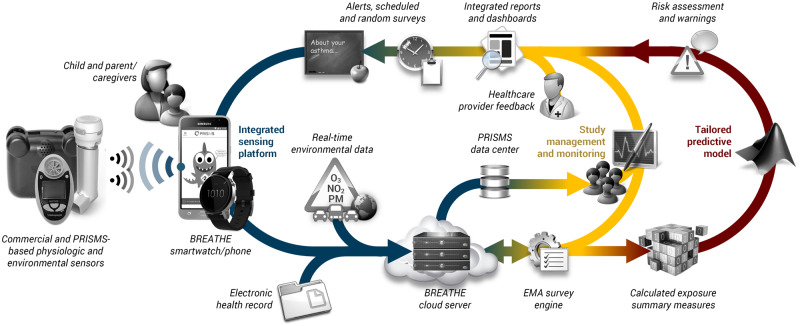
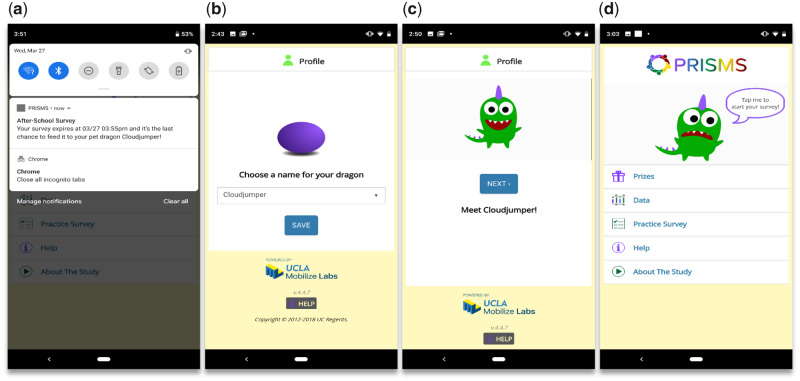
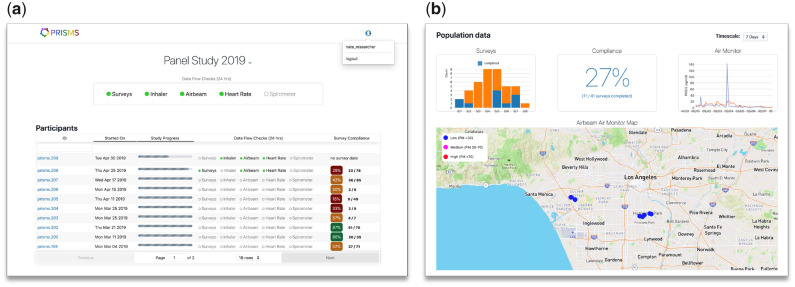
The Biomedical REAl-Time Health Evaluation (BREATHE) platform connects different sensors and data streams, contextualizing an individual's symptoms and daily activities over time to understand pediatric asthma's presentation and its management. A smartwatch/smartphone combination serves as a hub for personal/wearable sensing devices collecting data on health (eg, heart rate, spirometry, medications), motion, and personal exposures (eg, particulate matter, ozone); securely transmitting information to BREATHE's servers; and interacting with the user (eg, ecological momentary assessments). Server-side integration of electronic health record data and spatiotemporally correlated information (eg, weather, traffic) elaborates on these observations. An initial panel study involving pediatric asthma patients was conducted to assess BREATHE.
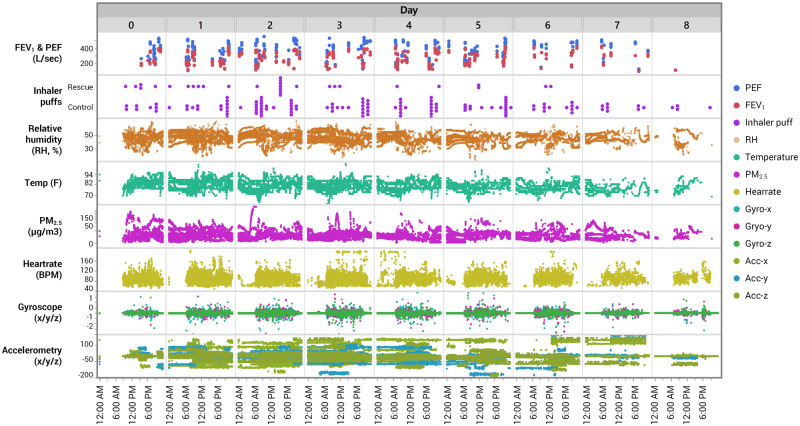
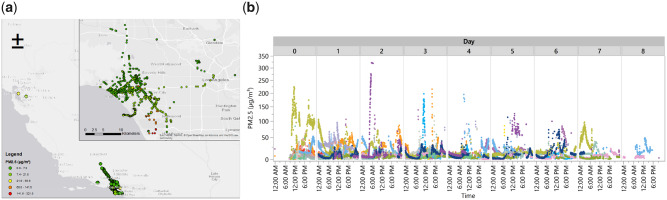
Twenty subjects were enrolled, during which BREATHE accrued seven consecutive days of continuous data per individual. The data were used to confirm knowledge about asthma (use of controller inhalers, time-activity behaviors, personal air pollution exposure), and additional analyses provided insights into within-day associations of environmental triggers and asthma exacerbations. Exit surveys focusing on mHealth usability, while positive, noted several translational challenges.
Based on these promising results, a longitudinal panel study to evaluate individual microenvironments and exposures is ongoing. Lessons learned thus far reflect the need to address various usability aspects, including convenience and ongoing engagement.
BREATHE enables multi-sensor mHealth studies, capturing new types of information alongside an evolving understanding of personal exposomes.
描述一个可配置的移动健康(mHealth)框架,用于整合生理和环境传感器,以用于专注于小儿哮喘领域的研究。
生物医学实时健康评估(BREATHE)平台连接不同的传感器和数据流,随着时间推移将个体的症状和日常活动情境化,以了解小儿哮喘的表现及其管理。智能手表/智能手机组合作为个人/可穿戴传感设备的中心,收集有关健康(如心率、肺活量测定、药物)、运动和个人暴露(如颗粒物、臭氧)的数据;将信息安全传输到BREATHE的服务器;并与用户进行交互(如生态瞬时评估)。电子健康记录数据和时空相关信息(如天气、交通)的服务器端整合对这些观察结果进行了详细阐述。进行了一项涉及小儿哮喘患者的初步小组研究以评估BREATHE。
招募了20名受试者,在此期间BREATHE为每个人连续收集了7天的数据。这些数据用于确认有关哮喘的知识(控制吸入器的使用、时间 - 活动行为、个人空气污染暴露),额外的分析提供了关于环境触发因素与哮喘发作日内关联的见解。关于移动健康可用性的退出调查虽然结果积极,但指出了一些转化方面的挑战。
基于这些有前景的结果,一项评估个体微环境和暴露的纵向小组研究正在进行。到目前为止吸取的经验教训反映了需要解决各种可用性方面的问题,包括便利性和持续参与度。
BREATHE支持多传感器移动健康研究,在对个人暴露组不断发展的理解的同时捕捉新型信息。