Department of Advanced Biomedical Science, Federico II University, Via S. Pansini n. 5, 80131, Naples, Italy.
J Cardiovasc Transl Res. 2021 Apr;14(2):256-270. doi: 10.1007/s12265-020-10057-w. Epub 2020 Jul 31.
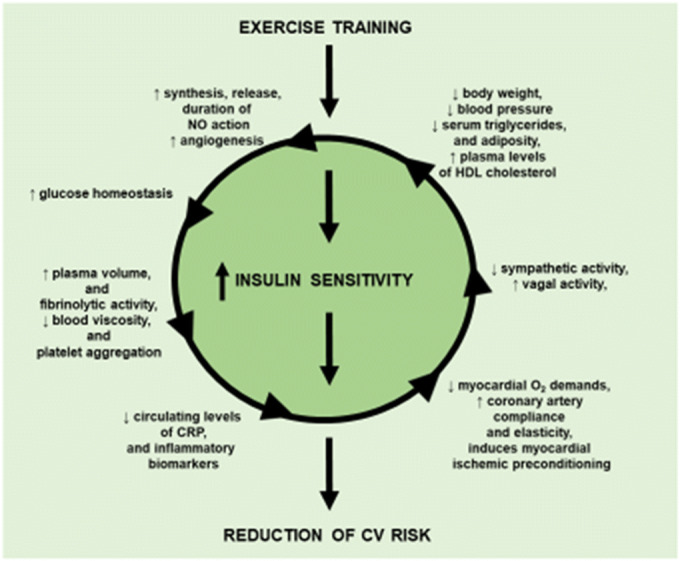
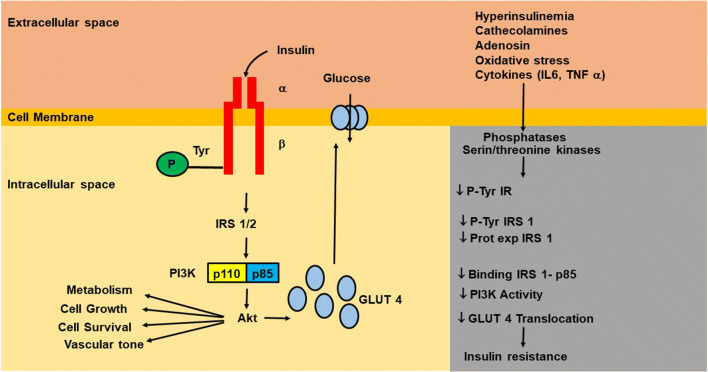
The beneficial effects of physical activity on the cardiovascular system nowadays have achieved the relevance of clinical evidence. In fact, several studies have documented the benefits of exercise training in the prevention of the cardiovascular risk. Abnormalities of insulin signaling transduction account for the impairment of insulin sensitivity and development of insulin resistance, which, in turn, is responsible for the enhancement of cardiovascular risk. Insulin sensitivity is related to the degree of physical activity, and physical training has been shown to ameliorate insulin action in insulin-resistant subjects. This effect is mediated by the improvement of the molecular abnormalities that are responsible of the insulin resistance, contributing in this way to restore the physiological insulin sensitivity. However, it should be underlined that mechanisms that account for this phenomenon are extremely complex and still unclear. Further studies are required to better clarify the molecular basis of the exercise-evoked improvement of insulin signal. Graphical abstract.
如今,体育锻炼对心血管系统的有益影响已经获得了临床证据的支持。事实上,多项研究已经证明了运动训练在预防心血管风险方面的益处。胰岛素信号转导异常导致胰岛素敏感性受损和胰岛素抵抗的发生,而后者又导致心血管风险的增加。胰岛素敏感性与身体活动的程度有关,而且已经证明体育锻炼可以改善胰岛素抵抗患者的胰岛素作用。这种效应是通过改善导致胰岛素抵抗的分子异常来介导的,从而有助于恢复生理胰岛素敏感性。然而,应当强调的是,解释这种现象的机制非常复杂,目前仍不清楚。需要进一步的研究来更好地阐明运动引起的胰岛素信号改善的分子基础。图表摘要。