Santangelo Rosa, Rizzarelli Enrico, Copani Agata
Department of Drug Sciences, University of Catania, 95125 Catania, Italy.
Department of Chemical Sciences, University of Catania, 95125 Catania, Italy.
ACS Omega. 2020 Jul 16;5(29):17900-17907. doi: 10.1021/acsomega.9b04483. eCollection 2020 Jul 28.
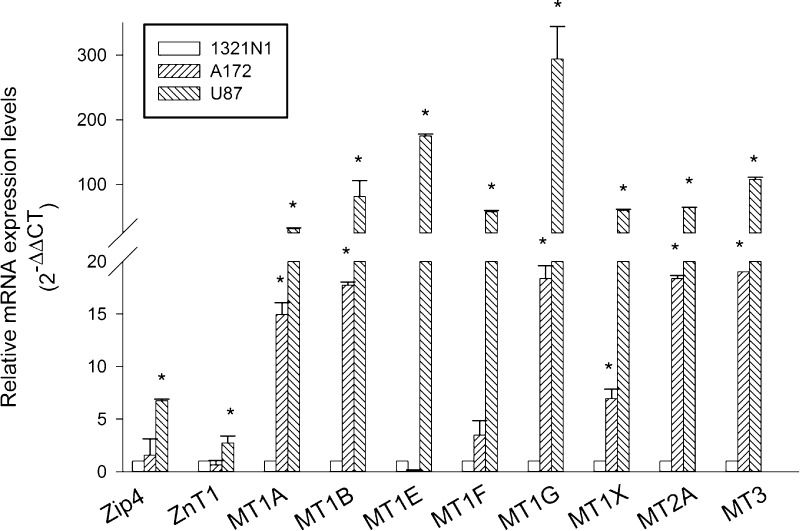
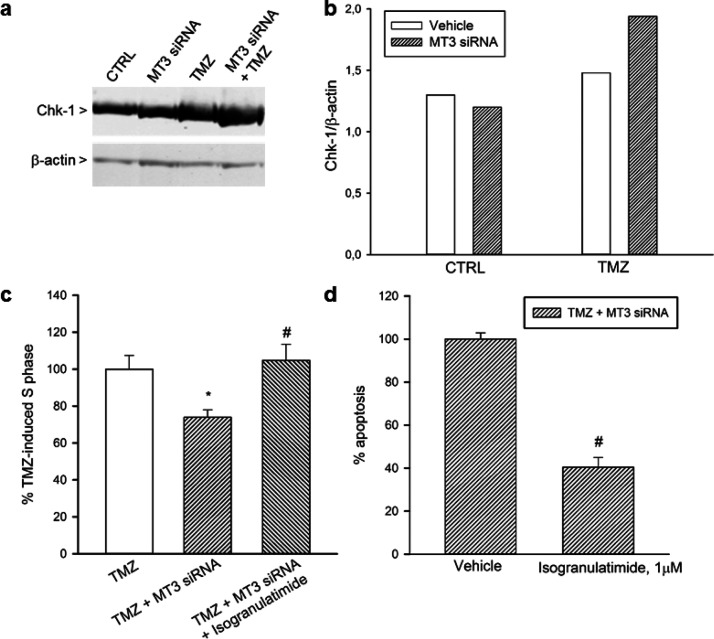
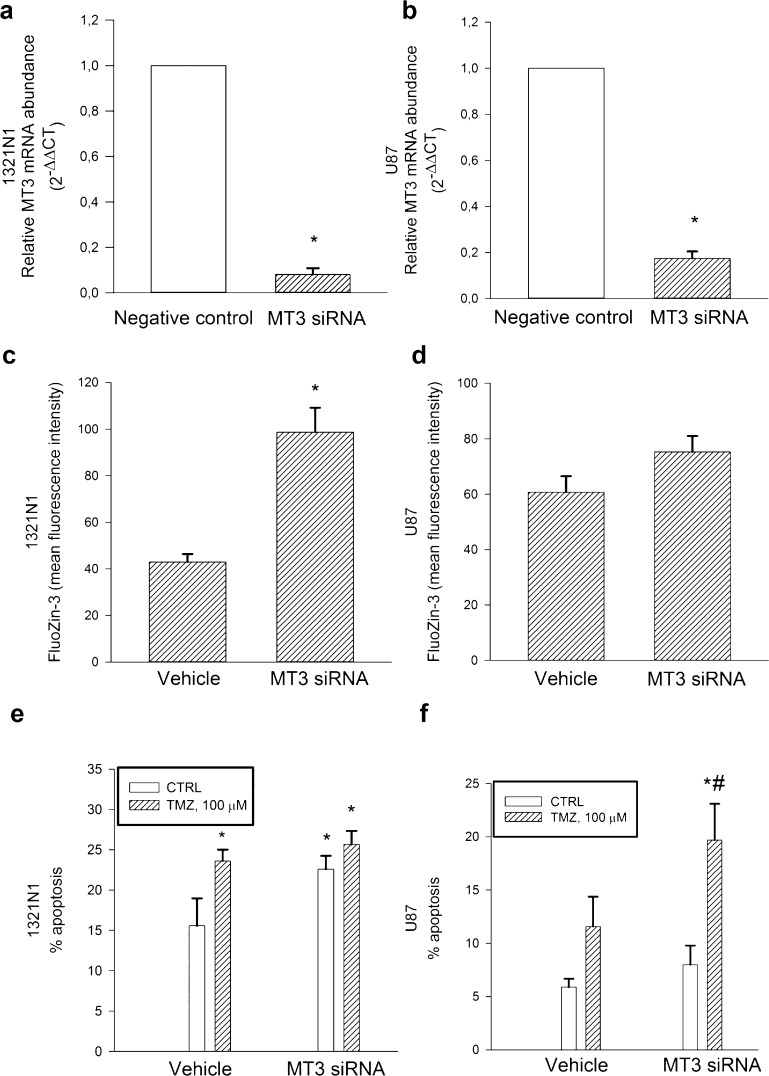
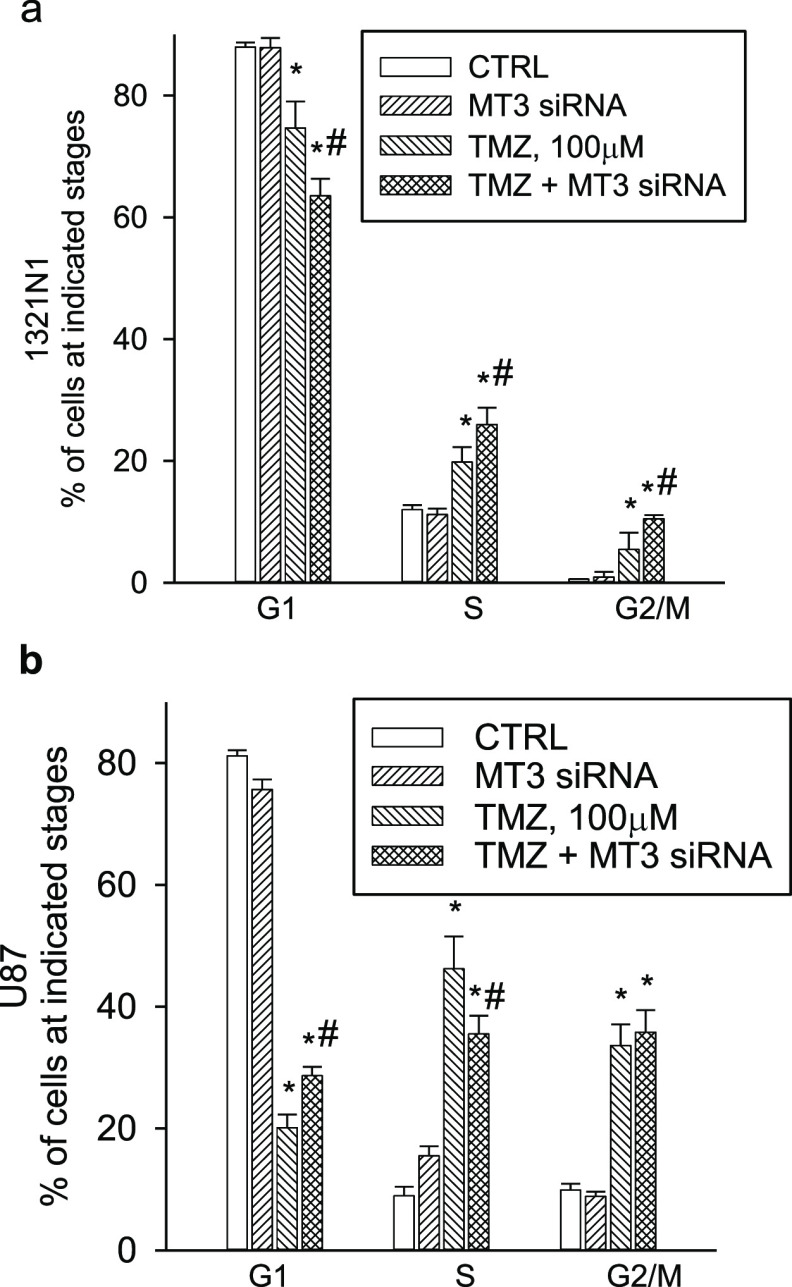
Metallothioneins (MTs) are metal-binding proteins that are overexpressed in various human cancers and are thought to be associated with resistance to cytotoxic drugs. The knowledge on MT expression, regulation, and function in human gliomas is limited. We found that MT3 mRNA was highly expressed in cell lines derived from grade IV gliomas (., A172 and U87 cells), as compared to grade II astrocytoma cells (., 1321N1). Different from 1321N1, U87 cells were partly resistant to the alkylating drug, temozolomide (TMZ) (100 μM for 96 h), which induced a massive accumulation of U87 into the S and G2 fractions of the cell cycle but not apoptotic death. Silencing of MT3 did not significantly affect U87 cell proliferation and survival, but it delayed G1/S transition and favored the occurrence of apoptosis in TMZ-treated cells. Accordingly, the combination of MT3 silencing and TMZ treatment increased the protein levels of checkpoint kinase-1, which was ultimately responsible for the lasting G1 arrest and death of double treated U87 cells.
金属硫蛋白(MTs)是一类金属结合蛋白,在多种人类癌症中过度表达,被认为与细胞毒性药物耐药性有关。关于MT在人类胶质瘤中的表达、调控及功能的了解有限。我们发现,与二级星形细胞瘤细胞(如1321N1)相比,MT3 mRNA在源自四级胶质瘤的细胞系(如A172和U87细胞)中高表达。与1321N1不同,U87细胞对烷化剂替莫唑胺(TMZ)(100 μM处理96小时)有部分抗性,该药物诱导U87细胞大量积累在细胞周期的S期和G2期,但未诱导凋亡死亡。MT3基因沉默对U87细胞增殖和存活无显著影响,但延迟了G1/S期转换,并促进了TMZ处理细胞中凋亡的发生。因此,MT3基因沉默与TMZ处理的联合作用增加了检查点激酶-1的蛋白水平,这最终导致了双重处理的U87细胞持续的G1期阻滞和死亡。