Department of Paediatric Rheumatology, Istanbul Faculty of Medical School, Istanbul University, Istanbul, Turkey.
Department of Paediatric Rheumatology, Kanuni Sultan Süleyman Research and Training Hospital, Istanbul, Turkey.
Rheumatol Int. 2020 Oct;40(10):1613-1623. doi: 10.1007/s00296-020-04663-9. Epub 2020 Aug 2.
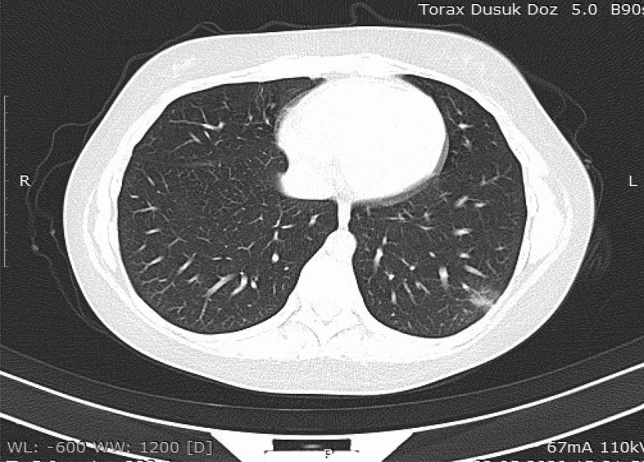
The aim of the research was to further extend current knowledge of whether severe acute respiratory syndrome coronavirus-2 (SARS-CoV-2) disease 2019 (COVID-19) entails a risk for children with various rheumatic diseases under immunosuppressive treatment. Telephone survey was administered by conducting interviews with the parents from May 1, 2020 to May 20, 2020. A message containing a link to the actual questionnaire was sent to their phones simultaneously. The medical records of the patients were reviewed for gathering information about demographic data, clinical follow-up, and treatments. Patients who were followed-up under immunosuppressive treatment (n = 439) were attempted to be contacted. The diagnostic distribution of patients (n = 414) eligible for the study was as follows: juvenile idiopathic arthritis (JIA) (n = 243, 58.7%), autoinflammatory diseases (n = 109, 26.3%), connective tissue diseases (n = 51, 12.3%), and vasculitis (n = 11, 2.7%). In the entire cohort, the mean age was 12 ± 4.7 years, and 54.1% (n = 224) were female. Nine patients have attended the hospital for COVID-19 evaluation, 6 of whom were in close contact with confirmed cases. One patient with seronegative polyarticular JIA, previously prescribed methotrexate and receiving leflunomide during pandemic was identified to be diagnosed with COVID-19. None, including the confirmed case, had any severe symptoms. More than half of the patients with household exposure did not require hospitalization as they were asymptomatic. Although circumstances such as compliance in social distancing policy, transmission patterns, attitude following contact may have influenced the results, immunosuppressive treatment does not seem to pose an additional risk in terms of COVID-19.
本研究旨在进一步扩展目前对于患有各种风湿性疾病并接受免疫抑制治疗的儿童感染 2019 年冠状病毒病(COVID-19)的风险的认识。我们于 2020 年 5 月 1 日至 2020 年 5 月 20 日通过电话调查对儿童家长进行访谈。同时向他们的手机发送包含实际问卷链接的消息。我们查阅了患者的病历,以收集人口统计学数据、临床随访和治疗信息。尝试联系接受免疫抑制治疗的(n = 439)患者。符合研究条件的患者(n = 414)的诊断分布如下:幼年特发性关节炎(JIA)(n = 243,58.7%)、自身炎症性疾病(n = 109,26.3%)、结缔组织疾病(n = 51,12.3%)和血管炎(n = 11,2.7%)。在整个队列中,平均年龄为 12 ± 4.7 岁,54.1%(n = 224)为女性。有 9 名患者因 COVID-19 评估而住院,其中 6 人与确诊病例密切接触。1 例血清阴性多关节 JIA 患者,曾服用甲氨蝶呤,并在大流行期间接受来氟米特治疗,被诊断为 COVID-19。包括确诊病例在内,均无任何严重症状。有一半以上的有家庭接触史的患者无需住院,因为他们无症状。尽管社会隔离政策的遵守情况、传播模式、接触后的态度等情况可能影响了结果,但免疫抑制治疗似乎不会增加 COVID-19 的风险。