• 文献检索
  • 文档翻译
  • 深度研究
  • 学术资讯
  • Suppr Zotero 插件Zotero 插件
  • 邀请有礼
  • 套餐&价格
  • 历史记录
应用&插件
Suppr Zotero 插件Zotero 插件浏览器插件Mac 客户端Windows 客户端微信小程序
定价
高级版会员购买积分包购买API积分包
服务
文献检索文档翻译深度研究API 文档MCP 服务
关于我们
关于 Suppr公司介绍联系我们用户协议隐私条款
关注我们

Suppr 超能文献

核心技术专利:CN118964589B侵权必究
粤ICP备2023148730 号-1Suppr @ 2026

文献检索

告别复杂PubMed语法,用中文像聊天一样搜索,搜遍4000万医学文献。AI智能推荐,让科研检索更轻松。

立即免费搜索

文件翻译

保留排版,准确专业,支持PDF/Word/PPT等文件格式,支持 12+语言互译。

免费翻译文档

深度研究

AI帮你快速写综述,25分钟生成高质量综述,智能提取关键信息,辅助科研写作。

立即免费体验

源自蛇毒液的假纳晶肽改变了表皮葡萄球菌细胞包膜的完整性,干扰了生物膜的形成。

Pseudonajide peptide derived from snake venom alters cell envelope integrity interfering on biofilm formation in Staphylococcus epidermidis.

机构信息

Université de Rennes, CNRS, Institut de Génétique et Développement de Rennes (IGDR), UMR 6290, Rennes, France.

Laboratório de Biofilmes e Diversidade Microbiana, Faculdade de Farmácia and Centro de Biotecnologia, Universidade Federal do Rio Grande do Sul, Porto Alegre, Brazil.

出版信息

BMC Microbiol. 2020 Aug 3;20(1):237. doi: 10.1186/s12866-020-01921-5.

DOI:10.1186/s12866-020-01921-5
PMID:32746783
原文链接:https://pmc.ncbi.nlm.nih.gov/articles/PMC7397659/
Abstract

BACKGROUND

The increase in bacterial resistance phenotype cases is a global health problem. New strategies must be explored by the scientific community in order to create new treatment alternatives. Animal venoms are a good source for antimicrobial peptides (AMPs), which are excellent candidates for new antimicrobial drug development. Cathelicidin-related antimicrobial peptides (CRAMPs) from snake venoms have been studied as a model for the design of new antimicrobial pharmaceuticals against bacterial infections.

RESULTS

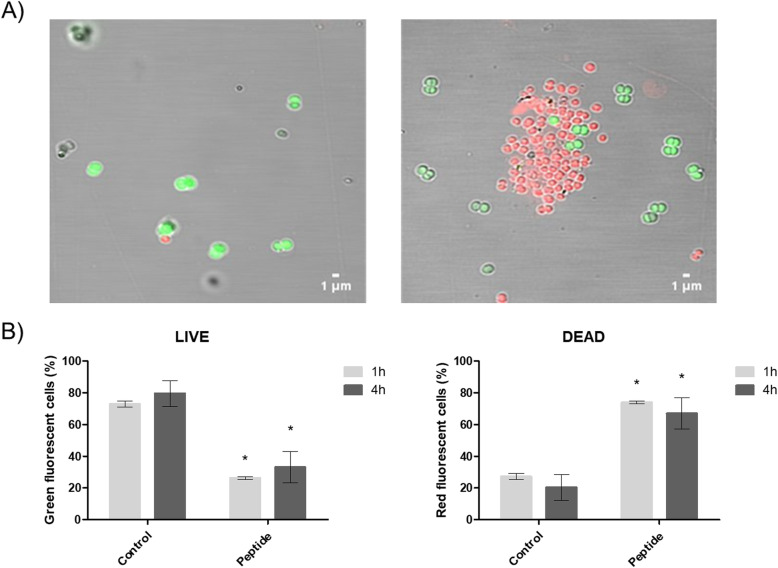
In this study we present an 11 amino acid-long peptide, named pseudonajide, which is derived from a Pseudonaja textilis venom peptide and has antimicrobial and antibiofilm activity against Staphylococcus epidermidis. Pseudonajide was selected based on the sequence alignments of various snake venom peptides that displayed activity against bacteria. Antibiofilm activity assays with pseudonajide concentrations ranging from 3.12 to 100 μM showed that the lowest concentration to inhibit biofilm formation was 25 μM. Microscopy analysis demonstrated that pseudonajide interacts with the bacterial cell envelope, disrupting the cell walls and membranes, leading to morphological defects in prokaryotes.

CONCLUSIONS

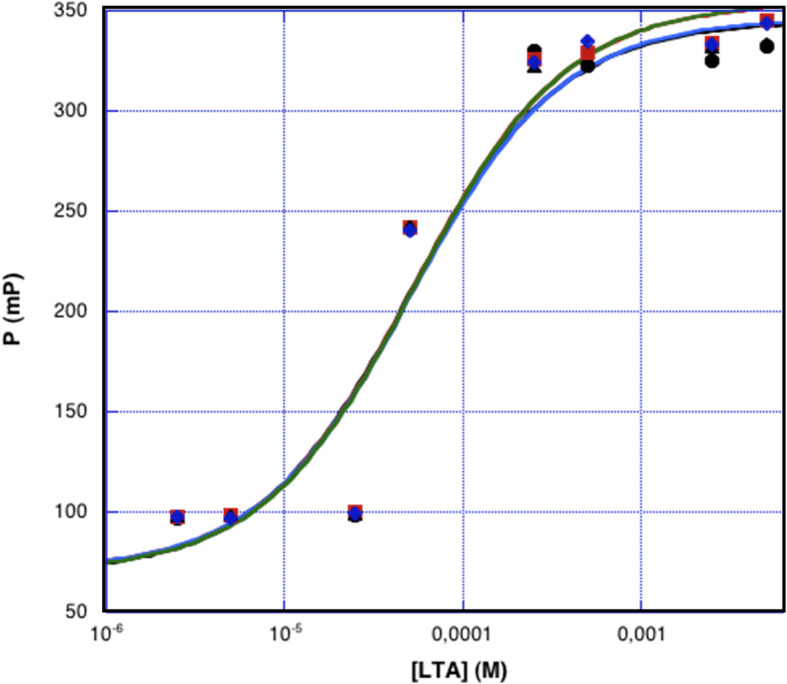
Our results suggest that pseudonajide's positives charges interact with negatively charged cell wall components of S. epidermidis, leading to cell damage and inhibiting biofilm formation.

摘要

背景

细菌耐药表型病例的增加是一个全球性的健康问题。科学界必须探索新的策略,以创造新的治疗选择。动物毒液是抗菌肽(AMPs)的良好来源,它们是开发新抗菌药物的理想候选物。来自蛇毒液的抗菌肽(CRAMPs)已被研究作为设计针对细菌感染的新型抗菌药物的模型。

结果

在这项研究中,我们提出了一种 11 个氨基酸长的肽,命名为 pseudonajide,它来源于一种 Pseudonaja textilis 毒液肽,对表皮葡萄球菌具有抗菌和抗生物膜活性。根据对各种具有抗菌活性的蛇毒液肽进行序列比对,选择了 pseudonajide。用浓度为 3.12 至 100 μM 的 pseudonajide 进行抗生物膜活性测定表明,抑制生物膜形成的最低浓度为 25 μM。显微镜分析表明,pseudonajide 与细菌细胞包膜相互作用,破坏细胞壁和细胞膜,导致原核生物形态缺陷。

结论

我们的结果表明,pseudonajide 的正电荷与表皮葡萄球菌的负电荷细胞壁成分相互作用,导致细胞损伤并抑制生物膜形成。

https://cdn.ncbi.nlm.nih.gov/pmc/blobs/f693/7397659/919b0789109b/12866_2020_1921_Fig11_HTML.jpg
https://cdn.ncbi.nlm.nih.gov/pmc/blobs/f693/7397659/4274706997f0/12866_2020_1921_Fig1_HTML.jpg
https://cdn.ncbi.nlm.nih.gov/pmc/blobs/f693/7397659/c16b0f9cd005/12866_2020_1921_Fig2_HTML.jpg
https://cdn.ncbi.nlm.nih.gov/pmc/blobs/f693/7397659/fde5f5c5d544/12866_2020_1921_Fig3_HTML.jpg
https://cdn.ncbi.nlm.nih.gov/pmc/blobs/f693/7397659/71f738a0caf9/12866_2020_1921_Fig4_HTML.jpg
https://cdn.ncbi.nlm.nih.gov/pmc/blobs/f693/7397659/00c6d4aa0161/12866_2020_1921_Fig5_HTML.jpg
https://cdn.ncbi.nlm.nih.gov/pmc/blobs/f693/7397659/8d98a713b83e/12866_2020_1921_Fig6_HTML.jpg
https://cdn.ncbi.nlm.nih.gov/pmc/blobs/f693/7397659/e685cd261230/12866_2020_1921_Fig7_HTML.jpg
https://cdn.ncbi.nlm.nih.gov/pmc/blobs/f693/7397659/8d5aa7b3cde7/12866_2020_1921_Fig8_HTML.jpg
https://cdn.ncbi.nlm.nih.gov/pmc/blobs/f693/7397659/27b8f34d0cb6/12866_2020_1921_Fig9_HTML.jpg
https://cdn.ncbi.nlm.nih.gov/pmc/blobs/f693/7397659/544a7c5a489e/12866_2020_1921_Fig10_HTML.jpg
https://cdn.ncbi.nlm.nih.gov/pmc/blobs/f693/7397659/919b0789109b/12866_2020_1921_Fig11_HTML.jpg
https://cdn.ncbi.nlm.nih.gov/pmc/blobs/f693/7397659/4274706997f0/12866_2020_1921_Fig1_HTML.jpg
https://cdn.ncbi.nlm.nih.gov/pmc/blobs/f693/7397659/c16b0f9cd005/12866_2020_1921_Fig2_HTML.jpg
https://cdn.ncbi.nlm.nih.gov/pmc/blobs/f693/7397659/fde5f5c5d544/12866_2020_1921_Fig3_HTML.jpg
https://cdn.ncbi.nlm.nih.gov/pmc/blobs/f693/7397659/71f738a0caf9/12866_2020_1921_Fig4_HTML.jpg
https://cdn.ncbi.nlm.nih.gov/pmc/blobs/f693/7397659/00c6d4aa0161/12866_2020_1921_Fig5_HTML.jpg
https://cdn.ncbi.nlm.nih.gov/pmc/blobs/f693/7397659/8d98a713b83e/12866_2020_1921_Fig6_HTML.jpg
https://cdn.ncbi.nlm.nih.gov/pmc/blobs/f693/7397659/e685cd261230/12866_2020_1921_Fig7_HTML.jpg
https://cdn.ncbi.nlm.nih.gov/pmc/blobs/f693/7397659/8d5aa7b3cde7/12866_2020_1921_Fig8_HTML.jpg
https://cdn.ncbi.nlm.nih.gov/pmc/blobs/f693/7397659/27b8f34d0cb6/12866_2020_1921_Fig9_HTML.jpg
https://cdn.ncbi.nlm.nih.gov/pmc/blobs/f693/7397659/544a7c5a489e/12866_2020_1921_Fig10_HTML.jpg
https://cdn.ncbi.nlm.nih.gov/pmc/blobs/f693/7397659/919b0789109b/12866_2020_1921_Fig11_HTML.jpg

相似文献

1
Pseudonajide peptide derived from snake venom alters cell envelope integrity interfering on biofilm formation in Staphylococcus epidermidis.源自蛇毒液的假纳晶肽改变了表皮葡萄球菌细胞包膜的完整性,干扰了生物膜的形成。
BMC Microbiol. 2020 Aug 3;20(1):237. doi: 10.1186/s12866-020-01921-5.
2
A cathelicidin-2-derived peptide effectively impairs Staphylococcus epidermidis biofilms.一种源自抗菌肽 cathelicidin-2 的肽能有效破坏表皮葡萄球菌生物膜。
Int J Antimicrob Agents. 2011 May;37(5):476-9. doi: 10.1016/j.ijantimicag.2010.12.020. Epub 2011 Mar 3.
3
Dual-function antimicrobial-antibiofilm peptide hybrid to tackle biofilm-forming Staphylococcus epidermidis.双功能抗菌-抗生物膜肽杂交体解决表皮葡萄球菌生物膜形成问题。
Ann Clin Microbiol Antimicrob. 2024 May 16;23(1):44. doi: 10.1186/s12941-024-00701-7.
4
LL-37 fragments have antimicrobial activity against Staphylococcus epidermidis biofilms and wound healing potential in HaCaT cell line.LL-37片段对表皮葡萄球菌生物膜具有抗菌活性,并在HaCaT细胞系中具有促进伤口愈合的潜力。
J Pept Sci. 2018 Jul;24(7):e3080. doi: 10.1002/psc.3080. Epub 2018 May 8.
5
Antimicrobial Peptides as Anti-Infectives against Staphylococcus epidermidis.作为抗表皮葡萄球菌感染药物的抗菌肽
Med Princ Pract. 2016;25(4):301-8. doi: 10.1159/000443479. Epub 2015 Dec 18.
6
Antimicrobial peptides: an effective approach to prevent bacterial biofilm formation in platelet concentrates.抗菌肽:预防血小板浓缩物中细菌生物膜形成的有效方法。
Transfusion. 2018 Aug;58(8):2013-2021. doi: 10.1111/trf.14646. Epub 2018 Apr 24.
7
Venom-derived peptide Mastoparan-1 eradicates planktonic and biofilm-embedded methicillin-resistant Staphylococcus aureus isolates.毒液衍生肽 Mastoparan-1 可根除浮游和生物膜嵌入的耐甲氧西林金黄色葡萄球菌分离株。
Microb Pathog. 2018 Jun;119:72-80. doi: 10.1016/j.micpath.2018.04.008. Epub 2018 Apr 4.
8
Design and membrane-disruption mechanism of charge-enriched AMPs exhibiting cell selectivity, high-salt resistance, and anti-biofilm properties.具有细胞选择性、高盐抗性和抗生物膜特性的电荷富集抗菌肽的设计及其膜破坏机制
Amino Acids. 2016 Feb;48(2):505-22. doi: 10.1007/s00726-015-2104-0. Epub 2015 Oct 8.
9
Antimicrobial peptides: Cell Membrane and Microbial Surface Interactions.抗菌肽:细胞膜与微生物表面的相互作用
Biochim Biophys Acta. 2016 May;1858(5):915-7. doi: 10.1016/j.bbamem.2016.03.005. Epub 2016 Mar 8.
10
Antimicrobial peptides and their interaction with biofilms of medically relevant bacteria.抗菌肽及其与医学相关细菌生物膜的相互作用。
Biochim Biophys Acta. 2016 May;1858(5):1044-60. doi: 10.1016/j.bbamem.2015.10.013. Epub 2015 Oct 23.

引用本文的文献

1
Snake Venom Compounds: A New Frontier in the Battle Against Antibiotic-Resistant Infections.蛇毒化合物:对抗抗生素耐药性感染的新前沿。
Toxins (Basel). 2025 May 1;17(5):221. doi: 10.3390/toxins17050221.
2
Cec4-Derived Peptide Inhibits Planktonic and Biofilm-Associated Methicillin Resistant Staphylococcus epidermidis.Cec4 衍生肽抑制浮游和生物膜相关耐甲氧西林表皮葡萄球菌。
Microbiol Spectr. 2022 Dec 21;10(6):e0240922. doi: 10.1128/spectrum.02409-22. Epub 2022 Dec 1.
3
Disclosure of a Promising Lead to Tackle Complicated Skin and Skin Structure Infections: Antimicrobial and Antibiofilm Actions of Peptide PP4-3.1.

本文引用的文献

1
Snake Venom Cathelicidins as Natural Antimicrobial Peptides.蛇毒组织蛋白酶抗菌肽作为天然抗菌肽
Front Pharmacol. 2019 Nov 29;10:1415. doi: 10.3389/fphar.2019.01415. eCollection 2019.
2
Characterization of a Cathelicidin from the Colubrinae Snake, .眼镜蛇科蛇类中一种杀菌肽的特性研究
Zoolog Sci. 2019 Feb 1;36(1):68-76. doi: 10.2108/zs180064.
3
Antimicrobial Peptides: Powerful Biorecognition Elements to Detect Bacteria in Biosensing Technologies.抗菌肽:用于生物传感技术中检测细菌的强大生物识别元件。
攻克复杂皮肤及皮肤结构感染的一个有前景线索的披露:肽PP4-3.1的抗菌和抗生物膜作用
Pharmaceutics. 2021 Nov 19;13(11):1962. doi: 10.3390/pharmaceutics13111962.
4
Capsicumicine, a New Bioinspired Peptide from Red Peppers Prevents Staphylococcal Biofilm and via a Matrix Anti-Assembly Mechanism of Action.辣椒素,一种来自红辣椒的新型仿生肽,通过基质抗组装作用机制预防葡萄球菌生物膜的形成。
Microbiol Spectr. 2021 Oct 31;9(2):e0047121. doi: 10.1128/Spectrum.00471-21. Epub 2021 Oct 27.
5
Combined Proteotranscriptomic-Based Strategy to Discover Novel Antimicrobial Peptides from Cone Snails.基于蛋白质转录组学的联合策略从芋螺中发现新型抗菌肽
Biomedicines. 2021 Mar 29;9(4):344. doi: 10.3390/biomedicines9040344.
Molecules. 2018 Jul 10;23(7):1683. doi: 10.3390/molecules23071683.
4
Bactericidal activity of amphipathic cationic antimicrobial peptides involves altering the membrane fluidity when interacting with the phospholipid bilayer.两亲性阳离子抗菌肽的杀菌活性涉及与磷脂双层相互作用时改变膜流动性。
Biochim Biophys Acta Biomembr. 2018 Nov;1860(11):2404-2415. doi: 10.1016/j.bbamem.2018.06.004. Epub 2018 Jun 11.
5
Antibiotic-resistant bacteria show widespread collateral sensitivity to antimicrobial peptides.耐药菌对抗生素肽表现出广泛的交叉敏感性。
Nat Microbiol. 2018 Jun;3(6):718-731. doi: 10.1038/s41564-018-0164-0. Epub 2018 May 24.
6
Immune Evasion Mechanisms of Biofilm Infection.生物膜感染的免疫逃逸机制
Front Microbiol. 2018 Feb 28;9:359. doi: 10.3389/fmicb.2018.00359. eCollection 2018.
7
Python Cathelicidin CATHPb1 Protects against Multidrug-Resistant Staphylococcal Infections by Antimicrobial-Immunomodulatory Duality.Python 抗菌肽 CATHPb1 通过抗菌-免疫调节双重作用抵抗耐多药葡萄球菌感染。
J Med Chem. 2018 Mar 8;61(5):2075-2086. doi: 10.1021/acs.jmedchem.8b00036. Epub 2018 Feb 26.
8
Surface Sensing for Biofilm Formation in .用于生物膜形成的表面传感 于……中 (原文不完整,翻译可能不太准确,需结合完整文本进一步完善)
Front Microbiol. 2018 Jan 9;8:2671. doi: 10.3389/fmicb.2017.02671. eCollection 2017.
9
The human skin microbiome.人体皮肤微生物组。
Nat Rev Microbiol. 2018 Mar;16(3):143-155. doi: 10.1038/nrmicro.2017.157. Epub 2018 Jan 15.
10
Peptides as a strategy against biofilm-forming microorganisms: Structure-activity relationship perspectives.肽作为对抗形成生物膜微生物的策略:结构-活性关系视角。
Eur J Pharm Sci. 2018 Mar 1;114:114-137. doi: 10.1016/j.ejps.2017.11.008. Epub 2017 Nov 11.