Department of Respiratory Medicine, Renmin Hospital of Wuhan University, 238 Jiefang Road, Wuchang District, Wuhan, 430060, China.
Infect Dis Poverty. 2020 Aug 3;9(1):108. doi: 10.1186/s40249-020-00723-1.
The number of coronavirus disease 2019 (COVID-19) cases has rapidly increased all over the world. Specific information about immunity in non-survivors with COVID-19 is scarce. This study aimed to analyse the clinical characteristics and abnormal immunity of the confirmed COVID-19 non-survivors.
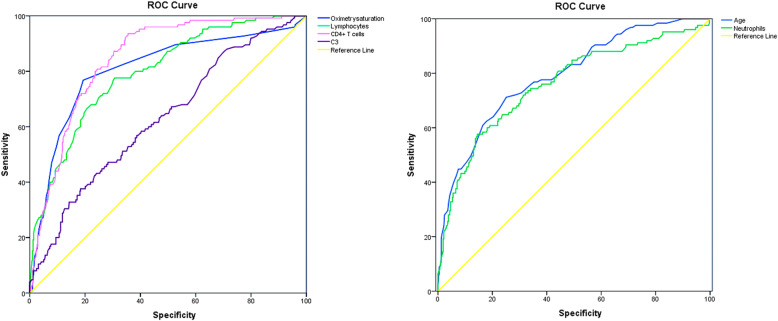
In this single-centered, retrospective, observational study, we enrolled 125 patients with COVID-19 who were died between January 13 and March 4, 2020 in Renmin Hospital of Wuhan University. A total of 414 randomly recruited patients with confirmed COVID-19 who were discharged from the same hospital during the same period served as control. The demographic, clinical characteristics and laboratory findings at admission, and treatment used in these patients were collected. The immunity-related risk factors associated with in-hospital death were tested by logistic regression models and Receiver Operating Characteristic (ROC) curve.
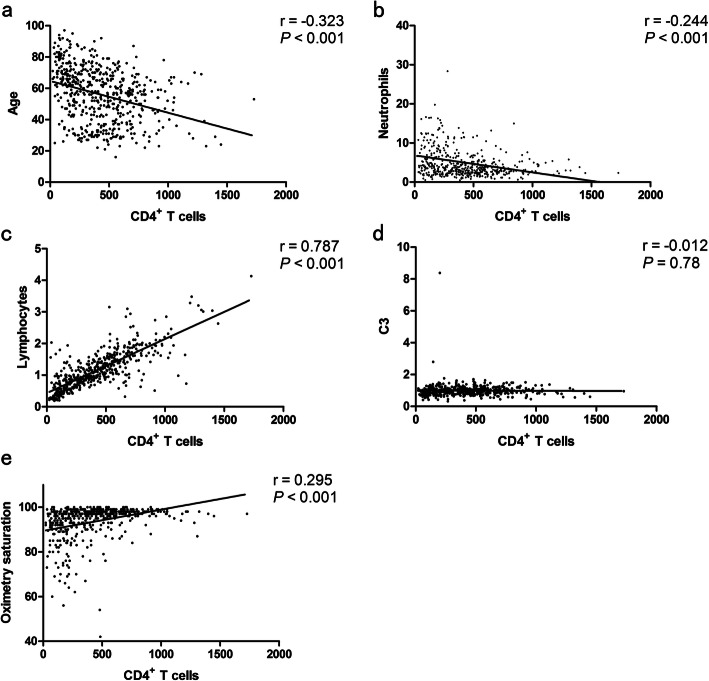
Non-survivors (70 years, IQR: 61.5-80) were significantly older than survivors (54 years, IQR: 37-65) (P < 0.001). 56.8% of non-survivors was male. Nearly half of the patients (44.9%) had chronic medical illness. In non-survivors, hypertension (49.6%) was the most common comorbidity, followed by diabetes (20.0%) and coronary heart disease (16.0%). The common signs and symptoms at admission of non-survivors were fever (88%), followed by cough (64.8%), dyspnea (62.4%), fatigue (62.4%) and chest tightness (58.4%). Compared with survivors, non-survivors had higher white blood cell (WBC) count (7.85 vs 5.07 × 10/L), more elevated neutrophil count (6.41 vs 3.08 × 10/L), smaller lymphocyte count (0.69 vs 1.20 × 10/L) and lower platelet count (172 vs 211 × 10/L), raised concentrations of procalcitonin (0.21 vs 0.06 ng/mL) and CRP (70.5 vs 7.2 mg/L) (P < 0.001). This was accompanied with significantly decreased levels of CD3 T cells (277 vs 814 cells/μl), CD4 T cells (172 vs 473 cells/μl), CD8 T cells (84 vs 262.5 cells/μl, P < 0.001), CD19 T cells (88 vs 141 cells/μl) and CD16 56 T cells (79 vs 128.5 cells/μl) (P < 0.001). The concentrations of immunoglobulins (Ig) G (13.30 vs 11.95 g/L), IgA (2.54 vs 2.21 g/L), and IgE (71.30 vs 42.25 IU/ml) were increased, whereas the levels of complement proteins (C)3 (0.89 vs 0.99 g/L) and C4 (0.22 vs 0.24 g/L) were decreased in non-survivors when compared with survivors (all P < 0.05). The non-survivors presented lower levels of oximetry saturation (90 vs 97%) at rest and lactate (2.40 vs 1.90 mmol/L) (P < 0.001). Old age, comorbidity of malignant tumor, neutrophilia, lymphocytopenia, low CD4 T cells, decreased C3, and low oximetry saturation were the risk factors of death in patients with confirmed COVID-19. The frequency of CD4 T cells positively correlated with the numbers of lymphocytes (r = 0.787) and the level of oximetry saturation (r = 0.295), Whereas CD4 T cells were negatively correlated with age (r =-0.323) and the numbers of neutrophils (r = - 0.244) (all P < 0.001).
Abnormal cellular immunity and humoral immunity were key features of non-survivors with COVID-19. Neutrophilia, lymphocytopenia, low CD4 T cells, and decreased C3 were immunity-related risk factors predicting mortality of patients with COVID-19.
全球范围内 2019 年冠状病毒病(COVID-19)病例数量迅速增加。关于 COVID-19 非幸存者的免疫的具体信息很少。本研究旨在分析确诊 COVID-19 非幸存者的临床特征和异常免疫。
在这项单中心、回顾性、观察性研究中,我们纳入了 2020 年 1 月 13 日至 3 月 4 日期间在武汉大学人民医院死亡的 125 例 COVID-19 确诊患者。同期从同一家医院出院的 414 名确诊 COVID-19 患者被随机招募作为对照组。收集这些患者的人口统计学、临床特征和入院时的实验室检查结果以及治疗情况。通过逻辑回归模型和Receiver Operating Characteristic(ROC)曲线测试与住院死亡相关的免疫相关危险因素。
非幸存者(70 岁,IQR:61.5-80)明显比幸存者(54 岁,IQR:37-65)年长(P<0.001)。非幸存者中 56.8%为男性。近一半的患者(44.9%)有慢性疾病。非幸存者中,高血压(49.6%)是最常见的合并症,其次是糖尿病(20.0%)和冠心病(16.0%)。非幸存者入院时的常见体征和症状为发热(88%),其次是咳嗽(64.8%)、呼吸困难(62.4%)、乏力(62.4%)和胸闷(58.4%)。与幸存者相比,非幸存者的白细胞计数(WBC)更高(7.85×10/L 比 5.07×10/L),中性粒细胞计数更高(6.41×10/L 比 3.08×10/L),淋巴细胞计数更低(0.69×10/L 比 1.20×10/L),血小板计数更低(172×10/L 比 211×10/L),降钙素原(0.21 vs 0.06 ng/mL)和 C 反应蛋白(CRP)浓度更高(70.5 vs 7.2 mg/L)(P<0.001)。这伴随着 CD3 T 细胞(277 比 814 细胞/μl)、CD4 T 细胞(172 比 473 细胞/μl)、CD8 T 细胞(84 比 262.5 细胞/μl,P<0.001)、CD19 T 细胞(88 比 141 细胞/μl)和 CD1656 T 细胞(79 比 128.5 细胞/μl)水平显著降低(P<0.001)。免疫球蛋白(Ig)G(13.30 vs 11.95 g/L)、IgA(2.54 vs 2.21 g/L)和 IgE(71.30 vs 42.25 IU/ml)的浓度升高,而补体蛋白 C3(0.89 vs 0.99 g/L)和 C4(0.22 vs 0.24 g/L)的水平降低在非幸存者与幸存者相比(均 P<0.05)。非幸存者在休息时的血氧饱和度(90%比 97%)和乳酸(2.40 比 1.90 mmol/L)水平较低(P<0.001)。年龄较大、合并恶性肿瘤、中性粒细胞增多、淋巴细胞减少、CD4 T 细胞减少、C3 降低和血氧饱和度降低是 COVID-19 确诊患者死亡的危险因素。CD4 T 细胞的频率与淋巴细胞的数量(r=0.787)和血氧饱和度(r=0.295)呈正相关,而 CD4 T 细胞与年龄(r=-0.323)和中性粒细胞的数量(r=-0.244)呈负相关(均 P<0.001)。
异常细胞免疫和体液免疫是 COVID-19 非幸存者的主要特征。中性粒细胞增多、淋巴细胞减少、CD4 T 细胞减少和 C3 降低是预测 COVID-19 患者死亡率的免疫相关危险因素。