Clinical Research Center, The First Affiliated Hospital of Xi'an Jiaotong University, Xi'an, Shaanxi, China.
School of Public Health, Xi'an Jiaotong University Health Science Center, Xi'an, Shaanxi, China.
Epidemiol Psychiatr Sci. 2020 Aug 4;29:e148. doi: 10.1017/S2045796020000657.
Drug use disorders are an important issue worldwide. Systematic attempts to estimate the global incidence of drug use disorders are rare. We aimed to determine the incidence of drug use disorders and their trends.
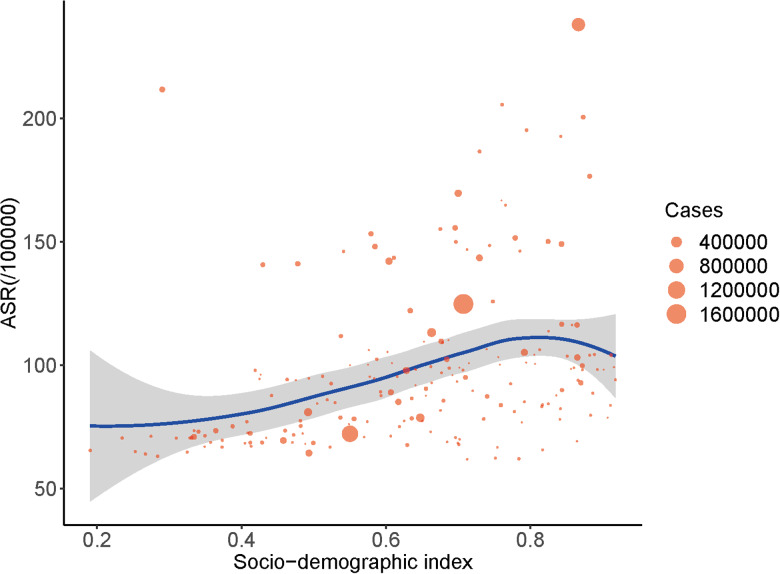
We obtained the annual incident cases and age-standardised incidence rate (ASR) of drug use disorders from 1990 to 2017 using the Global Health Data Exchange query tool. The estimated annual percentage changes of the ASR were used to quantify and evaluate the trends in the incidence rate. Gaussian process regression and the Pearson's correlation coefficient were used to assess the relationship between the ASR and socio-demographic index (SDI).
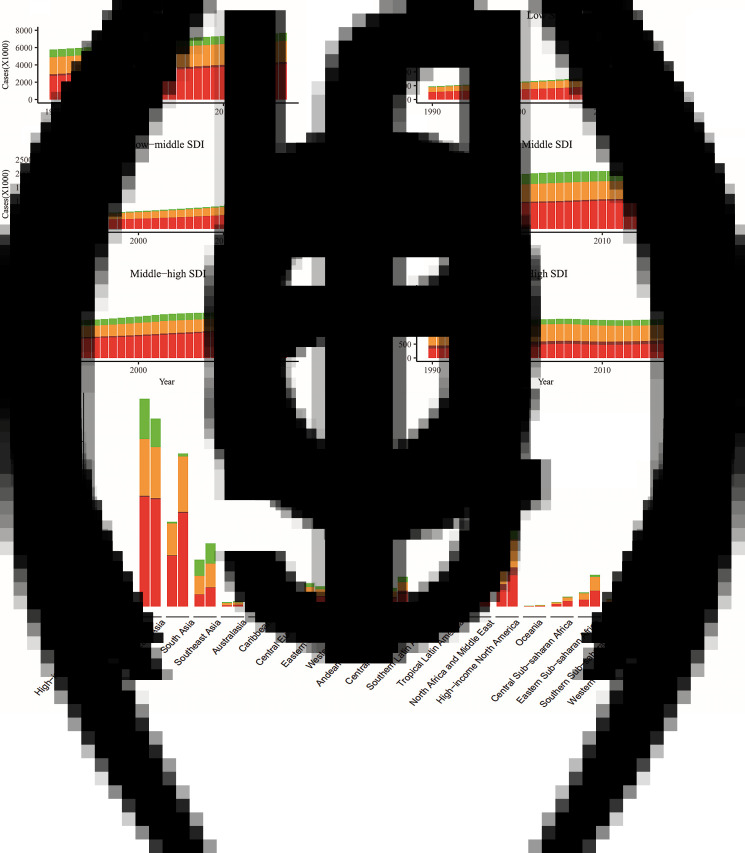
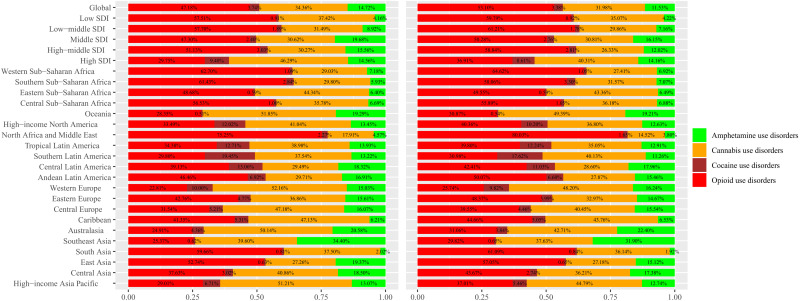
The number of drug use disorders' cases increased by 33.5% from 1990 to 2017 globally, whereas the ASR exhibited a stable trend. The ASR was higher in men than in women. Most cases (53.1%) of drug use disorders involved opioid. A positive association (ρ=0.35, p < 0.001) was found between ASR and SDI. Teenagers aged 15-19 years had the highest incidence rate.
The incident cases of drug use disorders were increasing, but the incidence rate did not change significantly from 1990 to 2017. Current preventive measures and policies for drug use disorders might have little effect. The present results suggest that future strategies should focus on men, teenagers and high-risk regions in order to improve the current status of drug use disorders.
药物使用障碍是一个全球性的重要问题。系统地估计全球药物使用障碍的发病率是罕见的。我们旨在确定药物使用障碍的发病率及其趋势。
我们使用全球卫生数据交换查询工具从 1990 年到 2017 年获得了药物使用障碍的年度发病病例和年龄标准化发病率(ASR)。使用估计的年百分比变化来量化和评估发病率的趋势。高斯过程回归和 Pearson 相关系数用于评估 ASR 与社会人口指数(SDI)之间的关系。
全球范围内,1990 年至 2017 年药物使用障碍的病例数增加了 33.5%,而 ASR 呈稳定趋势。男性的 ASR 高于女性。大多数药物使用障碍病例(53.1%)涉及阿片类药物。ASR 与 SDI 之间存在正相关关系(ρ=0.35,p<0.001)。15-19 岁的青少年发病率最高。
药物使用障碍的发病病例在增加,但从 1990 年到 2017 年,发病率没有明显变化。目前针对药物使用障碍的预防措施和政策可能效果不大。目前的结果表明,未来的策略应侧重于男性、青少年和高风险地区,以改善药物使用障碍的现状。