Division of Molecular Genetics, The Netherlands Cancer Institute, 1066 CX Amsterdam, The Netherlands.
Department of Pediatrics, Stanford University School of Medicine, Stanford, California 94305, USA.
Genes Dev. 2020 Aug 1;34(15-16):1017-1032. doi: 10.1101/gad.338228.120.
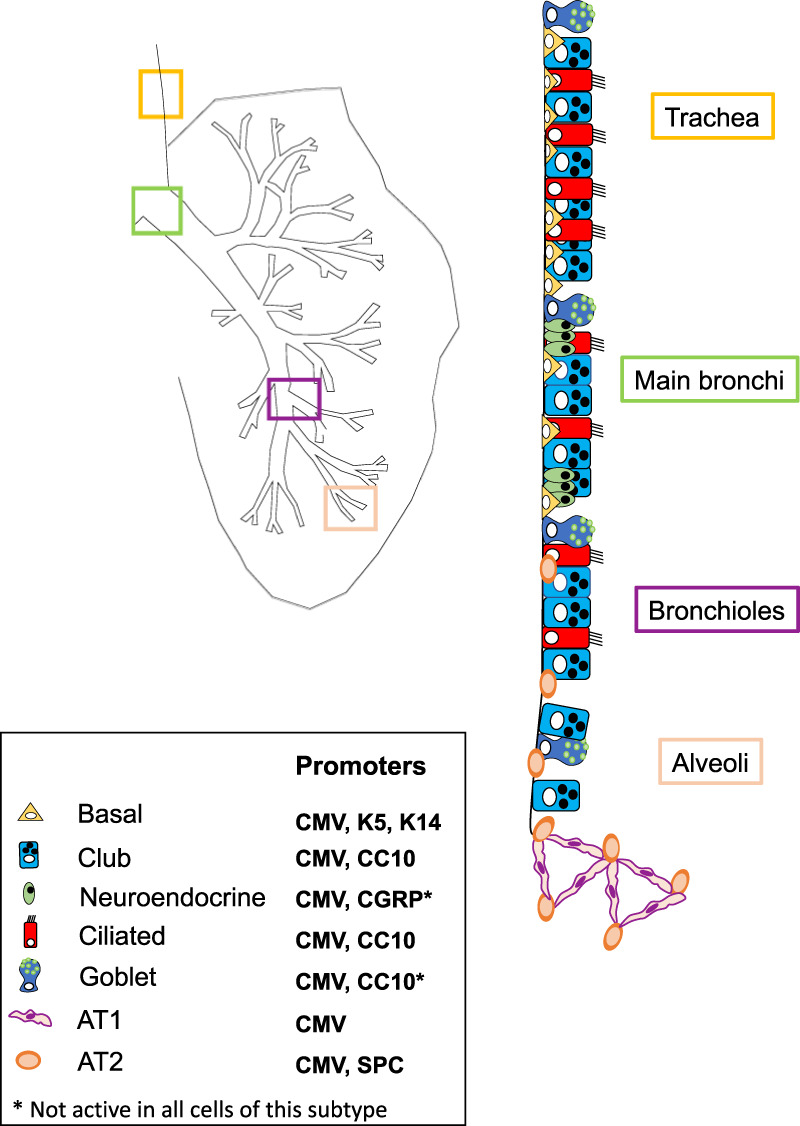
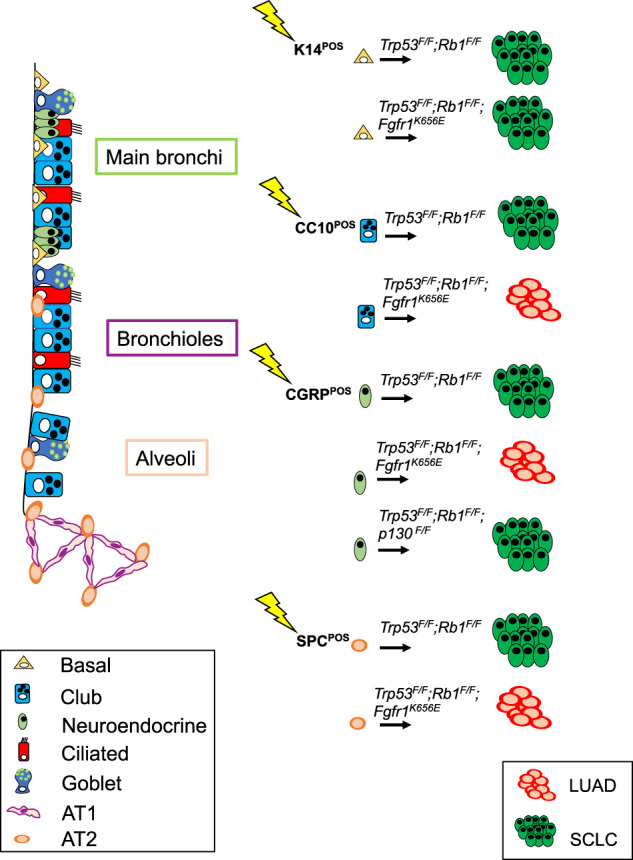
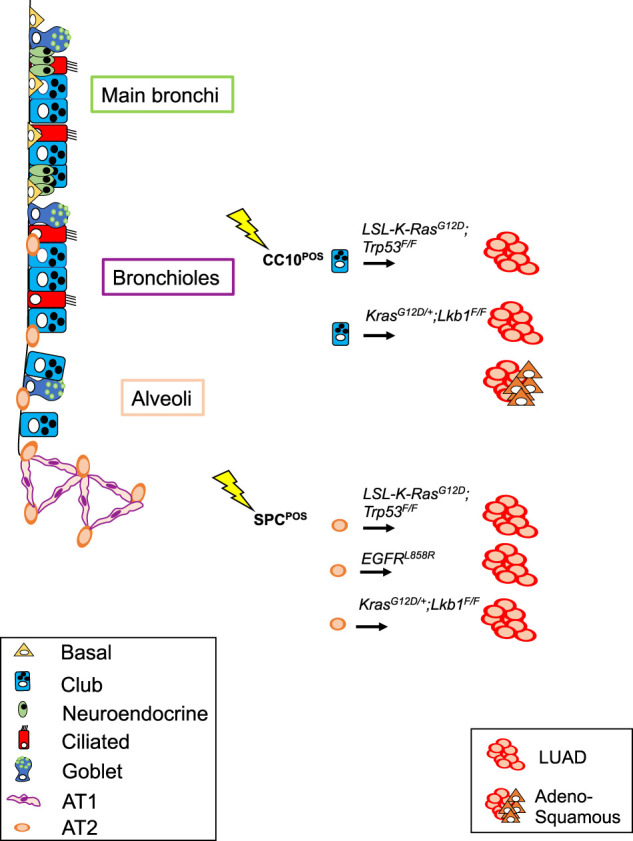
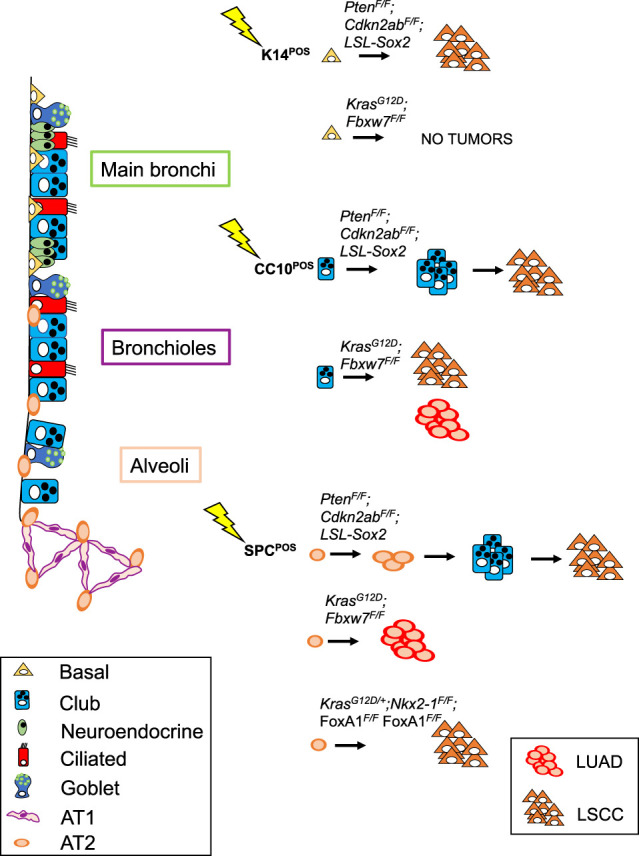
As one of the most common forms of cancer, lung cancers present as a collection of different histological subtypes. These subtypes are characterized by distinct sets of driver mutations and phenotypic appearance, and they often show varying degrees of heterogenicity, aggressiveness, and response/resistance to therapy. Intriguingly, lung cancers are also capable of showing features of multiple subtypes or converting from one subtype to another. The intertumoral and intratumoral heterogeneity of lung cancers as well as incidences of subtype transdifferentiation raise the question of to what extent the tumor characteristics are dictated by the cell of origin rather than the acquired driver lesions. We provide here an overview of the studies in experimental mouse models that try to address this question. These studies convincingly show that both the cell of origin and the genetic driver lesions play a critical role in shaping the phenotypes of lung tumors. However, they also illustrate that there is far from a direct one-to-one relationship between the cell of origin and the cancer subtype, as most epithelial cells can be reprogrammed toward diverse lung cancer fates when exposed to the appropriate set of driver mutations.
作为最常见的癌症类型之一,肺癌表现为多种不同的组织学亚型。这些亚型的特征是具有不同的驱动突变和表型表现,并且它们通常表现出不同程度的异质性、侵袭性以及对治疗的反应/耐药性。有趣的是,肺癌还具有表现出多种亚型特征或从一种亚型转化为另一种亚型的能力。肺癌的肿瘤间和肿瘤内异质性以及亚型转化的发生率提出了一个问题,即肿瘤特征在多大程度上是由起源细胞决定的,而不是由获得的驱动病变决定的。我们在这里提供了一个实验小鼠模型研究的概述,这些研究试图解决这个问题。这些研究令人信服地表明,起源细胞和遗传驱动病变都在塑造肺癌肿瘤的表型方面起着关键作用。然而,它们也说明了起源细胞和癌症亚型之间远非直接的一一对应关系,因为大多数上皮细胞在暴露于适当的驱动突变集时可以被重新编程为多种肺癌命运。