Institute of Molecular and Cell Biology, Agency for Science, Technology and Research, 138673 Singapore, Singapore.
Department of Pharmacology, Yong Loo Lin School of Medicine, National University of Singapore, 117597 Singapore, Singapore.
Proc Natl Acad Sci U S A. 2020 Aug 18;117(33):19904-19913. doi: 10.1073/pnas.2009167117. Epub 2020 Aug 3.
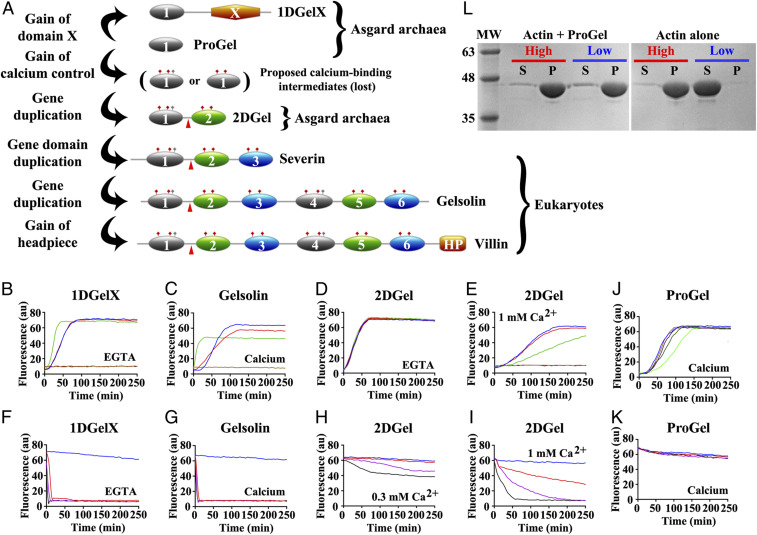
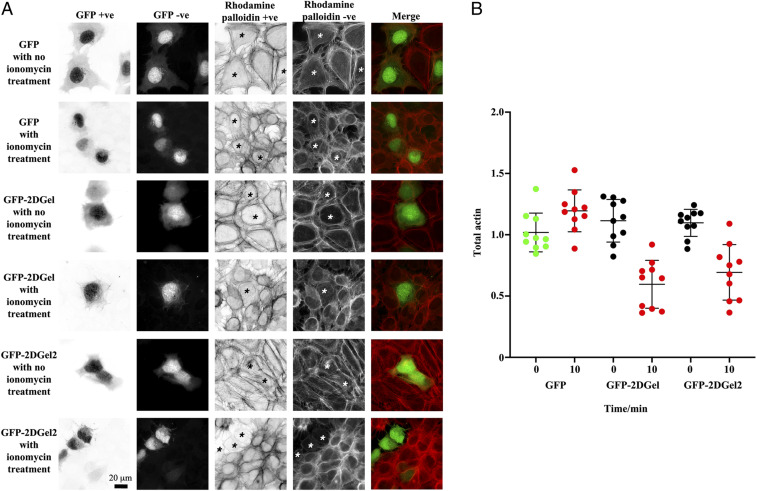
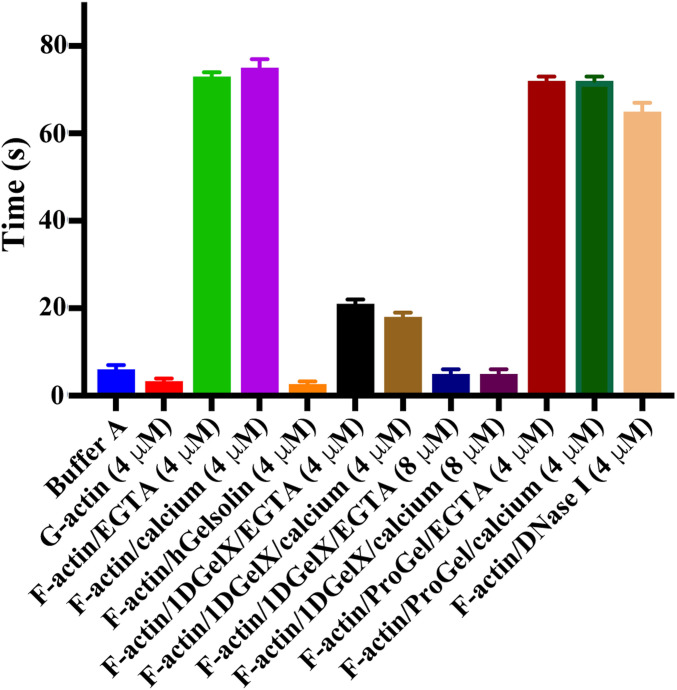
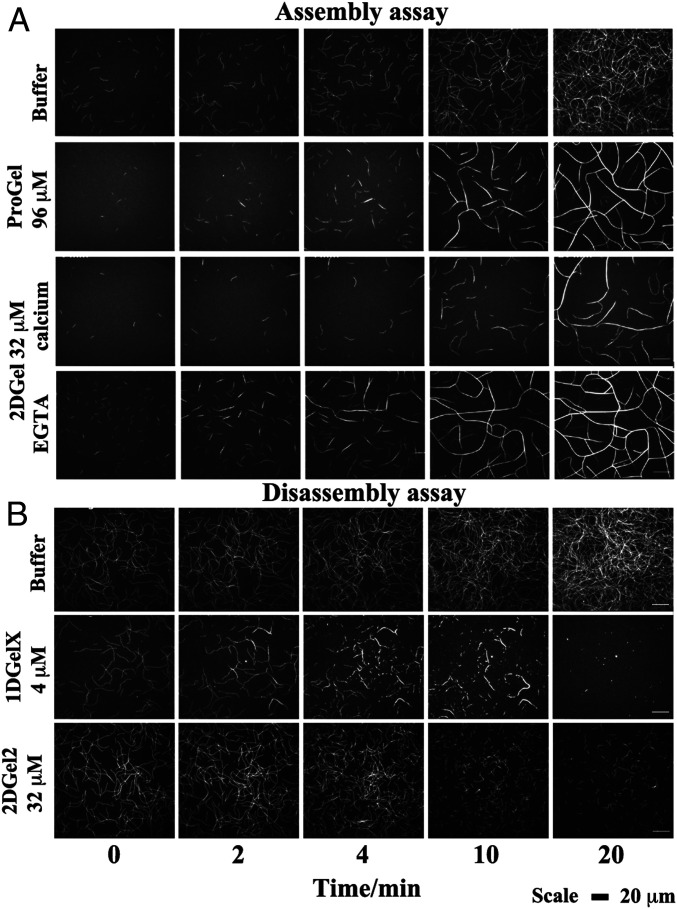
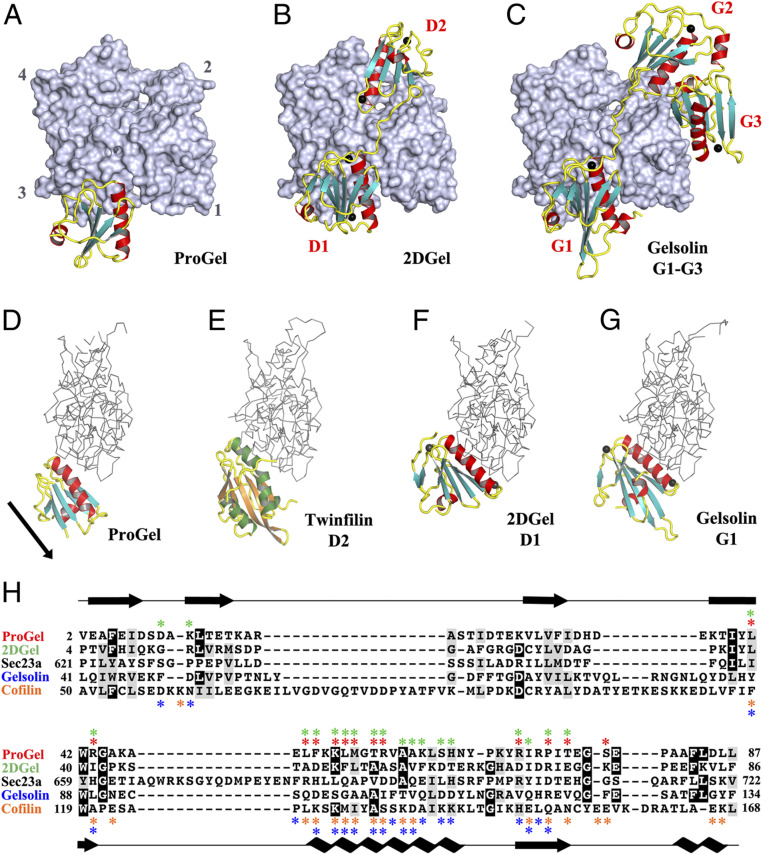
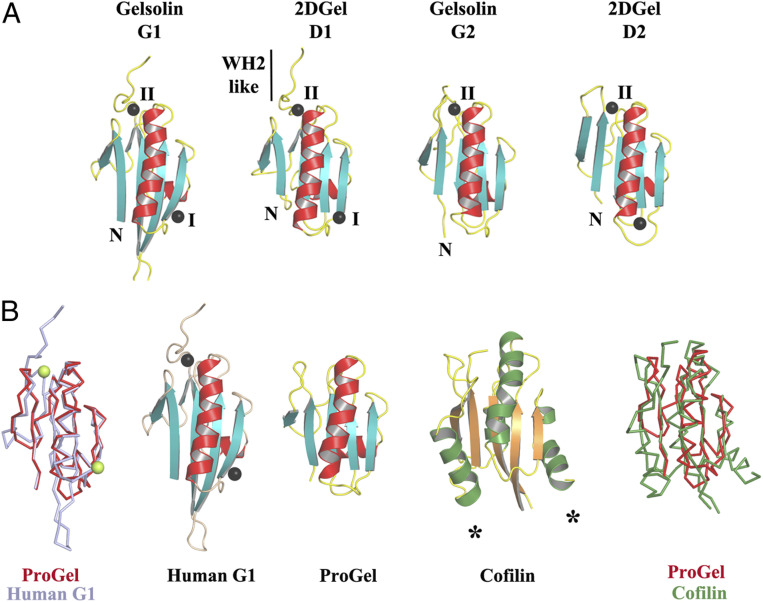
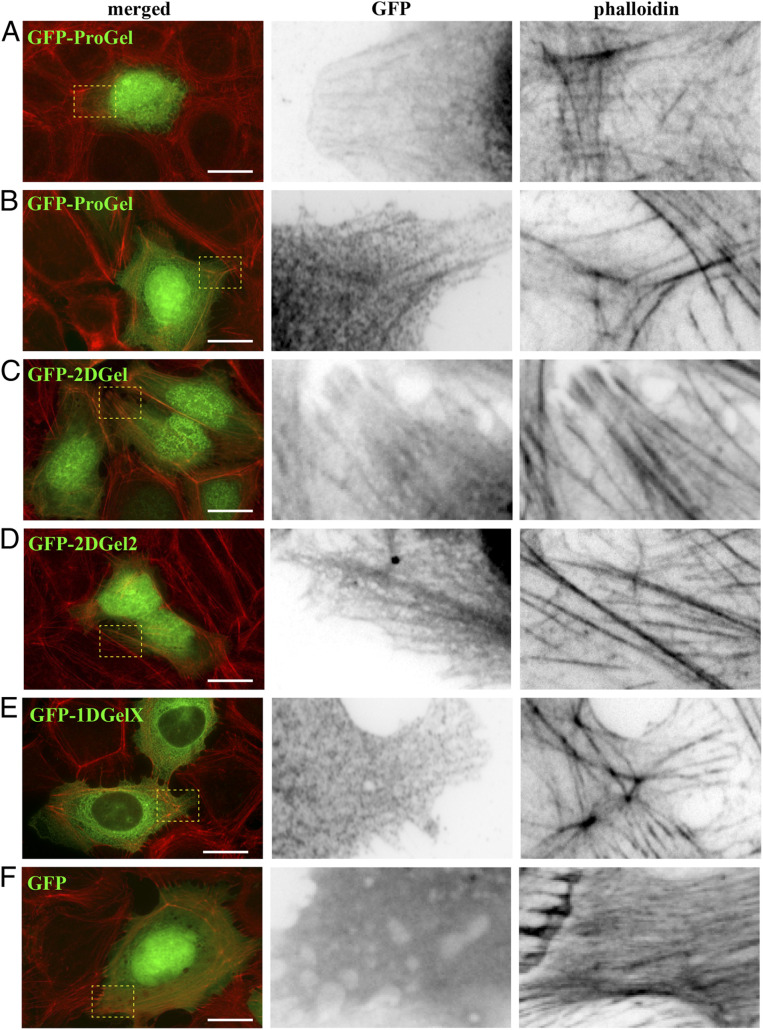
Asgard archaea genomes contain potential eukaryotic-like genes that provide intriguing insight for the evolution of eukaryotes. The eukaryotic actin polymerization/depolymerization cycle is critical for providing force and structure in many processes, including membrane remodeling. In general, Asgard genomes encode two classes of actin-regulating proteins from sequence analysis, profilins and gelsolins. Asgard profilins were demonstrated to regulate actin filament nucleation. Here, we identify actin filament severing, capping, annealing and bundling, and monomer sequestration activities by gelsolin proteins from Thorarchaeota (Thor), which complete a eukaryotic-like actin depolymerization cycle, and indicate complex actin cytoskeleton regulation in Asgard organisms. Thor gelsolins have homologs in other Asgard archaea and comprise one or two copies of the prototypical gelsolin domain. This appears to be a record of an initial preeukaryotic gene duplication event, since eukaryotic gelsolins are generally comprise three to six domains. X-ray structures of these proteins in complex with mammalian actin revealed similar interactions to the first domain of human gelsolin or cofilin with actin. Asgard two-domain, but not one-domain, gelsolins contain calcium-binding sites, which is manifested in calcium-controlled activities. Expression of two-domain gelsolins in mammalian cells enhanced actin filament disassembly on ionomycin-triggered calcium release. This functional demonstration, at the cellular level, provides evidence for a calcium-controlled Asgard actin cytoskeleton, indicating that the calcium-regulated actin cytoskeleton predates eukaryotes. In eukaryotes, dynamic bundled actin filaments are responsible for shaping filopodia and microvilli. By correlation, we hypothesize that the formation of the protrusions observed from Lokiarchaeota cell bodies may involve the gelsolin-regulated actin structures.
古菌 Asgard 基因组包含潜在的真核样基因,为真核生物的进化提供了有趣的见解。真核细胞肌动蛋白聚合/解聚循环对于许多过程中的力和结构提供至关重要,包括膜重塑。一般来说,Asgard 基因组通过序列分析编码两类肌动蛋白调节蛋白,即原肌球蛋白和凝胶蛋白。已经证明 Asgard 原肌球蛋白能够调节肌动蛋白丝的成核。在这里,我们通过 Thorarchaeota(Thor)的凝胶蛋白鉴定出肌动蛋白丝的切断、加帽、退火和捆绑以及单体隔离活性,完成了一个真核样肌动蛋白解聚循环,并表明 Asgard 生物中存在复杂的肌动蛋白细胞骨架调节。Thor 凝胶蛋白在其他 Asgard 古菌中具有同源物,并且包含一个或两个原型凝胶蛋白结构域的拷贝。这似乎是最初的原核基因复制事件的记录,因为真核凝胶蛋白通常包含三到六个结构域。这些蛋白与哺乳动物肌动蛋白形成复合物的 X 射线结构揭示了与人类凝胶蛋白或与肌动蛋白结合的副肌球蛋白的第一个结构域相似的相互作用。Asgard 两结构域,但不是一结构域凝胶蛋白含有钙结合位点,这表现在钙控制的活性中。在哺乳动物细胞中表达两结构域凝胶蛋白增强了离子霉素触发钙释放时肌动蛋白丝的解体。这种在细胞水平上的功能证明为钙控制的 Asgard 肌动蛋白细胞骨架提供了证据,表明钙调节的肌动蛋白细胞骨架早于真核生物。在真核生物中,动态捆绑的肌动蛋白丝负责塑造丝状伪足和微绒毛。通过相关性,我们假设 Lokiarchaeota 细胞体观察到的突起的形成可能涉及凝胶蛋白调节的肌动蛋白结构。