Rutgers Cancer Institute, Rutgers the State University of New Jersey, New Brunswick, NJ, 08901, USA.
Commun Biol. 2020 Aug 3;3(1):421. doi: 10.1038/s42003-020-01119-5.
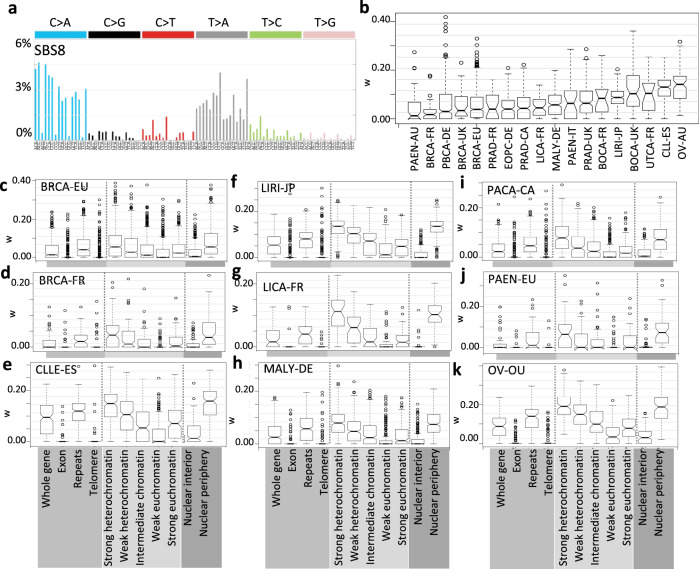
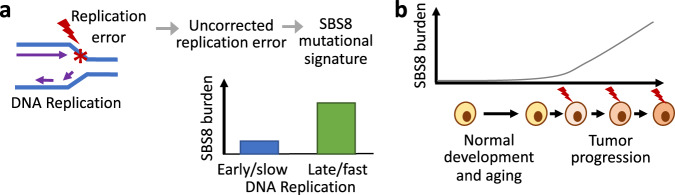
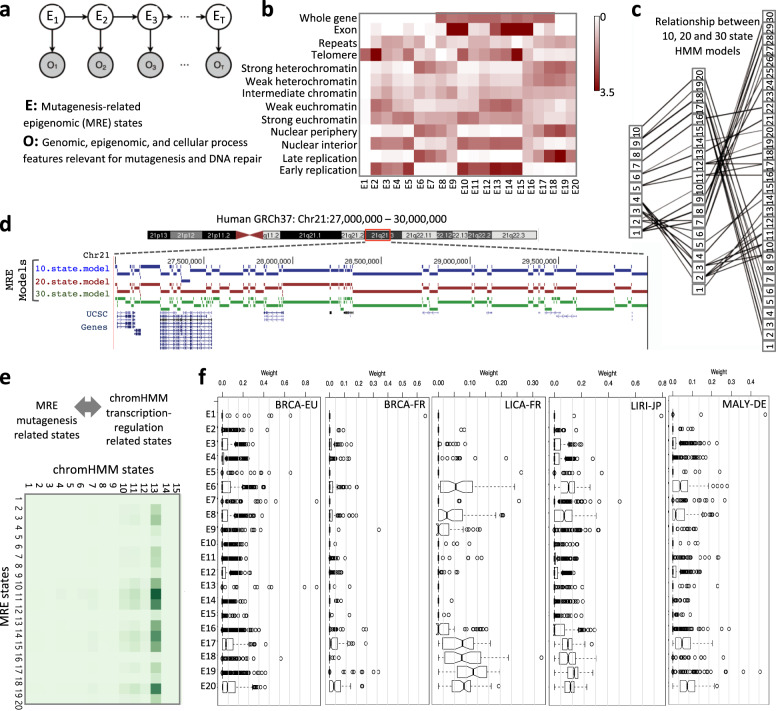
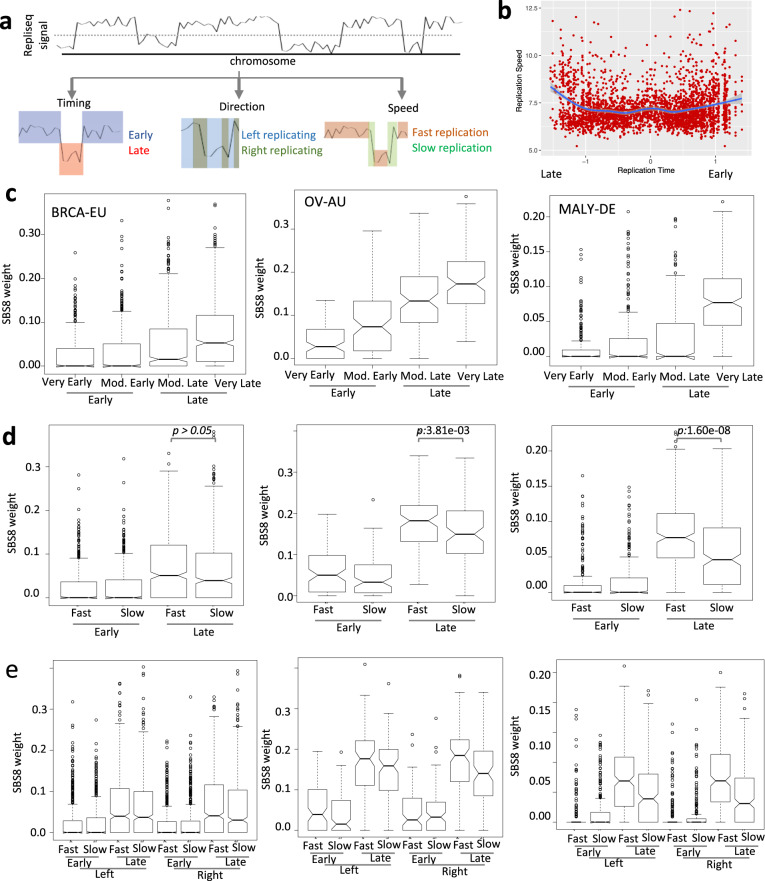
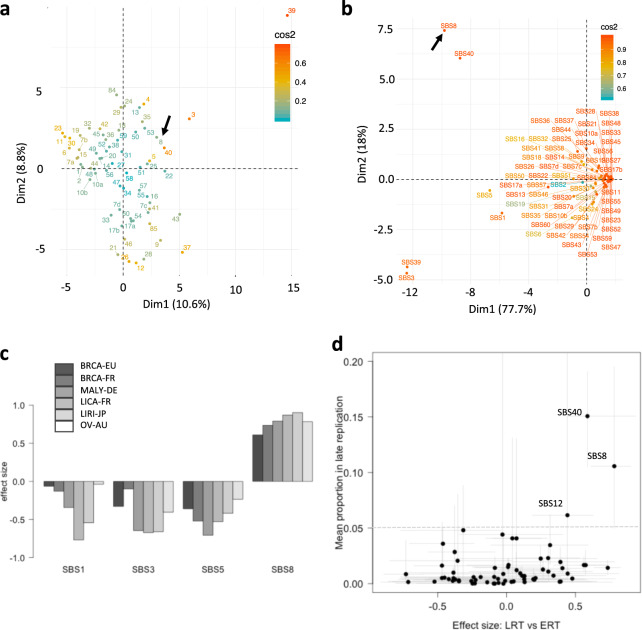
Although a majority of somatic mutations in cancer are passengers, their mutational signatures provide mechanistic insights into mutagenesis and DNA repair processes. Mutational signature SBS8 is common in most cancers, but its etiology is debated. Incorporating genomic, epigenomic, and cellular process features for multiple cell-types we develop genome-wide composite epigenomic context-maps relevant for mutagenesis and DNA repair. Analyzing somatic mutation data from multiple cancer types in their epigenomic contexts, we show that SBS8 preferentially occurs in gene-poor, lamina-proximal, late replicating heterochromatin domains. While SBS8 is uncommon among mutations in non-malignant tissues, in tumor genomes its proportions increase with replication timing and speed, and checkpoint defects further promote this signature - suggesting that SBS8 probably arises due to uncorrected late replication errors during cancer progression. Our observations offer a potential reconciliation among different perspectives in the debate about the etiology of SBS8 and its relationship with other mutational signatures.
尽管癌症中的大多数体细胞突变是乘客突变,但它们的突变特征为突变和 DNA 修复过程提供了机制上的见解。SBS8 突变特征在大多数癌症中很常见,但它的病因仍存在争议。我们整合了多种细胞类型的基因组、表观基因组和细胞过程特征,开发了与突变和 DNA 修复相关的全基因组综合表观基因组上下文图谱。在表观基因组背景下分析来自多种癌症类型的体细胞突变数据,我们发现 SBS8 优先发生在基因贫乏、靠近核纤层、晚期复制异染色质区域。虽然 SBS8 在非恶性组织中的突变中并不常见,但在肿瘤基因组中,随着复制时间和速度的增加,其比例增加,而检查点缺陷进一步促进了这种特征 - 表明 SBS8 可能是由于癌症进展过程中未纠正的晚期复制错误引起的。我们的观察结果为 SBS8 的病因及其与其他突变特征之间的关系的争论中的不同观点提供了一个潜在的调和。