Department of Hematology and Medical Oncology, Winship Cancer Institute of Emory University, Atlanta, GA, USA.
Department of Surgery, Winship Cancer Institute of Emory University, Atlanta, GA, USA.
Br J Cancer. 2020 Oct;123(9):1377-1386. doi: 10.1038/s41416-020-1018-0. Epub 2020 Aug 4.
BTC is an aggressive disease exacerbated by inflammation and immune suppression. Expansion of immunosuppressive cells occurs in biliary tract cancer (BTC), yet the role of BTC-derived cytokines in this process is unclear.
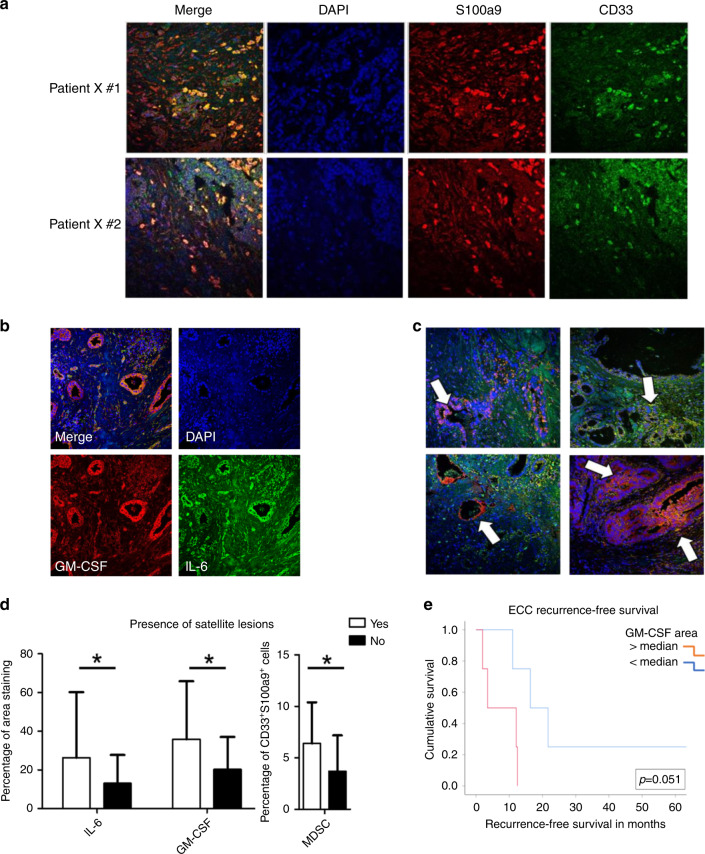
Activated signalling pathways and cytokine production were evaluated in a panel of human BTC cell lines. Human peripheral blood mononuclear cells (PBMCs) were cultured with BTC supernatants, with and without cytokine neutralising antibodies, and analysed by flow cytometry or immunoblot. A human BTC tissue microarray (TMA, n = 69) was stained for IL-6, GM-CSF, and CD33S100a9 cells and correlated with clinical outcomes.
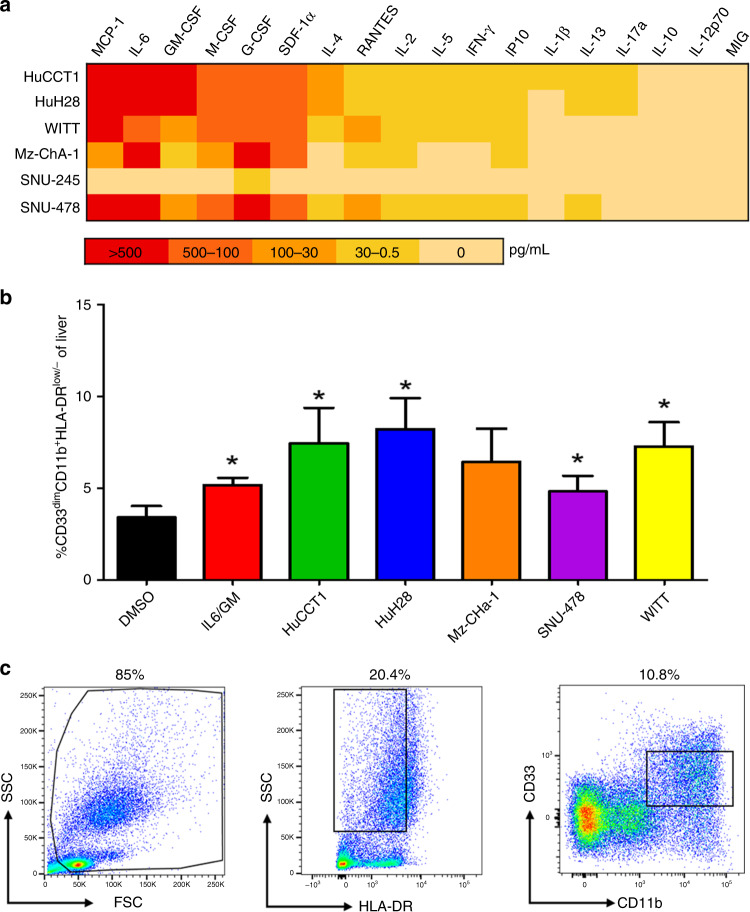
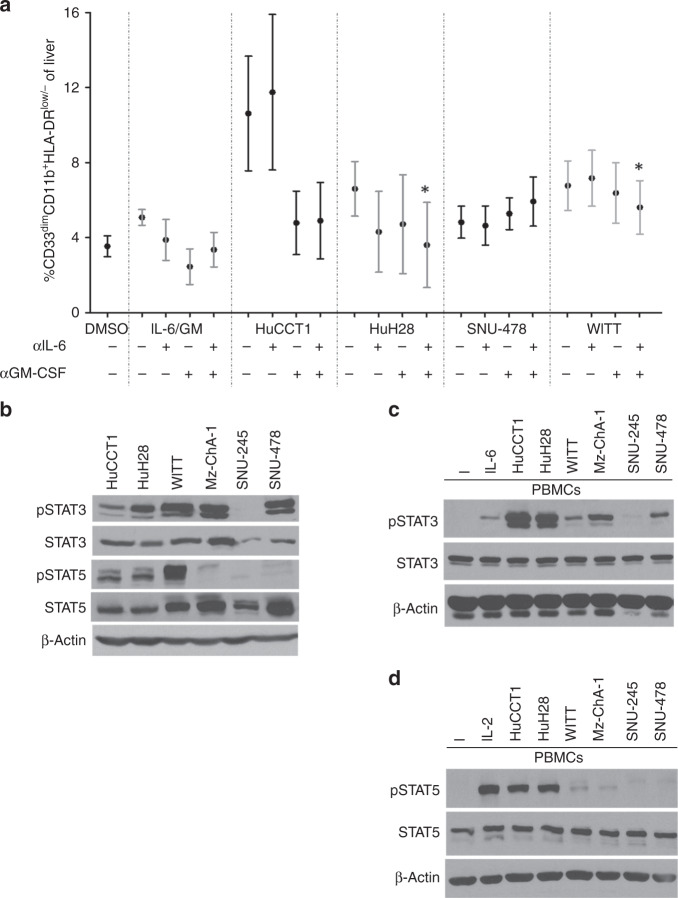
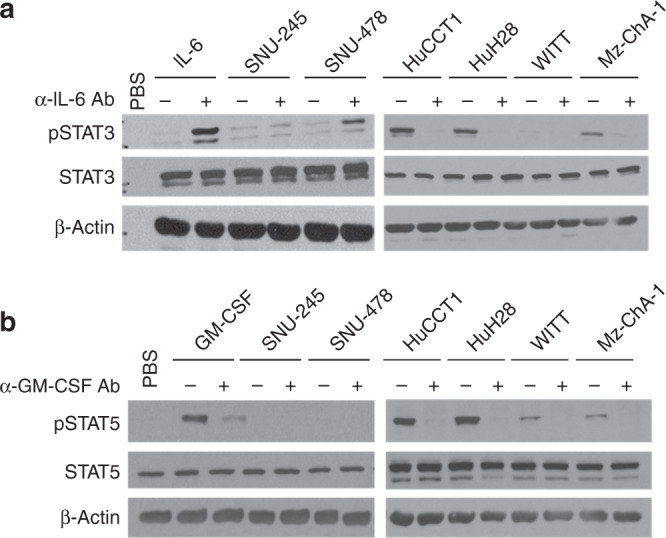
Immunomodulatory factors (IL-6, GM-CSF, MCP-1) were present in BTC supernatants. BTC supernatants expanded CD33CD11bHLA-DR myeloid-derived suppressor cells (MDSCs) from human PBMCs. Neutralisation of IL-6 and GM-CSF in BTC supernatants inhibited activation of STAT3/5, respectively, in PBMCs, with heterogeneous effects on MDSC expansion in vitro. Staining of a BTC TMA revealed a positive correlation between IL-6 and GM-CSF, with each cytokine and more CD33S100a9 cells. Increased CD33S100a9 staining positively correlated with higher tumour grade, differentiation and the presence of satellite lesions.
BTC-derived factors promote suppressive myeloid cell expansion, and higher numbers of CD33S100a9 cells in resectable BTC tumours correlates with more aggressive disease.
BTC 是一种由炎症和免疫抑制加剧的侵袭性疾病。在胆管癌(BTC)中,免疫抑制细胞的扩增发生,但 BTC 衍生细胞因子在这一过程中的作用尚不清楚。
在一系列人 BTC 细胞系中评估了激活的信号通路和细胞因子产生。用人 BTC 上清液培养人外周血单核细胞(PBMC),并用或不用细胞因子中和抗体培养,并通过流式细胞术或免疫印迹分析。对人 BTC 组织微阵列(TMA,n=69)进行 IL-6、GM-CSF 和 CD33S100a9 细胞染色,并与临床结果相关。
BTC 上清液中存在免疫调节因子(IL-6、GM-CSF、MCP-1)。BTC 上清液从人 PBMC 中扩增 CD33CD11bHLA-DR 髓系来源的抑制细胞(MDSCs)。BTC 上清液中 IL-6 和 GM-CSF 的中和分别抑制了 PBMC 中 STAT3/5 的激活,对体外 MDSC 扩增有不同的影响。BTC TMA 的染色显示 IL-6 和 GM-CSF 之间存在正相关,与每个细胞因子和更多的 CD33S100a9 细胞呈正相关。增加的 CD33S100a9 染色与更高的肿瘤分级、分化和卫星病变的存在呈正相关。
BTC 衍生的因子促进抑制性髓样细胞的扩增,可切除的 BTC 肿瘤中更多的 CD33S100a9 细胞与更具侵袭性的疾病相关。