Vitali Eleonora, Boemi Ilena, Tarantola Giulia, Piccini Sara, Zerbi Alessandro, Veronesi Giulia, Baldelli Roberto, Mazziotti Gherardo, Smiroldo Valeria, Lavezzi Elisabetta, Spada Anna, Mantovani Giovanna, Lania Andrea G
Laboratory of Cellular and Molecular Endocrinology, Humanitas Clinical and Research Center-IRCCS (Istituto di Ricovero e Cura a Carattere Scientifico), 20089 Rozzano, Italy.
Department of Biomedical Sciences, Humanitas University, 20090 Pieve Emanuele, Italy.
Cancers (Basel). 2020 Aug 2;12(8):2143. doi: 10.3390/cancers12082143.
Treatment options for neuroendocrine tumors (NETs) are rarely curative, as NETs frequently show resistance to medical therapy. The use of everolimus, an mTOR inhibitor, is limited by the development of resistance, probably due to the activation of Akt signaling. In this context, the antidiabetic drug metformin is able to inhibit mTOR, providing a rationale for the use of metformin and everolimus in combination.
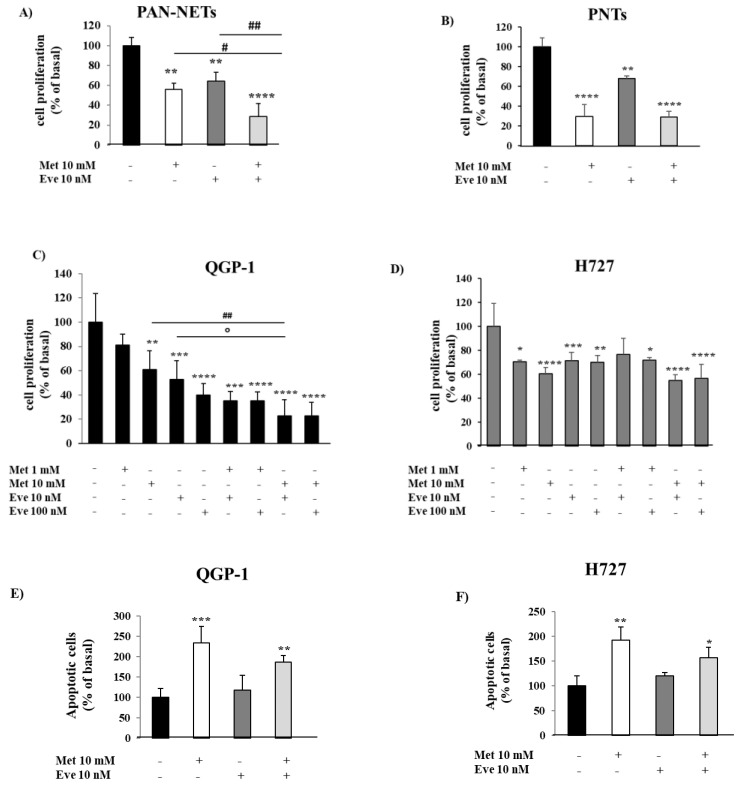
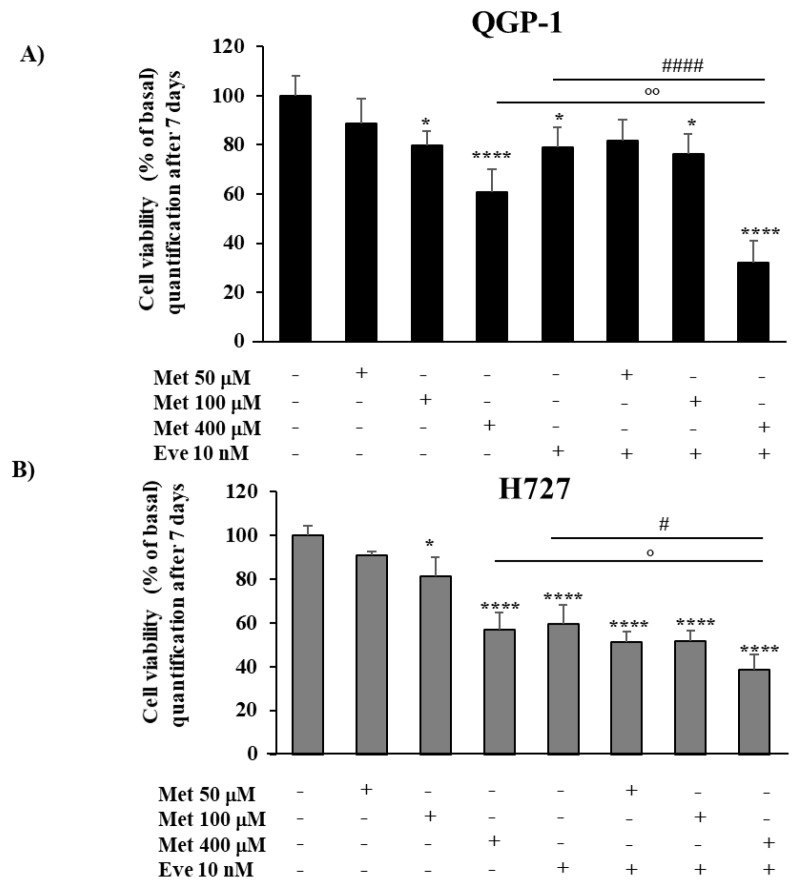
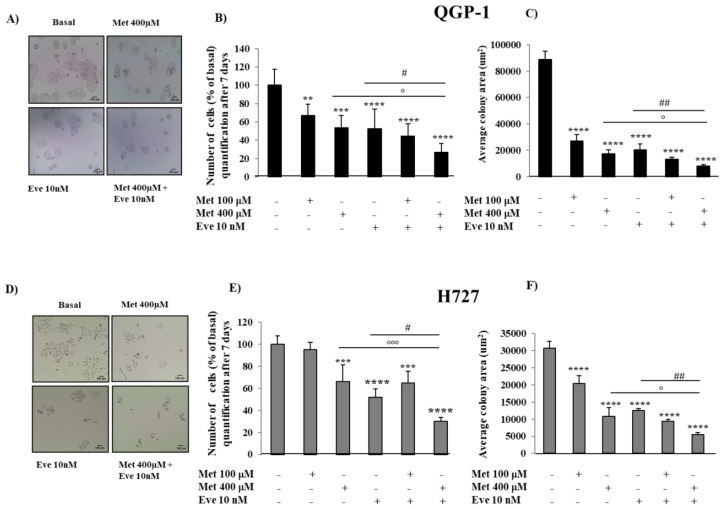
We investigated the effects of the metformin and everolimus combination on NET cell proliferation, apoptosis, colony formation, cell viability, NET spheroids growth and the involvement of the Akt and mTOR pathways, and also developed everolimus-resistant NET cells to further study this combination.
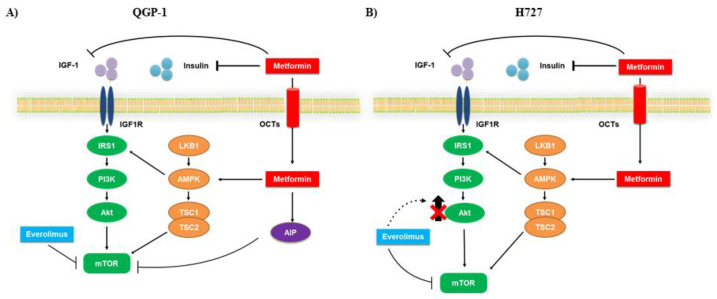
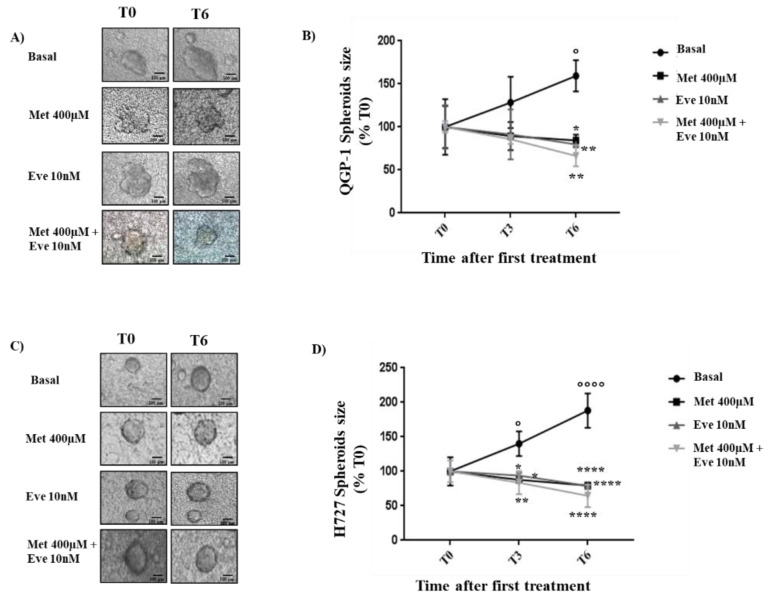
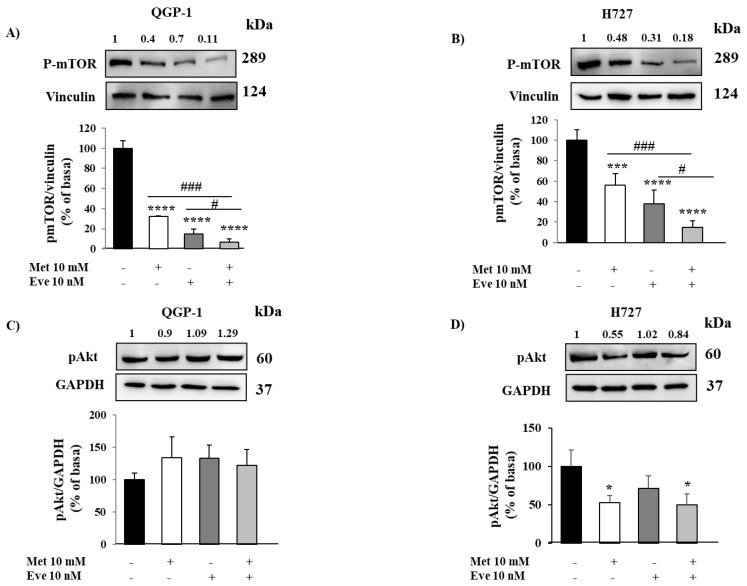
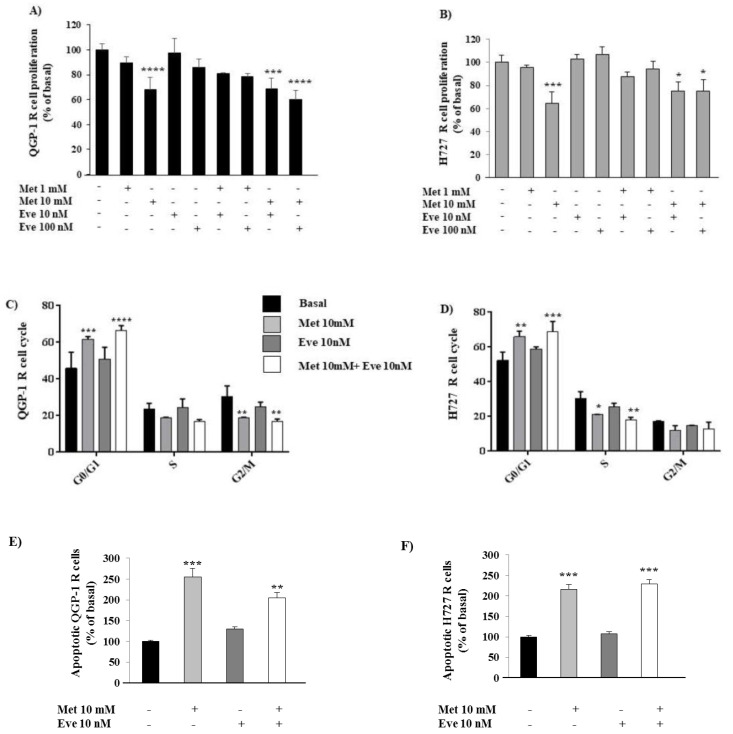
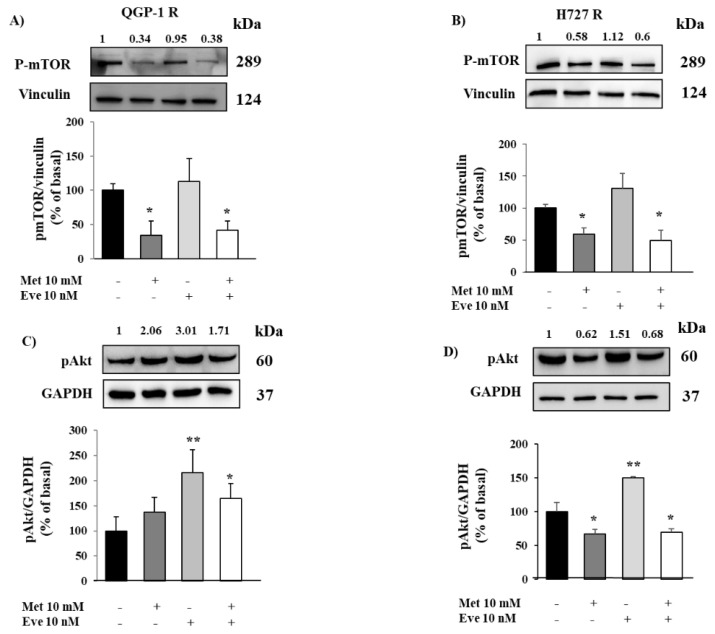
Metformin and everolimus in combination are more effective than monotherapy in inhibiting pancreatic NET (PAN-NET) cell proliferation (-71% ± 13%, < 0.0001 vs. basal), whereas no additive effects were observed on pulmonary neuroendocrine tumor (PNT) cell proliferation. The combinatorial treatment is more effective than monotherapy in inhibiting colony formation, cell viability, NET spheroids growth rate and mTOR phosphorylation in both NET cell lines. In a PAN-NET cell line, metformin did not affect Akt phosphorylation; conversely, it significantly decreased Akt phosphorylation in a PNT cell line. Using everolimus-resistant NET cells, we confirmed that metformin maintained its effects, acting by two different pathways: Akt-dependent or independent, depending on the cell type, with both leading to mTOR suppression.
Considering the promising effects of the everolimus and metformin combination in NET cells, our results provide a rationale for its use in NET patients.
神经内分泌肿瘤(NETs)的治疗选择很少能治愈,因为NETs常常对药物治疗表现出耐药性。mTOR抑制剂依维莫司的使用受到耐药性发展的限制,这可能是由于Akt信号通路的激活。在这种情况下,抗糖尿病药物二甲双胍能够抑制mTOR,为联合使用二甲双胍和依维莫司提供了理论依据。
我们研究了二甲双胍和依维莫司联合使用对NET细胞增殖、凋亡、集落形成、细胞活力、NET球体生长以及Akt和mTOR信号通路的影响,还构建了依维莫司耐药的NET细胞以进一步研究这种联合用药。
二甲双胍和依维莫司联合使用在抑制胰腺神经内分泌肿瘤(PAN-NET)细胞增殖方面比单一疗法更有效(-71%±13%,与基础值相比,<0.0001),而在肺神经内分泌肿瘤(PNT)细胞增殖方面未观察到相加效应。联合治疗在抑制两种NET细胞系的集落形成、细胞活力、NET球体生长速率和mTOR磷酸化方面比单一疗法更有效。在一个PAN-NET细胞系中,二甲双胍不影响Akt磷酸化;相反,在一个PNT细胞系中它显著降低了Akt磷酸化。使用依维莫司耐药的NET细胞,我们证实二甲双胍通过两种不同途径发挥作用,维持其效果:取决于细胞类型,通过Akt依赖或非依赖途径,两者均导致mTOR抑制。
考虑到依维莫司和二甲双胍联合使用在NET细胞中显示出的有前景的效果,我们的结果为其在NET患者中的使用提供了理论依据。