Department of Pathology, Case Western Reserve University, Cleveland, OH, USA.
Department of Pathology, University of Pittsburgh Medical Center, PA, USA.
Cell Transplant. 2020 Jan-Dec;29:963689720947146. doi: 10.1177/0963689720947146.
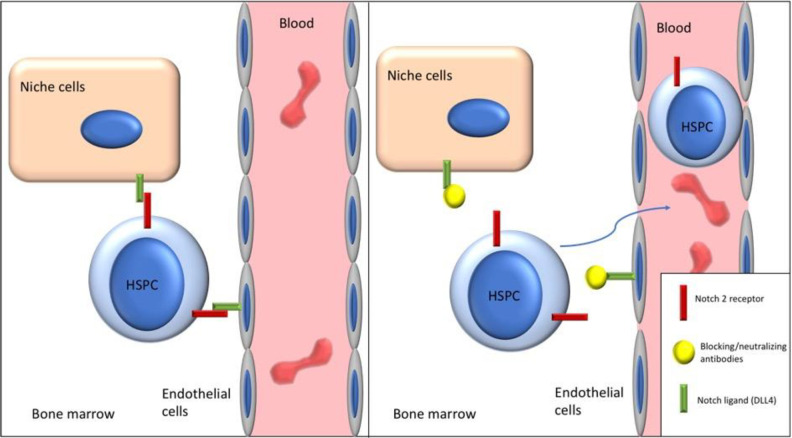
Hematopoietic stem cell (HSC) transplantation can be a potential cure for hematological malignancies and some nonhematologic diseases. Hematopoietic stem and progenitor cells (HSPCs) collected from peripheral blood after mobilization are the primary source to provide HSC transplantation. In most of the cases, mobilization by the cytokine granulocyte colony-stimulating factor with chemotherapy, and in some settings, with the CXC chemokine receptor type 4 antagonist plerixafor, can achieve high yield of hematopoietic progenitor cells (HPCs). However, adequate mobilization is not always successful in a significant portion of donors. Research is going on to find new agents or strategies to increase HSC mobilization. Here, we briefly review the history of HSC transplantation, current mobilization regimens, some of the novel agents that are under investigation for clinical practice, and our recent findings from animal studies regarding Notch and ligand interaction as potential targets for HSPC mobilization.
造血干细胞 (HSC) 移植可能是治疗血液系统恶性肿瘤和某些非血液系统疾病的潜在方法。动员后从外周血中采集的造血干/祖细胞 (HSPC) 是提供 HSC 移植的主要来源。在大多数情况下,通过细胞因子粒细胞集落刺激因子联合化疗进行动员,在某些情况下,联合 CXCR4 拮抗剂plerixafor 进行动员,可以获得高产量的造血祖细胞 (HPC)。然而,在相当一部分供者中,并非总能成功进行充分动员。目前正在研究新的药物或策略来增加 HSC 的动员。在这里,我们简要回顾 HSC 移植的历史、当前的动员方案、一些正在研究用于临床实践的新型药物,以及我们最近在动物研究中关于 Notch 和配体相互作用作为 HSPC 动员潜在靶点的发现。