From the Department of Neurology, Boston University School of Medicine, MA (R.E.P., A.S.B., H.A., S.S., J.R.R.).
NHLBI's Framingham Heart Study, MA (R.E.P., A.O., A.S.B., H.A., S.S., J.R.R.).
Hypertension. 2020 Sep;76(3):707-714. doi: 10.1161/HYPERTENSIONAHA.120.15073. Epub 2020 Jul 31.
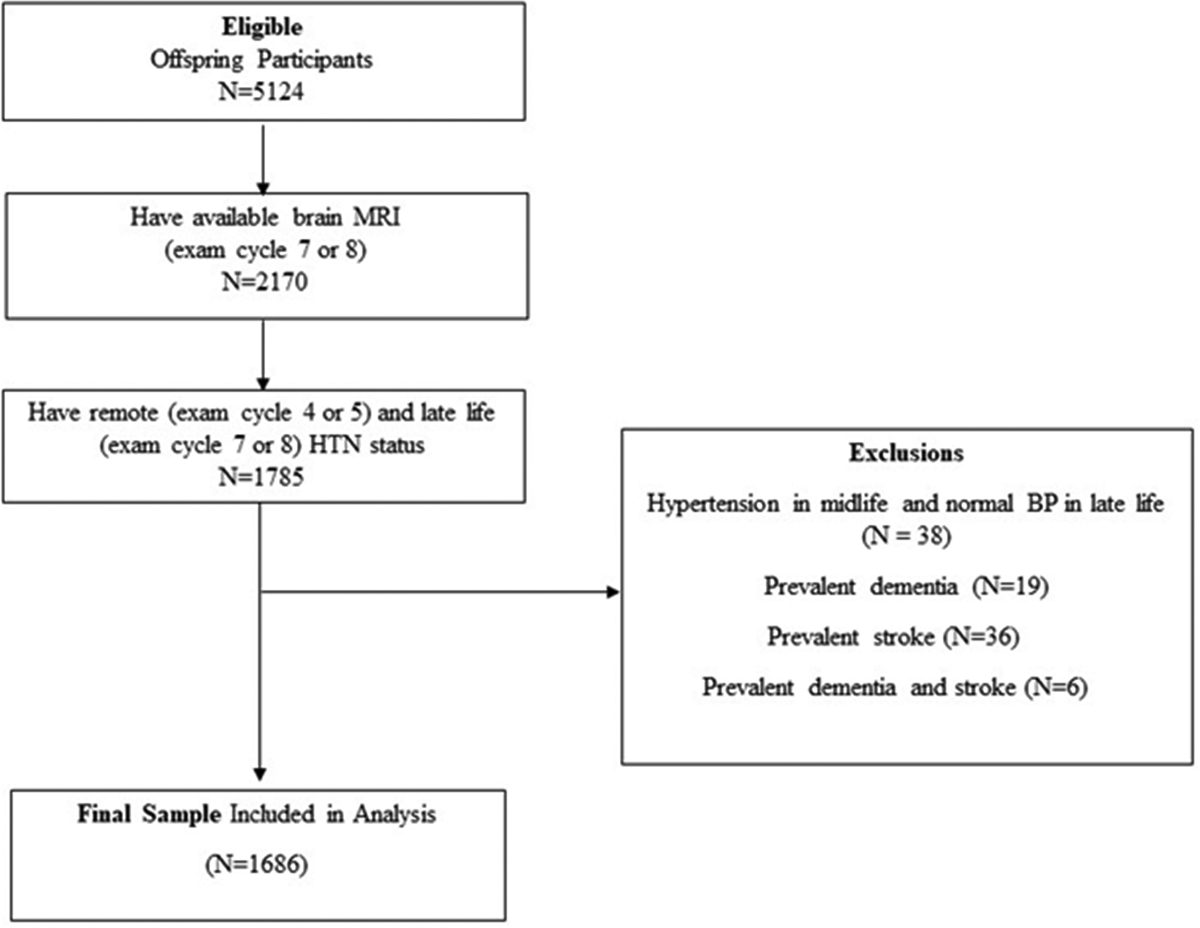
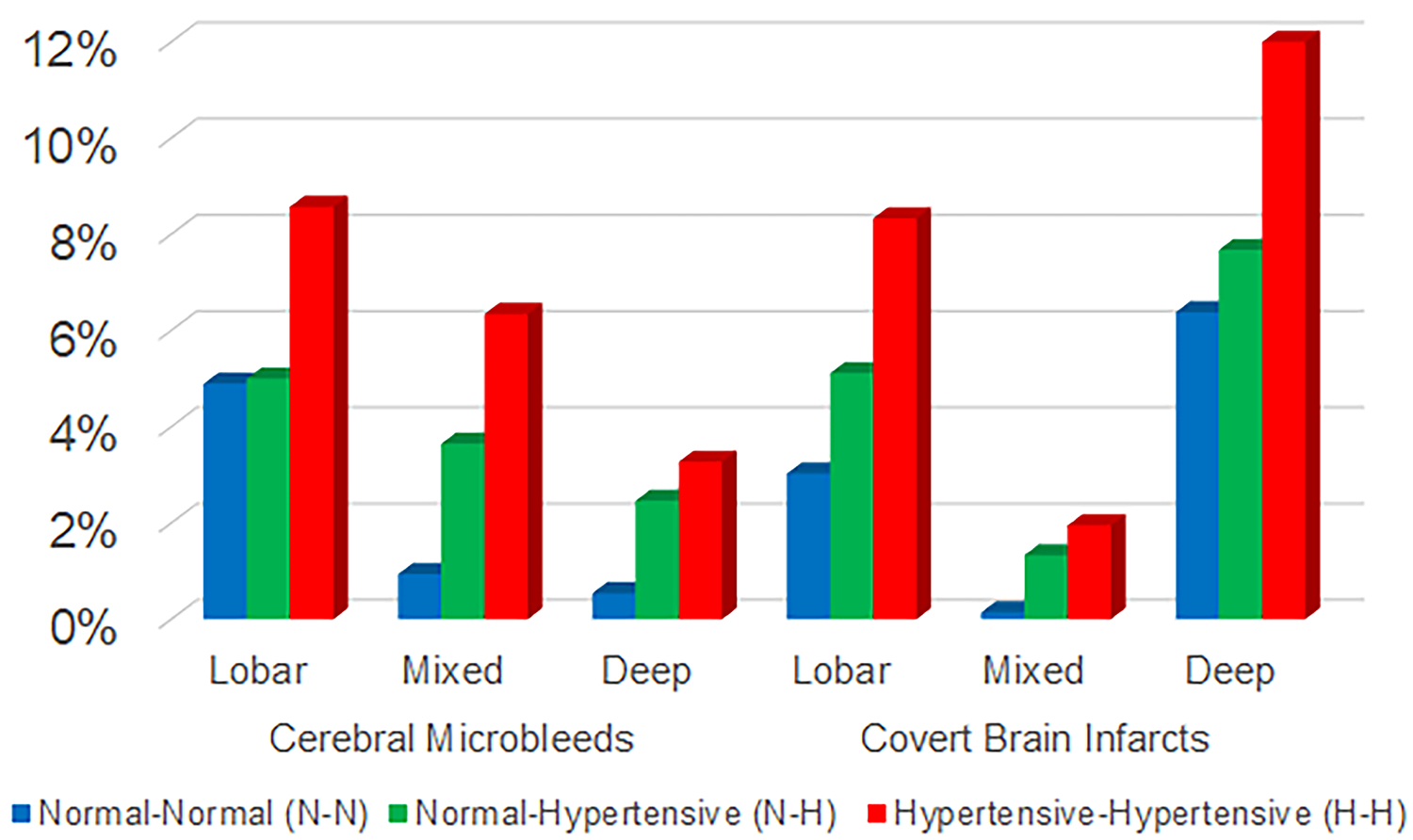
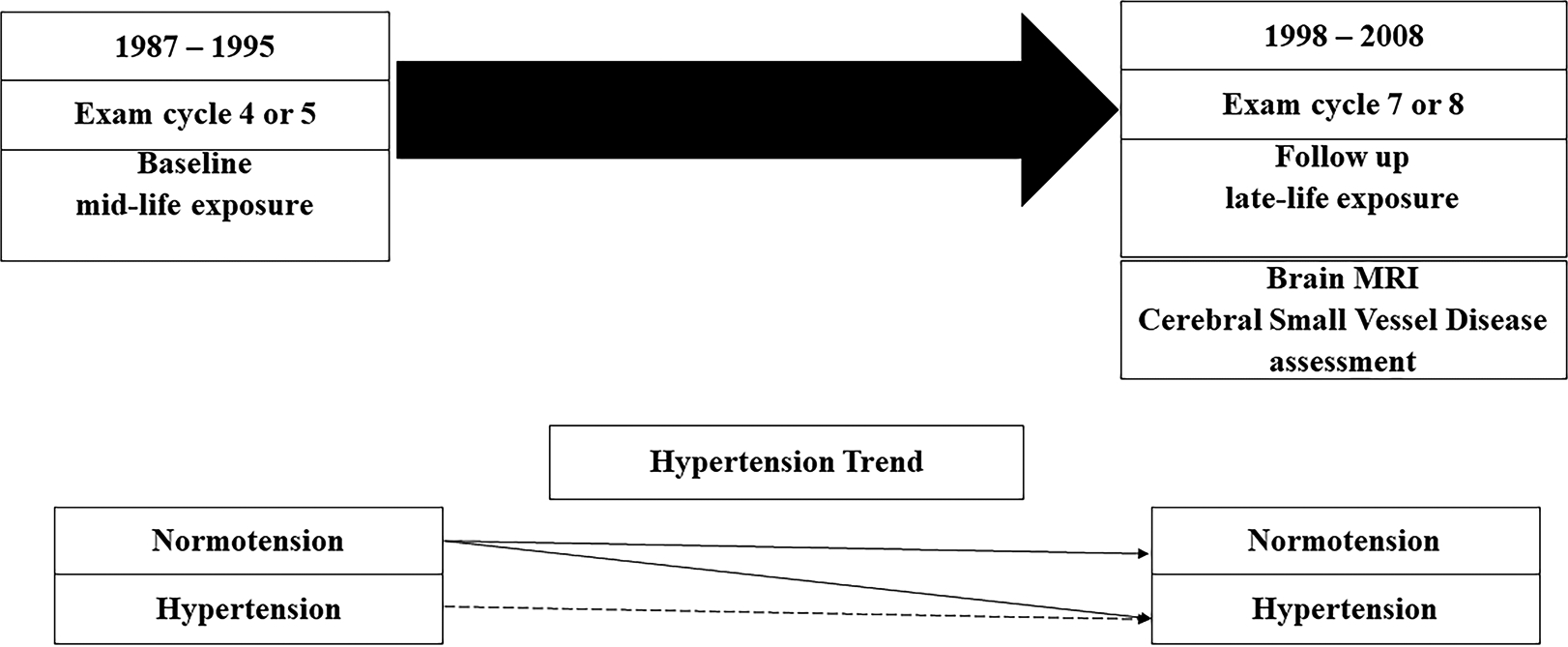
The duration and lifetime pattern of hypertension is related to risk of stroke and dementia. In turn, cerebral small vessel disease (CSVD) is the most frequent form of cerebrovascular disease underlying dementia and stroke. Thus, study of the relation of mid to late life hypertension trends with CSVD late in life will help understand hypertension's role and inform preventive efforts of CSVD consequences. We studied 1686 Framingham Heart Study Offspring cohort participants free of stroke and dementia, who were examined in mid and late life, and had available brain magnetic resonance imaging during late life. We related hypertension trends between mid and late life (normotension-normotension N-N, normotension-hypertension N-H, hypertension-hypertension H-H) to cerebral microbleeds and covert brain infarcts (CBI), overall and stratified by brain topography. We used multivariable logistic regression analyses to calculate odds ratio and 95% CIs for CSVD measures. The prevalence of CSVD in late life was 8% for cerebral microbleeds and 13% for covert brain infarcts and increased with longer hypertension exposure across all brain regions. Compared with the trend pattern of N-N, both N-H and H-H trends had higher odds of mixed cerebral microbleeds (2.71 [1.08-6.80], and 3.44 [1.39-8.60], respectively); H-H also had higher odds of any cerebral microbleeds or covert brain infarcts (1.54 [1.12-2.20]), and any covert brain infarcts (1.55 [1.08-2.20]). The burden of CSVD also increased with longer hypertension exposure. Our results highlight hypertension having a major role in subclinical CSVD, across subtypes and brain regions, and call attention to improve recognition and treatment of hypertension early in life.
高血压的持续时间和终身模式与中风和痴呆的风险有关。反过来,脑小血管疾病(CSVD)是导致痴呆和中风的最常见形式的脑血管疾病。因此,研究中晚年高血压趋势与晚年 CSVD 的关系将有助于了解高血压的作用,并为 CSVD 后果的预防措施提供信息。我们研究了 1686 名弗莱明翰心脏研究后代队列参与者,他们没有中风和痴呆,在中年和晚年接受了检查,并且在晚年有可用的脑磁共振成像。我们将中年和晚年的高血压趋势(正常血压-正常血压 N-N、正常血压-高血压 N-H、高血压-高血压 H-H)与脑微出血和隐匿性脑梗死(CBI)相关联,总体上和按脑分布分层。我们使用多变量逻辑回归分析来计算 CSVD 测量值的比值比和 95%置信区间。在晚年,CSVD 的患病率为脑微出血 8%,隐匿性脑梗死 13%,并且随着所有脑区高血压暴露时间的延长而增加。与 N-N 的趋势模式相比,N-H 和 H-H 的趋势模式均具有更高的混合性脑微出血的可能性(分别为 2.71 [1.08-6.80]和 3.44 [1.39-8.60]);H-H 也具有更高的任何脑微出血或隐匿性脑梗死的可能性(1.54 [1.12-2.20])和任何隐匿性脑梗死的可能性(1.55 [1.08-2.20])。CSVD 的负担也随着高血压暴露时间的延长而增加。我们的结果强调了高血压在亚临床 CSVD 中具有主要作用,跨越亚型和脑区,并提醒人们注意在生命早期更好地识别和治疗高血压。