Department of Biochemistry and Biomedical Sciences, McMaster University, 1280 Main Street West, Hamilton, ON, L8S 4L8, Canada.
Drug Discovery Group, The Ontario Institute for Cancer Research, 661 University Ave Suite 510, Toronto, ON, M5G 0A3, Canada.
BMC Cancer. 2020 Aug 5;20(1):724. doi: 10.1186/s12885-020-07193-6.
Breast tumor initiating cells (BTIC) are stem-like cells that initiate and sustain tumor growth, and drive disease recurrence. Identifying therapies targeting BTIC has been hindered due primarily to their scarcity in tumors. We previously reported that BTIC frequency ranges between 15% and 50% in multiple mammary tumors of 3 different transgenic mouse models of breast cancer and that this frequency is maintained in tumor cell populations cultured in serum-free, chemically defined media as non-adherent tumorspheres. The latter enabled high-throughput screening of small molecules for their capacity to affect BTIC survival. Antagonists of several serotonin receptors (5-HTRs) were among the hit compounds. The most potent compound we identified, SB-699551, selectively binds to 5-HT5A, a Gα protein coupled receptor (GPCR).
We evaluated the activity of structurally unrelated selective 5-HT5A antagonists using multiple orthogonal assays of BTIC frequency. Thereafter we used a phosphoproteomic approach to uncover the mechanism of action of SB-699551. To validate the molecular target of the antagonists, we used the CRISPR-Cas9 gene editing technology to conditionally knockout HTR5A in a breast tumor cell line.
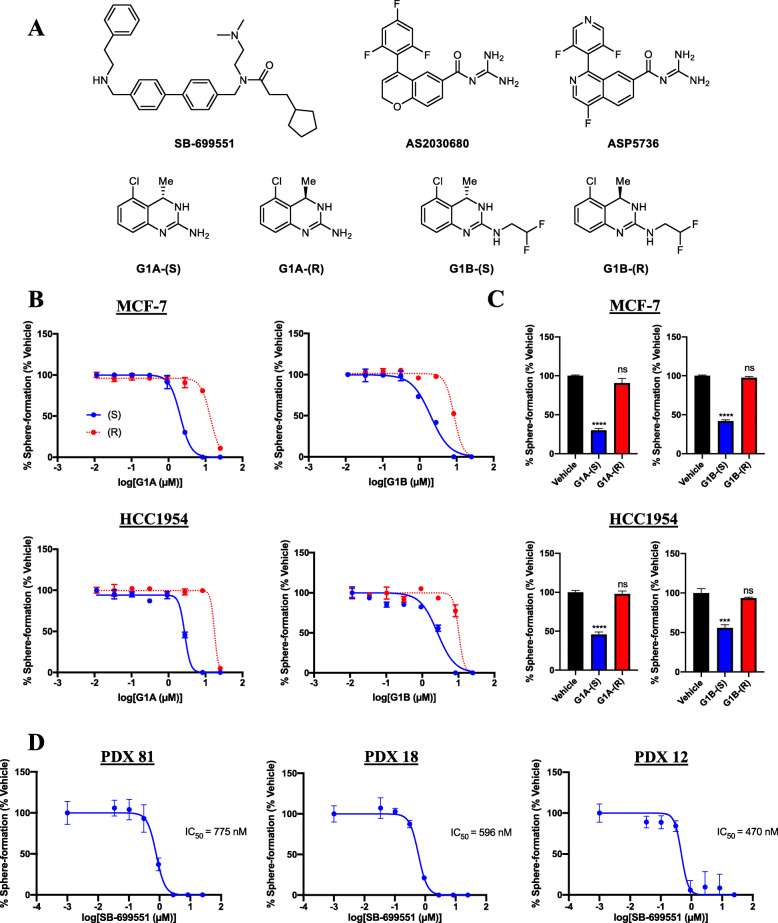
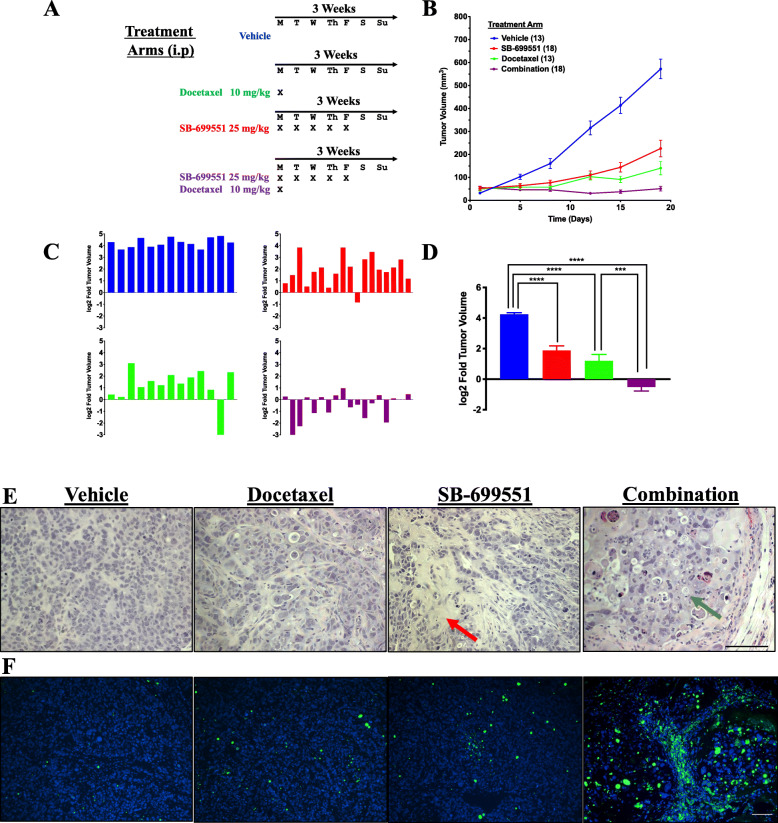
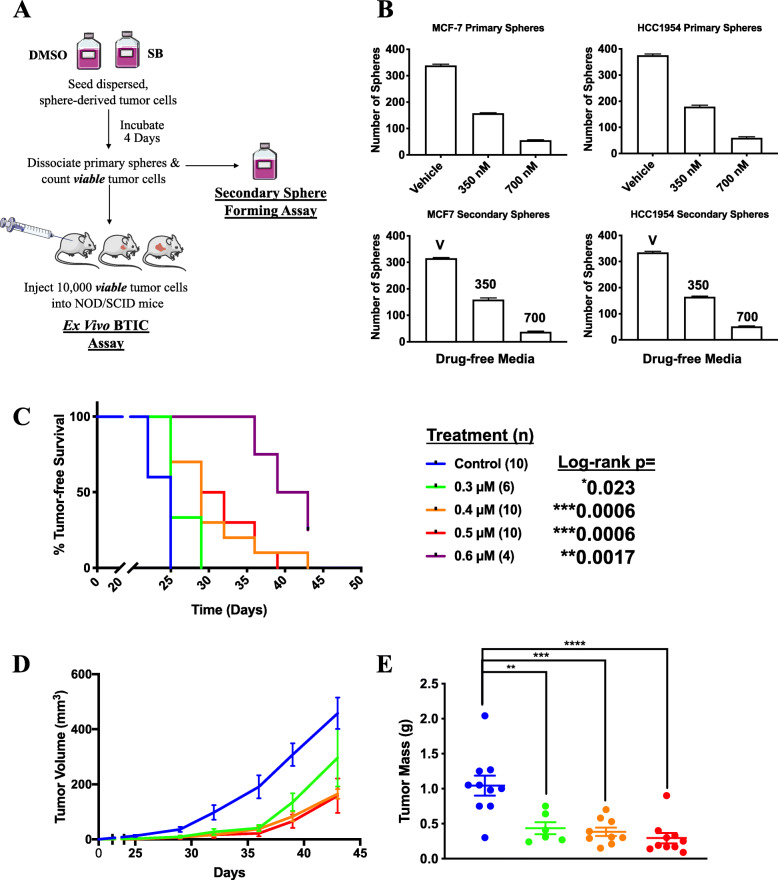
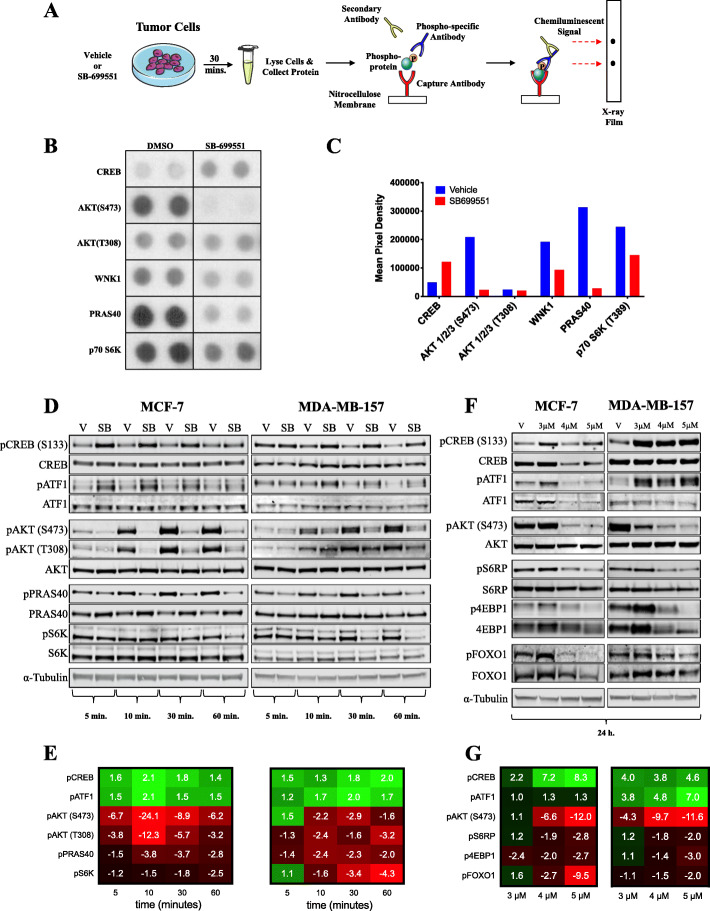
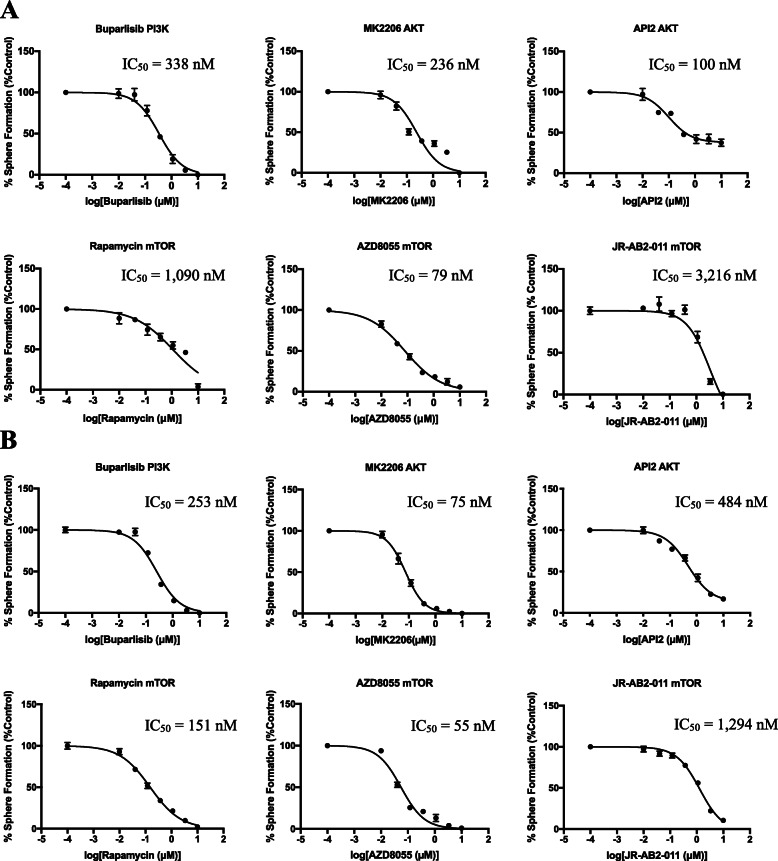
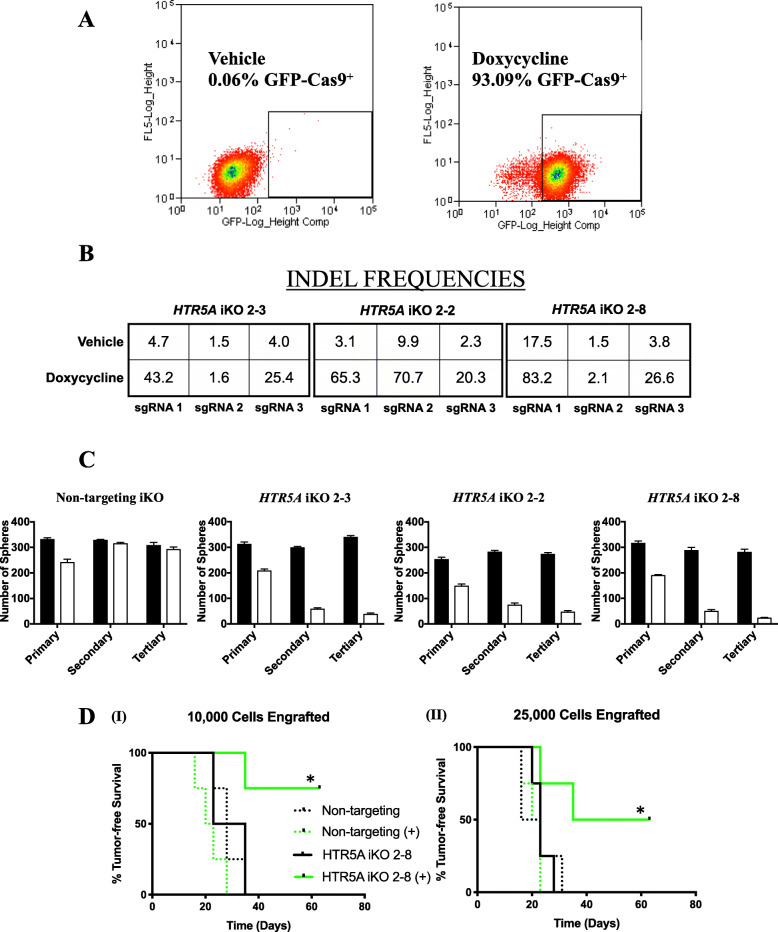
We found that selective antagonists of 5-HT5A reduced the frequency of tumorsphere initiating cells residing in breast tumor cell lines and those of patient-derived xenografts (PDXs) that we established. The most potent compound among those tested, SB-699551, reduced the frequency of BTIC in ex vivo assays and acted in concert with chemotherapy to shrink human breast tumor xenografts in vivo. Our phosphoproteomic experiments established that exposure of breast tumor cells to SB-699551 elicited signaling changes in the canonical Gα-coupled pathway and the phosphoinositide 3-kinase (PI3K)/AKT/mammalian target of rapamycin (mTOR) axis. Moreover, conditional mutation of the HTR5A gene resulted in the loss of tumorsphere initiating cells and BTIC thus mimicking the effect of SB-699551.
Our data provide genetic, pharmacological and phosphoproteomic evidence consistent with the on-target activity of SB-699551. The use of such agents in combination with cytotoxic chemotherapy provides a novel therapeutic approach to treat breast cancer.
乳腺肿瘤起始细胞(BTIC)是启动和维持肿瘤生长、驱动疾病复发的干细胞样细胞。由于其在肿瘤中的稀缺性,针对 BTIC 的治疗方法的鉴定一直受到阻碍。我们之前报道过,在 3 种不同的乳腺癌转基因小鼠模型的多个乳腺肿瘤中,BTIC 的频率范围在 15%到 50%之间,并且在无血清、化学定义的培养基中培养的肿瘤细胞群体中,这种频率保持在非贴壁肿瘤球中。后者使小分子的高通量筛选能够影响 BTIC 的存活能力。几种 5-羟色胺受体(5-HTRs)的拮抗剂是命中化合物之一。我们鉴定的最有效化合物 SB-699551 选择性结合 5-HT5A,一种 Gα 蛋白偶联受体(GPCR)。
我们使用 BTIC 频率的多种正交测定方法评估了结构上不相关的选择性 5-HT5A 拮抗剂的活性。之后,我们使用磷酸蛋白质组学方法来揭示 SB-699551 的作用机制。为了验证拮抗剂的分子靶点,我们使用 CRISPR-Cas9 基因编辑技术在乳腺肿瘤细胞系中条件性敲除 HTR5A。
我们发现,5-HT5A 的选择性拮抗剂降低了乳腺肿瘤细胞系和我们建立的患者来源异种移植(PDX)中存在的肿瘤球体起始细胞的频率。在所测试的化合物中,最有效的化合物 SB-699551 降低了 BTIC 在离体测定中的频率,并与化疗协同作用,使体内人乳腺肿瘤异种移植物缩小。我们的磷酸蛋白质组学实验确定,暴露于 SB-699551 的乳腺肿瘤细胞会引发经典 Gα 偶联途径和磷酸肌醇 3-激酶(PI3K)/AKT/雷帕霉素靶蛋白(mTOR)轴的信号变化。此外,HTR5A 基因的条件突变导致肿瘤球体起始细胞和 BTIC 的丢失,从而模拟了 SB-699551 的作用。
我们的数据提供了遗传、药理学和磷酸蛋白质组学证据,一致表明 SB-699551 的靶标活性。此类药物与细胞毒性化疗联合使用为治疗乳腺癌提供了一种新的治疗方法。